This article in Inside Higher Education, which comments on a survey showing that more professors today feel their academic freedom is threatened than did during the McCarthyist era, is the kind of thing you’d expect me to have a lot to say about.
Gross surveyed social science professors last year about whether they had felt that their academic freedom was threatened, and found that about one-third did. In 1955, Paul Lazarsfeld, the late Columbia University professor, did a similar survey and found only one-fifth of professors feeling affected by attacks on their academic freedom.
However, I’m going out of town with my family in a little over an hour and won’t be back until the weekend, so I don’t have time to comment on it very fully. So here’s your assignment: imagine what you think I’d say about it, and then argue over what you’ve imagined in the comments.
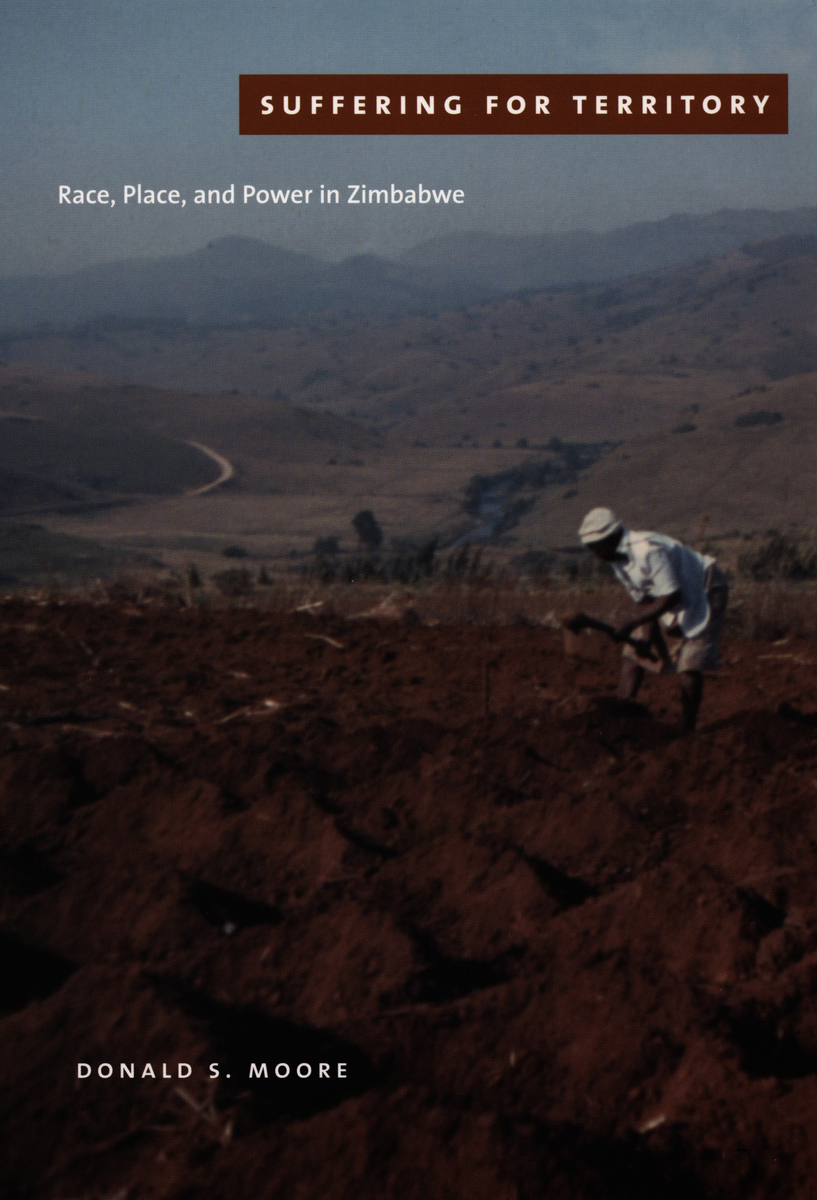
I spent the weekend trying to figure out how to tie together Donald Moore’s book with the recent spate of talk here about sports and the military. No go on the former so far, but I think the book is a good case for thinking about the history of anthropological knowledge and its contribution to geo-political affairs. Comparison with Iraq is obviously apposite– why is Mugabe’s Zimbabwe not the same kind of threat as Saddam’s Iraq, barring the obvious issue of oil? Why is the region considered (relatively, and by the US and EU) stable despite the ravages of AIDS, the super out-of-control inflation or the century-long (and now tit-for-tat) history of racialized dispossession at the center of Moore’s book? But more relevant is the question of how anthropological knowledge has been used in both governance and wartime in the history of Africa. The “colonial” card is one often played in anthropology (and frequently here on SM), but rarely, I think, carefully examined. For my money, Chapter 5 of Moore’s book is one of the few places I’ve seen an anthropologist take really seriously the complicated uses of anthropological knowledge in a colonial and post-colonial setting, and I think it merits a comparison with the question of what, for instance, people like Montgomery McFate, Laura McNamara, or Marcus Griffinare involved in with respect to Iraq are involved in with respect to the use of anthropological knowledge within the government today (NOTE: I didn’t mean to lump all three of these folks together as people working in or on Iraq… only as three different kinds of anthropologists working with or on the miltary or defense. Laura McNamara works for th DOE and has studied defense analysts, but has nothing whatsoever to do with HTS or the DoD.) . Continue reading →
Sorry, the image “iraq_asian_cup_celebrations_bag130.jpg” is missing.
Iraqi people wave their flags during celebrations after the Iraq soccer team won the Asian Cup, in streets of the Shiite holy city of Karbala, 80 kilometers (50 miles) south of Baghdad, Iraq, Sunday, July 29, 2007. (AP Photo via Yahoo)
In a true sports story that seems like a script to a Hollywood movie, the Iraqi Men’s soccer team beat Saudi Arabia in the finals of the Asian Cup on July 29th in Jakarta, with the winning goal in the 71st minute headed in by the Sunni team captain from Kirkuk, off a corner kick by Kurd teammate from Mosul. The Iraqi team was as diverse as anything Disney could think of, with Sunnis, Shi’ites, and Kurds mixed in together under a Brazilian coach. Political leaders throughout the world all had something to say about one of the few instances of good news coming from Iraq; even General David Petreus, commander of American forces in Iraq, took the time to celebrate.
Can sports triumph over politics? Or is it yet another arena to be politicized. The ability of sports to bring together a social group is not just the main message of movies like Remember the Titans or The Mighty Ducks; it is also a main point in many of the anthropological studies of sports. There are a number of good reviews of the anthropological literature on sports. In no particular order, I would recommend Noel Dyck’s introduction to a 2000 edited volume entitled Games, Sports, and Cultures, Kendall Blanchard’s 1995 book The Anthropology of Sport (more like a textbook), or Thomas Carter’s 2002 article in Identities. There are numerous ethnographies that also have a good introduction to the field, including those written by Susan Brownell, Alan Klein, Eduardo Archetti, and Joseph Alter (to name only a few). There are many good ethnographies and edited volumes on all the major global sports such as soccer, baseball, track and field, and basketball, as well as interesting studies on more regional sports.
Much of the contemporary study of sports (especially in European circles) is based upon the seminal work of Norbert Elias, who approached sports as a necessary product of modernity by what he refers to as “the civilizing process.” From Elias’s perspective, a key component of sports is the bureaucratic control of violence through the establishment of rules and organizations that enforce them. Elias further added that sports, as an element of leisure, are an outcome of industrialization, in that work becomes increasingly differentiated from leisure in a dialectical manner. Work in modern societies imposes a rigorous restraint on individuals, increasing a sense of alienation that, according to Elias, is relieved by the “quest for excitement” in leisure (think of Victor Turner’s communitas). Sports are therefore a necessary part of modernity that provides society with a mimetic excitement that gives individuals a liberating, cathartic experience within the iron cage of modern life. Sports, however, must have the same kind of restraints as wider society for society to maintain its cohesion; they are a part of the Weberian process of rationalization. The anthropological literature on sports can be roughly divided into different topical categories, and later this week I will discuss some of them.
Sports and Identity. Sports are presented as a key cultural arena in which a multiplicity of identities (such as ethnicity, nationalism, gender, or class) are created, performed, and essentialized. Sports provide people with bodily means to differentiate themselves from others latitudinally or hierarchically (see Jeremy MacClancy’s edited volume). The connection between sports and identity is most visible in various public spectacles such as the Olympic Games or World Cup Soccer. These studies have showed how sports serve as a double-edged sword – like the example of Jackie Robinson breaking the racial barrier in baseball, sports can both divide and unify, flatten or exacerbate differences. Pierre Bourdieu has an interesting set of articles that lay out a program for the study of sports, especially as a means of understanding social class dynamics.
Nation-states are heavily involved in the use of sports for unifying diverse cultures and communities within its borders (think of the recent victory by the Iraqi men’s soccer team in the Asian Cup), and through its patronage can transform sports into a political arena. In a study of Indian wrestlers, Joseph Alter, for example, demonstrates how wrestling spread an ideology that on the one hand is critical of the Hindu caste system through its interpretation of the body, but on the other hand is critical of the social conditions created by the modern Indian state. In some of these studies, the successes and failures of individual athletes in competition are social projections of regional and national pride and can help integrate diverse societies through an imagined community generated by athletes and teams that physically represent the nation.
Paradoxically, sports also provides a way to transgress national boundaries by re-drawing boundaries based upon the shared practices of a particular sport. Alan Klein’s 1997 ethnographic study of a binational professional baseball team demonstrates not only the possibilities of this transgression, but also its limits. Again, the recent triumph of the Iraqi national team — composed of Shiites, Sunnis, and Kurds — brought fans out into the streets to celebrate the victory, a celebration later marred by renewed violence. And the Sunni team captain who scored the winning goal stayed in Syria while the rest of team returned to Iraq because of the threat of violence precisely for his brining a little joy to Iraqis; not quite a good Hollywood ending.
There are really a wealth of interesting anthropology books out there right now, so it was hard to figure out what to read. Sandra Bamford’s books is a very close second, and I’m sure it will re-surface here in the future, but given that it just came out (my library doesn’t yet have a copy), it might be hard for people to find. Similarly Harry West’s recent book is also very new, and seeing as how Kupilikula was suggested last year and this year, somewhere along the line it too will return. But in the end, Moore has risen to the top of the list. We’re hoping it will draw in people in geography, politics, maybe legal or environmental studies, so tell all your cool friends in the other disciplines too.
The book is substantial, 400 pages, 3 sections. I will try to post something by July 15th on the introduction, and then shoot for 1-2 chapters per week until mid-late August. I hope all the Savage Minds will chime in, and if anyone else wants to write anything substantial about a section of the book, I will happily post it here on your behalf. Let the suffering begin!
How far in time and across space do the shadows of the Cold War reach? Masco persuasively argues that Cold War logics live with us today, not least in the way that US culture continues to constitute itself through fantasies of its own demise. Americans are weirdlyobsessed with their own annihilation, whether at the hands of communist revolutionaries or Islamic radicals. But Estonia, a country of 1.3 million, actually was invaded by the Soviets. The country, an hour and half by boat from Helsinki, continues to confront — or bury — that memory. What Masco argues for the US, recent events in Estonia have perhaps also revealed: repression doesn’t work very well.
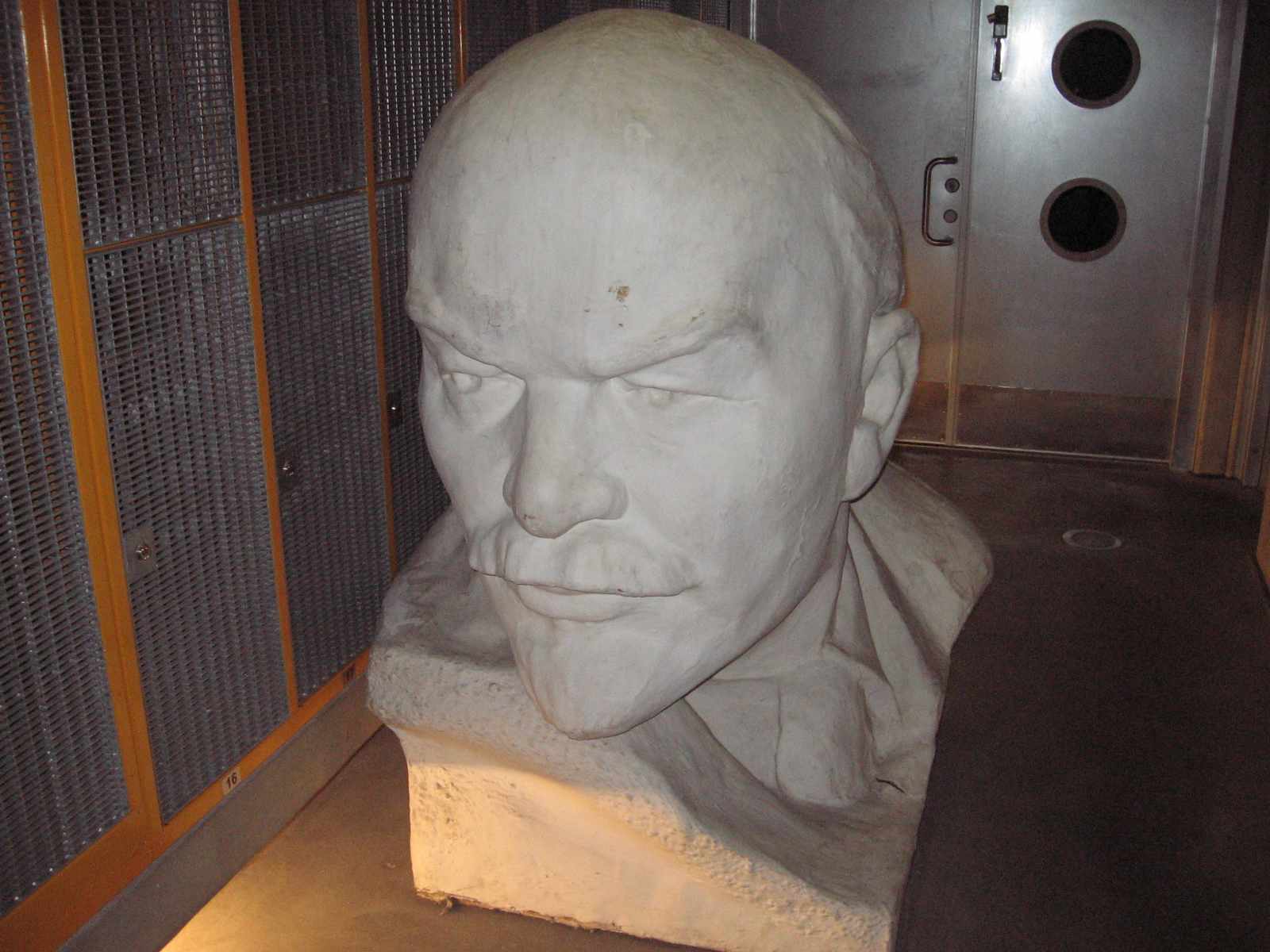
Estonia’s ‘Museum of Occupations‘ sits just outside Tallinn’s famous old town. It is a modern structure (opened in 2003); you enter through a courtyard cleverly enclosed beneath a glass-sheathed reading room and lecture hall. I was excited to visit the Museum a few weeks ago. Estonia had made international headlines for moving a memorial to Soviet soldiers in WWII (soldiers who expelled the Nazi occupiers of Estonia) from central Tallinn to a less visible cemetery outside the city. Riots erupted across the country for reasons I could not fully grasp at the time. When I visited in May I could still see broken glass in many storefronts. I hoped that the Museum would provide context for understanding the rioting.
In fact, throughout Tallinn, there are very few signs of the former Soviet Union. There is one Soviet era theater in the Old Town. But other than that one building, you might never know that Estonia had been a part of the Soviet Union for 50 years. In order to find the Soviet presence, you have to look underground — literally. Continue reading →
Would it be unfair to say that this image basically sums up the content of mainstream U.S. politics and culture since “9/11”? Where does this picture fit amidst arguments about the clash of civilizations, the politics of oil, the legality of torture, secularism, multiculturalism, or the exercise of sovereign power? Does the image of George W. Bush as a roided-out Uncle Sam basically iconize the post-millenial U.S. zeitgeist?
I have felt since 9/11 that the U.S. is best understood through the psychology manifested in this image, a psychology dominated by the fragile and wounded ego of a national subject understood as ‘white’ and ‘male.’ I see U.S. politics as dominated by the mentality of the grade school playground, where argument takes the form of “I know you are but what am I?” and the insecure bully goes around whopping on whimps because he is afraid that no one loves him. I see U.S. culture in the last several years as fundamentally authoritarian. It doesn’t take a professor of anthropology to argue that “9/11” has catalyzed a backlash against all that ails the modern white male ego. U.S. culture appears fundamentally motivated by a need to build up and defend the poor, damaged male self after decades of onslaught by the feminists and the gays, the intellectuals, the Europeans, the immigrants, whatever. Though the wound that motivated much of the defensive political posturing and putsches of the last several years resulted from the spectacular humiliation of “9/11,” the abject failure of the Iraq war as a demonstration of U.S. prowess has only deepened the cut. The prospects are frightening.
Countless moments in recent memory have contributed to my gut feeling that the whole U.S. thing can best be explained as a Tough Guy response to the sucker punch on 9/11, but none to me revealed the basic psychology underlying U.S. political ideology better than when Ann Coulter called U.S. presidential candidate John Edwards a fag. Continue reading →
Oneman was one of the first anthropology bloggers I found on the web, and the idea of working together with him was one of the major motivations for starting Savage Minds. His posts have also consistently been some of the most popular posts on Savage Minds. So it is with great sadness that we bid him adieu.
No one wants to slave away as an adjunct forever, and so I we are happy that Oneman has found a good paying job, although regular readers will be somewhat surprised that he would take employment with the Department of Homeland Security; but when Oneman explained it to us it made sense. After all, if anthropologists are going to be working closely with the intelligence community, it is important that someone who understands the ethical dilemmas associated with such collaboration be on hand to mediate between the two communities. Yet it is unfortunate that the sensitive nature of his new duties will make it impossible for Oneman to continue blogging.
It would simply require too much self-censorship, and probably even require him to submit his blog entries to his new bosses for approval. Oneman feels, and the rest of us at Savage Minds agree, that such government intervention in the content of our blog would fundamentally alter the open access climate we are attempting to promote here. With that in mind, we understand why Oneman wishes to withdrawal from our community, and we wish him the best of luck.
We know that some of our readers will not be so understanding, and will likely view Oneman’s career change as a betrayal; but before you shout “Judas” in the comments, please take a moment to reflect on Oneman’s many thoughtful posts on the topic and ask whether you would rather have our government working with the most gung-ho neo-imperialists in our discipline or with someone whose values better reflect your own?
Like many of the readers of Savage Minds I have been eagerly following the blogs at the “Anthropology of the Contemporary”:http://anthropos-lab.net/ laboratory. In these blogs Paul Rabinow, Nikolas Rose and others have been exploring ‘biopower’, or the unique form that modern disciplinary power takes on in today’s world, when the very biological aspect of life can be subject to what management and inspection. The result is what Agamben has called bios or “the bare life” of the subject stripped down to its biological essentials.
Some people consider this sort of theorizing to lack any sort of ‘applied’ dimension. And yet it is very important to note that Foucault himself wrote “I would like my books to be a kind of tool-box which others can rummage through to find a tool which they can use however they wish in their own area… I don’t write for an audience, I write for users, not readers.” For many young professors such as myself who are starting out writing their first book, there is much in this notion of the biopolitics of the bare life that can be useful.
The most important notion, for me, is the idea of the reproduction of the subject under the conditions of the bare life. Foucault insists in Discipline and Punish that power constitutes a subtle but thorough-going disciplining of the body. Similarly, the carceral self is regulated at all times by a system of discipline that describes in minute details its daily activities. The inmates of panoptical institutions, forever, had their daily schedule regimented down to every last quarter of an hour.
The importance of producing docile bodies cannot be missed by junior professors, who must put in fourteen and eighteen hour days. Control of the body is central at all times or else one may fall asleep or, dosed on enormous amounts of caffeine, find the body unable to concentrate on reading anthropology.
It is clearly this sort of scrupulous regimentation that academics could learn to profit from. Scrutinizing my own schedule, for instance, has revealed that I spend up to four hours a day ‘eating’ despite the fact that the act of nourishing the body itself takes mere minutes of my day. Preparing food also wastes time that could be spent reading or correcting papers and as Mauss pointedo ut long ago, eating in the presence of others (I think here of my wife ) involves talking with them — an act which builds social solidarity but wastes precious minutes. And of course because it is considered rude to speak with one’s mouth is full, one can only eat when The Other speaks.
Purchasing food and eating in private is also suboptimal. Walking office to the university cafeteria can take upwards of twenty minutes and of course during these moments one risks encountering other bodies that will attempt to engage you in discourse. Even the fastest prepared and easiest to handle food — the Taco Bell burrito supremes that Foucault so enjoyed during his time at Berkeley — are relatively expensive and filled with non-essential ingredients which fatten the body rather than discipline it.
For this reason I’d like to announce here on the blog my new experiment in anthropological optimization through biopolitical mastery of the self — I am going to give up food for the entire month of April in order to live the bare life for anthropology.
After careful consultation with Paul Rabinow and a dietician, it quickly became apparent to me that rigging up some sort of nutrient drip into my body to eliminate food altogether was untenable — not only would the machinery take time to manage, but the risk of infection was high, which would result in illness and lost study time. After some looking around I havedecided to start myself on a diet of “blue green algae pills”:http://www.klamathbluegreen.com/ supplemented by an occasional “protein shake”:http://www.naturesplus.com/products/productDetail.asp?criteria=search&searchVar=4573&productnumber=4573&category=25 to supply protein and vitamins. Since my goal is to remain totally immobile (to facilitate reading) hopefully I will need little nourishment. Also, after discussing this plan with my mother, he pointed out that I would get colon cancer if I had no fiber, I will also be taking some “psyllium husk pills”:http://www.greatestherbsonearth.com/nsp/psyllium_seed.htm.
I am eager to share the outcome of my experiment with the readers of this blog — as we all know the job market is extremely competitive. The archaic order of professordom is passing away and those of us who can find some way to be — as Rabinow put it — “modern” will have a definite advantage over those people who waste hours eating every day. As Foucault put, behind every meal “we must hear the distant roar of battle.”
Continuing themes raised in my previous post, I’d like to present another riddle of rationalization and reflect on its meaning and impact.
As part of the planning process for the building project in which I’m involved, I joined my colleagues in various fieldtrips to other institutions. In the course of those travels I saw and heard about many odd cases in which codes of various sorts, complicated by their local interpretation, had a significant role in shaping architectural decisions. The example that I wish to consider could have happened anywhere, so its precise location doesn’t matter. All you need to know is that the buildings in question are located at an American institution of higher education.
The institution built an addition that links two late 19th-century buildings. At the time of construction, local authorities said that only two of the four entrances on one side of the complex had to meet the accessibility standards of the Americans with Disabilities Act (ADA). Since the average distance between the entries is only slightly more than 50 feet, this seemed sensible. Adding two more large ramps would raise costs significantly and, more important, deface the historic buildings. (Although they are historic, they aren’t on the state or federal historic register, an issue I’ll get to in a second.)
A couple of years after the building was opened, though, the local code official, apparently under pressure from higher-ups elsewhere, reversed the earlier decision. Now all four doors either had to be made ADA-compliant or the two non-compliant ones had to be decommissioned as public entries.
The institution, like virtually all American colleges and universities, is committed to the letter and spirit of the ADA. But absent a budget for the addition of two substantial concrete ramps and a willingness to compromise the look of handsome old buildings, the institution removed exterior handles from the doors in question. Continue reading →
I’m grateful for Strong’s post calling attention to David Graeber’s recent Malinowski Lecture on bureaucracy and power. These issues have been much on my mind in recent months.
Some personal background: One of the challenges (and very occasionally, pleasures) of working at a small college is that faculty members are often given administrative tasks that transcend the usual chairing of departments and programs. Where I teach, most of the top administrative officers are working academics, a situation that sets a tone for the rest of the faculty. Since 1998, I have been involved in a large building project that by 2012 will have encompassed the construction of three major buildings–two faculty office buildings and a new college library–and the remaking of a core part of the campus. I share chairing duties with the College Librarian, but in reality my co-chair and I have little latitude to make key decisions. Most of the time, we herd cats and serve as institutional memory for a multi-million dollar project that, when completed, will have taken nearly 15 years from initial conceptualization to the ritual cutting of the last ribbon.
For an anthropologist, architecture and site-planning are a real-world test of social analysis–it is, as they say, where the rubber meets the road. Architecture on college and university campuses is inevitably a form of social engineering, with all the possibilities (and delusions) that this entails. But even the most laudable goals–e.g, “creating a lively environment that facilitates teaching and learning”–must be weighed against such factors as cost, aesthetics, building codes, and unknown but presumably radical changes in IT in the coming decades. Fortunately, we’ve been working with a team of gifted architects with considerable experience in how buildings and people interact.
So where’s the anthropology in this? To design and construct buildings today is to wrestle with all the contradictions of modernity–in particular, what is often called the “irrationality of rationality” as manifested in risk-management, “accountability,” “due diligence,” and bureaucratic proceduralism. Continue reading →
A striking development that has come out of the last decade’s concern with indigenous IPR and, more broadly, with the world’s mad scramble for rules of cultural ownership is the rise of global initiatives to identify and protect anything defined as “heritage.” UNESCO is the single biggest player here, but UNESCO discussions have spawned new bureaucracies in many parts of the world.
Some experts close to the process see this as a good thing. Their argument is largely a pragmatic one: at least the world is talking about this stuff and finally taking measures to protect heritage from IP piracy. If you want to get the general flavor of this, click here to read about South Korea’s current efforts to define and preserve whatever it defines as its cultural heritage.
Although I’ve met many people involved with heritage protection and generally find them smart and motivated by the best of intentions, I’m a heritage protection skeptic, which puts me in good company. For a bracing critique full of tart humor, check out David Lowenthal’s article “Heritage Wars,” published in a UK online magazine last year. Other recent contributions to the skeptic’s position include Rob Albro’s 2005 essay “Making Cultural Policy and Confounding Cultural Diversity,” as well as a recent essay by Dorothy Noyes called “The Judgment of Solomon: Global Protections for Tradition and the Problem of Community Ownership,” accessible here. Continue reading →
Human geography — and particularly Marxist human geographers such as the work of Harvey, Smith, and LeFevre — have developed the notion of ‘scale’ that have found their way into anthropological theory. Thus we have notions of scale making and scale jumping percolating into the works of Tsing, West, and so forth. These concepts have always seemed naggingly imprecise to me although it is difficult exactly to say why. I want to take a stab at explaining why here, even though I’m hardly an expert on this literature.
Scale, technically, is the representative fraction that indicates the relationship of a unit of distance on a map to a distance on earth — one inch to a mile, and so forth. ‘Issues’ of scale arise when geographers enter the realm of (as Neokantians might put it) problems selection and focus — what ‘scale’ is appropiate for a particular research topic? That of the country, the region, the city? Since geography is (almost by definition) catrographically inclined, issues of research focus and design are expressed in spatial terms.
This is all well and good, but when anthropology begins adopting these terms this spatial metaphor for problem selection — appropriate for cartographic endeavors — gets stretched to the point where it becomes a hinderance rather than a help. This is particularly true, I feel, in the case of the literature on globalization. Continue reading →
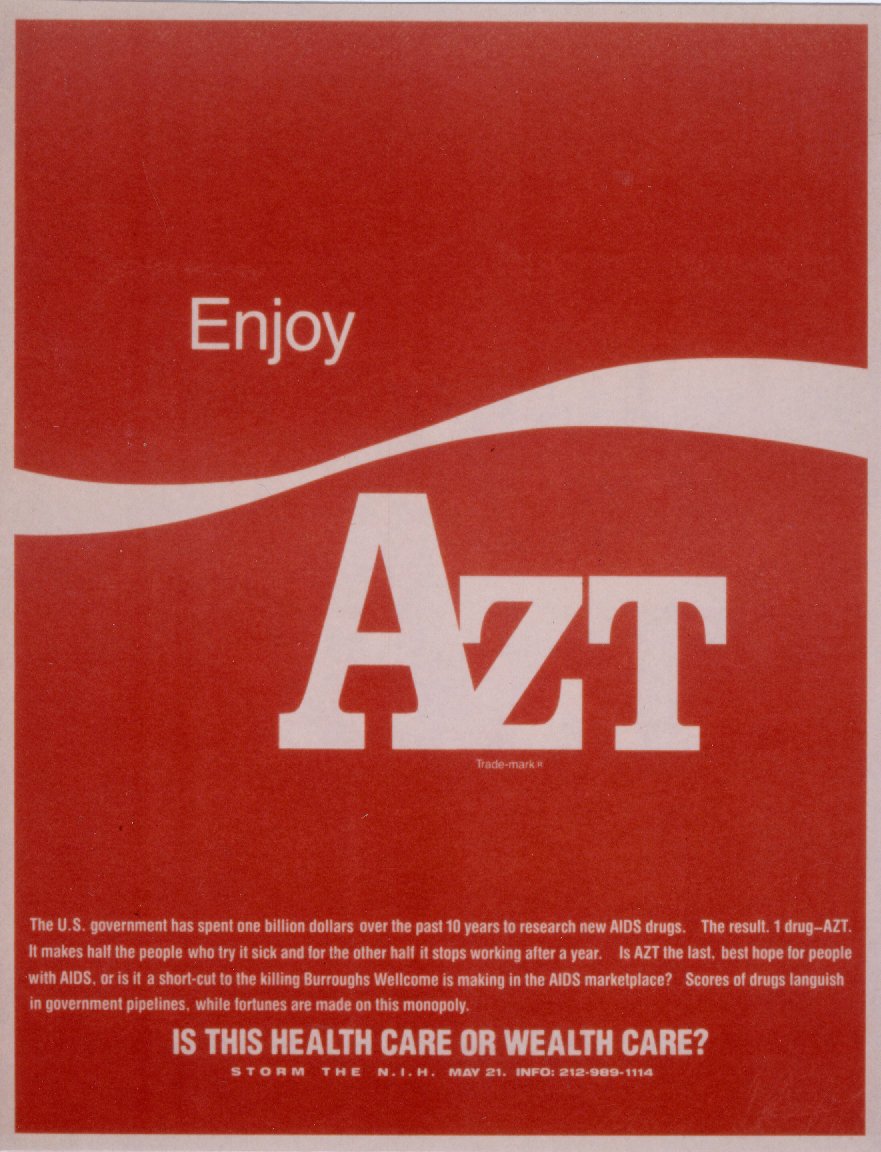
Earlier on Savage Minds, I asked about contemporary shifts in the symbolism and sociality of HIV/AIDS — a global epidemic. The question concerns me as someone who found himself along with other members of ACT UP, in the early mid-90s, in places like the parking lot of the Astrodome yelling at delegates to the Republican National Convention about funding for healthcare. It concerns me as someone who, in the late mid-90s, was employed as a professional ethnographer (!) tracking social knowledge related to sexual risk in San Francisco. These days, I am interested in the meaning of HIV and the ways in which that meaning is mediated and manifested specifically through what might be called technologies of public persuasion, whether they are relatively complex, such as social marketing campaigns (on the left above), or fairly simple, such as political protest posters (on the right).
A pointed exchange of sorts in the pages of Anthropology News last fall highlights the role that anthropologists are playing in ongoing efforts to respond to–and shape–the HIV/AIDS epidemic and its meaning today. An initial article (read: puff piece) lauded the research of Ted Green, who has worked closely with the Bush administration on its AIDS strategy. Green has embraced ‘risk elimination’ programs for HIV prevention — especially those that (according to Green) primarily prioritize abstinence and partner reduction over condom use and education. By his own account, this represents a paradigm shift in thinking on HIV prevention:
Green believes that the transformation of his maverick and unorthodox ideas into official US policy has been nothing short of groundbreaking.
The article works hard to place Green gingerly in between ‘fashionable academic anthropology’ and the conservative government he apparently works with quite closely, despite being a Democrat (we read of him on a private trip to Africa with CEOs of major pharmaceutical concerns and top Bush administration officials). Green sees Uganda’s famous ‘ABC’ approach as reflecting an ‘indigenous’ Ugandan response to AIDS, and apparently he emphasizes the need for HIV/AIDS agencies to take into account local perspective(s). His political party affiliation notwithstanding, Green’s research is embraced by the right wing of the political spectrum.
Douglas Feldman and Tom Boellstorff each published sharp letters in response to the AN piece. Continue reading →
I’m happy to report some good news regarding a post from over a year ago, when I noted that the Bushmen were being expelled from the Kalahari Game Reserve. This week the Botswana High Court ruled that they could go home. Unfortunately, the government is being very obstinate in its implementation of the ruling:
In a statement Thursday, however, Attorney General Athaliah Molokomme laid down conditions for the government’s implementation of the court order.
“The Central Kalahari Game Reserve remains state land,” Molokomme’s statement said. “It is owned by the state and subject to the laws of the republic.”
Only 189 people who filed the lawsuit would be given automatic right of return with their children, Molokomme said, far short of the 2,000 bushmen who say they want to go home. Anyone else would have to apply for permits.
Returning bushmen may take building materials into the reserve but only “for constructing non-permanent structures,” the statement said.
Those returning can use enough water for “subsistence needs,” Molokomme said. However, park authorities can restrict the amount of water to what is “reasonably required.”
This is likely to be a major obstacle to settlers because the government shut the main well in 2002, and water is scarce in the Kalahari.
Under the government’s rules the bushmen cannot bring domestic animals into the park. Anyone who wants to hunt — a central activity in hunter-gatherer societies — must apply for permits.
We’ve had a lot of discussion here about the relationship between anthropology and the war-on-terror (mostly by Oneman: see here, here, here, and here). I think a lot of the discussion misses the mark. Aside from important issues about how such work would affect the ability of anthropologists to do their work in the first place, the issue that really concerns me is whether or not the context exists in which anthropological knowledge could matter to government agencies?
The Washington Post recently ran an article in which they quoted FBI officials to the effect that they didn’t need to have top level operatives with knowledge of Arabic in order to effectively do their job:
In a recent deposition filed in an employee lawsuit, a senior FBI official testified that the bureau’s two International Terrorism Operations Sections (ITOS) do not require any agents to know Arabic, even though the sections coordinate all foreign terrorism investigations. Only four agents in ITOS have any familiarity with Arabic, and none of them are ranked above elementary proficiency, documents show.
And just this week the New York Times ran an editorial about how few leading officials in the war-on-terror are unable to articulate the most basic differences between Sunnis and Shiites:
But so far, most American officials I’ve interviewed don’t have a clue. That includes not just intelligence and law enforcement officials, but also members of Congress who have important roles overseeing our spy agencies. How can they do their jobs without knowing the basics?
If it could be done without hurting the trust necessary between anthropologists and their informants/collaborators (an admittedly big “if”), I don’t really have anything against anthropologists working for the government; however, I’m very skeptical about the ability of government to make use of anthropological knowledge. I don’t think this is because these officials are stupid, many are quite sharp, but because they work in an administrative culture in which knowledge about the rest of the world simply doesn’t matter.

 Would it be unfair to say that this image basically sums up the content of mainstream U.S. politics and culture since “9/11”? Where does this picture fit amidst arguments about the clash of civilizations, the politics of oil, the legality of torture, secularism, multiculturalism, or the exercise of sovereign power? Does the image of George W. Bush as a roided-out Uncle Sam basically iconize the post-millenial U.S. zeitgeist?