Category Archives: Blog post

Anthropology outside Anthropology, Part 1

“I’m an anthropologist by training and I work as a medical interpreter.” When I tell this to people from anthropology backgrounds, I often receive sympathetic groans from them, as if I fell out of anthropology heaven, wasting my graduate training. It certainly felt that way when I left academic anthropology. However, my medical interpreter job proved me wrong.

To be honest, I wasn’t entirely thrilled about this job when the offer came to me at first. Having read numerous scholarly critiques of biomedical institutions during my studies in medical anthropology, I felt that I would be engulfed by biomedicine and end up working on the “wrong side” of the powerful (biomedicine)-powerless (patients) equation.

Anyone who has studied medical anthropology should be familiar with the canonical work in critical assessments of biomedicine (or Western medicine) by Arthur Kleinman, Byron Good, Margaret Lock, etc (for practical advice on working within biomedicine, see Kleiman’s essay “Anthropology in Clinic”). They warn us of the authoritative power of biomedical knowledge, which is so extensive that it permeates as legitimate cultural norms, values, and morals through our everyday lives. Specifically relating to my current job, some scholars caution about the negative consequences of medical interpreters in patients’ health outcomes: the interpreter as information gatekeeper and provider proxy (Hsieh and Kramer 2012), the interpreter as a covert co-diagnostician and institutional gatekeeper (Davidson 2001), and the interpreter as an ineffective mediator for meaningful clinical communications (Leanza, Bolvin, and Rosenberg 2010).

Despite my skepticism, the medical interpreter job hasn’t bulldozed over my principles as an anthropologist. And I credit this positive result to the medical interpreter certification program, as well as my training in anthropology. The interpreter training was carefully crafted to encourage prospective interpreters to learn how to focus strictly on being communication conduits between providers and patients, while also developing the ability to assess when to become a patient’s advocate. The instructor of this training program made us practice juggling these roles in various hypothetical scenarios over and over again.

Being detail-oriented, which I acquired from my ethnographic research as a part of the training in anthropology, helps me fulfill these medical interpreter roles as well. We interpreters are the eyes and ears of these complex medical situations, vigilantly attending to facial expressions of the provider and the patient and any words and sounds uttered by them. What our eyes and ears catch is instant data, so to speak, in order for us to identify miscommunications, distrusts, and disagreements between both sides of the equation. In this way, we can quickly step out of the communication conduit role and jump back in to help attenuate conflicts and tensions.

One unexpected benefit from my training in anthropology came to light through writing up mandatory post-appointment reports. My interpreter agency often commends me for my meticulous reports. Writing these reports certainly brings back some of the memories from my ethnographic research – Flashback: I’m sitting in my car at a gas station a couple of blocks away from one of my research sites and madly scribbling down every little detail I saw and heard during a long event where I just did participant-observation. I can later type this all up into a coherent story as a part of research data that will be coded and analyzed after the completion of the research.

Sure, writing post-appointment reports isn’t as complicated as typing up fieldnotes. But all of the words I jot down while interpreting my clients become something like the notes I took during my participant-observation, as I type them up into a post-appointment report – sometimes on my phone as soon as I get back to my car in the hospital parking lot. I honestly would have never thought that ethnographic research skills would be useful at a job outside anthropology.

To see Part 2, click here.

Journey between Two Languages

This entry is part 12 of 20 in the Decolonizing Anthropology series.

By Asmeret Ghebreigziabiher Mehari

As a non-native learner and speaker of Amharic, English, and Swahili, I have taken several journeys between these languages and my mother tongue, Tigrinya. Considering geopolitical domination and subordination, the passages between Amharic and Tigrinya or Swahili and Tigrinya are fewer than between English and Tigrinya. However, all crossings have similar purposes: to improve my comprehension, speaking, reading, and writing skills of these languages. In writing this post, I have taken a journey that merges Tigrinya and English in the service of two critical questions: 1) what role would a journey between two languages play in the process of thinking and writing about decolonizing archaeology?  2) What would the traveler feel and experience?

This journey took a few days to begin answering these two questions, but the first two days make the foundation of this and any future journeys.

Continue reading

Ramadan Diaries: Week Three

[Note: Ramadan is long over, but due to some technical difficulties, our weekly entries were interrupted. With this entry on not fasting during Ramadan, we pick up where we left off.] 

Ramadan Diaries takes you into the Ramadan experience of two students of anthropology at Washington University in St. Louis, Oguz Alyanak and Dick Powis. They will be fasting amongst Muslims in two Francophone contexts, Strasbourg, France and Dakar, Senegal, respectively. By sharing brief notes on the fasting experience, the aim is to provide a reflexive account of participant observation as it is undertaken by two scholars with distinct backgrounds and field sites. This is the fourth entry in the series, you can read the Introduction, Week One, and Week Two here. 

Oguz Alyanak: Last week, I took the overnight bus from Strasbourg to Paris to attend a two-day conference. The six-hour bus trip, on Wednesday (to Paris) and Friday (back to Strasbourg), started at midnight. I boarded the bus less than two hours after breaking fast, and skipped my last meal of the day (sahur) because I fell asleep during both legs of the trip. So far, fasting has not been physically demanding. However, I was not sure whether my body would handle it while attending a conference tired and sleep-deprived. Hence, for the first time, I thought about skipping. The idea led me to think of my Ramadan experience, and particularly of its purpose, and what I made of it as part of my fieldwork. Continue reading

Fractal Kinship: Europe 2016

Political conflict can create deep turmoil within families. Marina lost her only son to fighting in eastern Ukraine. He died while fighting in a Ukrainian airborne division that was attempting to regain territory lost to separatists. The magnitude of this loss becomes more palpable if we consider Marina’s family as a whole: her mother had welcomed the separatists and supported them in their fight. Her sister was politically active and took a leadership position in one of the breakaway republics. So as Marina sees it, her mother and sister helped facilitate the death of her only son.

The EU referendum results have also thrown families into upheaval. The title of a recent article sums it up well “I can barely even look at my parents.” In the aftermath of Britain’s vote to leave the EU, a generation gap between the millennials and the older generation has widened. Young people report having heated arguments with their parents, being hung up on, and even being told to leave Great Britain if it is so wonderful in the EU. A primary issue is that the younger generation has been planning for a future that as a result of the vote to exit the EU, is out of reach. One man summed up his feelings toward his parents by saying “I feel betrayed.” https://www.theguardian.com/lifeandstyle/2016/jun/27/brexit-family-rifts-parents-referendum-conflict-betrayal

Photo of maternity ward in Donbas by Olexandr Danylov

Betrayal. It is a commonly used word within families affected by the war in the Donbas region of eastern Ukraine as well. I am calling this phenomenon, that seems to be a part of conflict in many places and times, fractal kinship. A fractal is a natural phenomenon or a mathematical set that exhibits a repeating pattern that displays at every scale. Fractals are useful in modeling structures like coastlines and snowflakes, in which similar structures recur at progressively smaller scales.

There are other pertinent examples of fractal kinship in more distant history. Abraham Lincoln warned in 1858 that a “house divided against itself cannot stand.” This notion became part of the American political vocabulary. The American Civil War pitted brother against brother and father against son. As Taylor (2005) points out, the division of families in the Civil War shattered expectations and beliefs about the meaning of family at the time, prompting people to step back and think. Continue reading

Teaching Decolonizing Methodologies

This entry is part 11 of 20 in the Decolonizing Anthropology series.

By Paige West

For about a decade I have been teaching a graduate seminar in anthropology at Columbia University called “Decolonizing Methodology” which takes Linda Tuhiwai Smith’s groundbreaking book Decolonizing Methodologies: Research and Indigenous Peoples as its starting point and also draws on other key texts focused on research methodologies specifically (Denzin et. al. 2008; Kovach 2010). In the course we tend to start with Smith’s work and then use her careful analysis to guide us in taking apart the various traditional methodologies that anthropologists tend to rely on in their research and the various theoretical frames that are of-the-moment within the field. This means that the course moves back and forth between “decolonizing methodology” and “decolonizing theory”.

Continue reading

Situational Awareness

This morning I was taking notes on my laptop as an officer from the NYPD counter terrorism department’s SHIELD unit gave a room full of academic staff ‘active shooter’ training. As the first video was rolling, he walked over and stood behind me to see what I was typing and almost inaudibly asked the young man from IT who was sitting behind me what I was up to. “She’s taking notes,” he whispered back, loud enough for me to hear. My first instinct was to think that maybe buying a bright red laptop was a bad idea, followed quickly by a wish that I had had enough time before the session to run to my office to drop off my stuff and pick up a notebook. My heart was pounding loudly; this person had taken over my safe space rendering it anxious and forced my body to feel defensive when all I had been doing was taking notes. I did not flinch or acknowledge his existence as he paced around me. Even though I like to pretend it does not matter, I know that it was not the red laptop that was the trigger for his suspicion, but rather my hijab. I watched the screen as Derrick O’Dell told us what he did in 2007 during the Virginia Tech mass shooting. I thought of the many students I taught. I thought of the kids in the neighborhood schools. I thought of my young daughter. I thought about what I could do to make it past an ‘active shooter’, and I realized I would have to have a second plan in place as well: how to make it past law enforcement without them thinking it was me.

Continue reading

The Museum of Corruption

During the Revolution of Dignity in Ukraine, protestors streamed into the residence of former President Yanukovich at Mezhyhirya reclaimed it. The hat thief who became Head of State is charged with squandering billions of dollars during his years as President. Ukrainians are still asking how to repair the political culture that made it possible to elect this man.

The Yanukovich estate has been turned into a “Museum of Corruption.” Vans with the “Museum of Corruption” placards fill with passengers on the outskirts of Kyiv about every twenty minutes and careen to the estate where visitors can gawk and repent. Like the Museum of Terror in Budapest that explores fascist and communist terror in Hungary, Yanukovich’s estate exposes the idiocies of modern leadership through bizarre inversions. This is a place where animals lived better than many Ukrainians. Museums of corruption may become a thing of the future: one opened in Thailand in June 2015.

http://www.channelnewsasia.com/news/asiapacific/thailand-launches-museum/2136102.html.

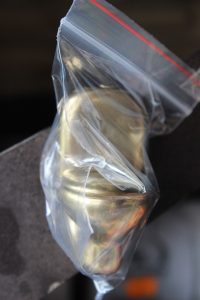
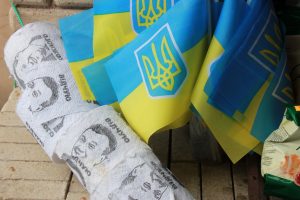
Tourists can leave Ukraine’s Museum of Corruption with souvenirs like refrigerator magnets in the shape of a golden toilet (Yankovich reportedly had golden toilet fixtures) or toilet paper printed with the face of the latest political bad boy.

IMG_1158 IMG_1153

A paradoxical layer here is the humanitarian purpose his estate now serves. People who have been displaced by the war in eastern Ukraine and the occupation of Crimea were granted permission to live here. Yes. This is a good thing, sort of. Continue reading

Around the Web Digest- Black Lives Matter

Hello everyone.

I woke up this morning feeling heavy with sadness. Alton Sterling was killed by police in Baton Rouge, Louisiana. A day after Philando Castile was murdered in Falcon Heights, Minnesota by the police. Social media has become a never ending stream of images and text that position black bodies as a moral panic, an echo chamber of violence. The debates over the structures of racism and the police have reached a national arena; we as anthropologists can no longer stand silent.

Instead of a normal Around the Web Digest, I offer readings by anthropologists and critics about the role of the field in dismantling structures of oppression.

Cultural Anthropology offers many readings from a variety of scholars on the intersectionality of Black life in America. Pieces on the experiences of living in constant violence from the state, survival strategies, gendered aspects of policing, international perspectives, and the role of systemic economic disenfranchisement.

Anthropod interviews Yarimar Bonilla, Laurence Ralph, and Mark Auslander on their views of recent #Blacklivesmatter protests.

Shay Akil on Decolonize All The Things criticizes anthropology on it complacency on anti-blackness in academia. Our research and theory will do nothing if it is not translated into practice.

In 2014, we witnessed anthropology face new crossroads in how we contribute to everyday life with coalitions being built across Gaza and Ferguson. I wonder where our discipline stands today with state violence still encroaching in marginalized communities and counter-movements against Black Lives Matter movements.

Here are some earlier resources for teaching from American Ethnologist  about Black Lives Matter protests. (Here) (Here)

Savage Minds has written extensively on the role of racism and anthropology. I compile a list here to better read through.

Not only do anthropologists research these communities, I believe we have the moral responsibility to practice informed activism for these communities in order to heal.

I will return next week with a regularly scheduled digest.

Peace and Love,

Eddie

Reclaiming Detroit: Decolonizing Archaeology in the Postindustrial City

This entry is part 10 of 20 in the Decolonizing Anthropology series.

By Krysta Ryzewski

Detroit moves quickly; issues of scale and pace in a city of this size pose major challenge to contemporary archaeological practice. I’m not sure what a decolonizing archaeology should look like here, but it’s happening nonetheless. It is grassroots. It connects with communities. It shares the skills we have as social scientists with people, places, and collections. The goals are simple – to tell stories that matter, to empower memory, to increase participation, and, hopefully, to spur action against destructive forces of erasure and exclusion. We don’t have the luxury of time and protracted theoretical deliberation on our side; this work is done in a climate of rapid late capitalist development and privatization, where most of places we encounter are at the mercy of irreversible decay from ruination or demolition by developers.
Continue reading

Around the Web Digest- June 19

Hi everyone! I hope you are enjoying your Tuesday, maybe still recovering from Pride weekend? I have some light readings for the week to aid in your recovery.

The need for queer anthropology only grows in the shadow of Orlando and growing political discourses on queer people around the world. Tamar Shirinian illustrates the intimate relationship between the nation-state and the lives of queer people.

Stem cells still fascinate biologists for their vast potential in medicine and learning about human development. However, stem cell tourism that promises miracle cures across the world is emerging. An emerging issue among medical anthropologists who study medical tourism.

The EU is in peril as the Brexit situation looks more and more uncertain. Simon Roberts reflects on the importance of anthropology in perilous times and the value of ethnography in public policy.

Surfing as metaphor for ethnographic practice. David Whyte offers parallels between the embodied knowledge of surfing in constantly changing environments to the shifting cultural landscapes within ethnographic field work.

Do you want to mix it up a little bit in the fall when teaching classes? Food Anthropology suggests cooking a meal in the tradition of experiential learning?

Sleep vs. Nap vs. Inemuri. When regular sleep patterns are a virtue; why is sleeping in public so prevalent in Japan?

If you are not familiar with the work of Paul Stoller (earlier announced as an inaugural member of the Public Anthropology Institute), here is a video that illustrates the foundational work of Dr. Stoller.

If you have any article that you recommend, please share them with me at smechong@gmail.com

See you next Week!

Introducing the Public Anthropology Institute

This entry is part 9 of 20 in the Decolonizing Anthropology series.

By: Faye V. Harrison, Carole McGranahan, Matilda Ostow, Melissa Rosario, Paul Stoller, Gina Athena Ulysse and Maria Vesperi

The massacre in Orlando was just two days before we sat together around a seminar table in an idyllic New England college town. A massacre of forty-nine people out dancing, celebrating life in a gay nightclub called Pulse. They were mostly young, queer, and Latinx. Gone. Already stories had turned to focus on the killer’s motivations. Was this primarily homophobic homegrown terrorism or the machinations of the Islamic State? We were meeting at Wesleyan University in Connecticut to discuss the creation of the Public Anthropology Institute (PAI) and contemplate ways to use our scholarly knowledge of cultural difference for greater service globally. Given the disheartening public debate in this moment reminiscent of Dickens’ best and worst of times, we were convinced that this work is necessary in the face of such violence and hate.

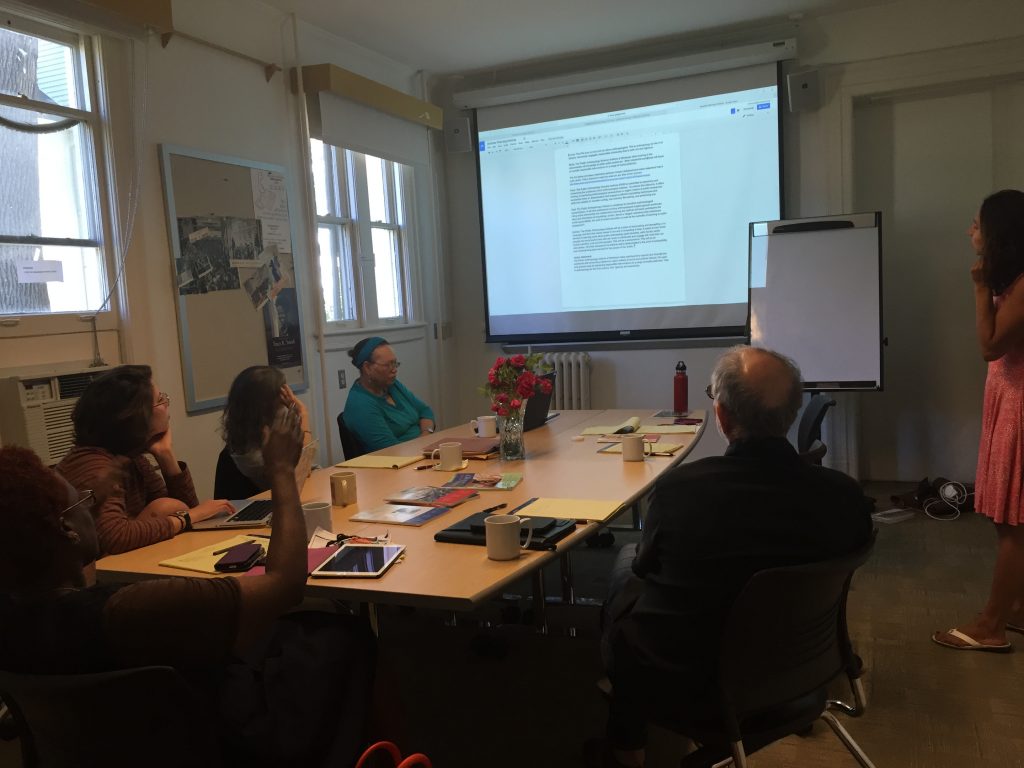
Creating PAI at Wesleyan University, June 2016

For too long anthropologists have retreated into the minutia of arcane disciplinary debate even when our knowledge can make a difference. It can be intellectually stimulating and important to turn inward, but conversations among ourselves cannot be the only ones we have. We also need to create work with a larger impact and a longer reach. As scholars who have studied across the global south and thought deeply about geopolitics, poverty, social and economic inequality, racism, homophobia, sexism and climate change, we believe it is time to reconnect with the obligation to produce knowledge that makes the world a better place. As the stakes get higher, anthropological perspectives can make critical, unexpected connections and offer direction beyond the logic of dominant assumptions. Continue reading

The Anthro/Zine strikes back!

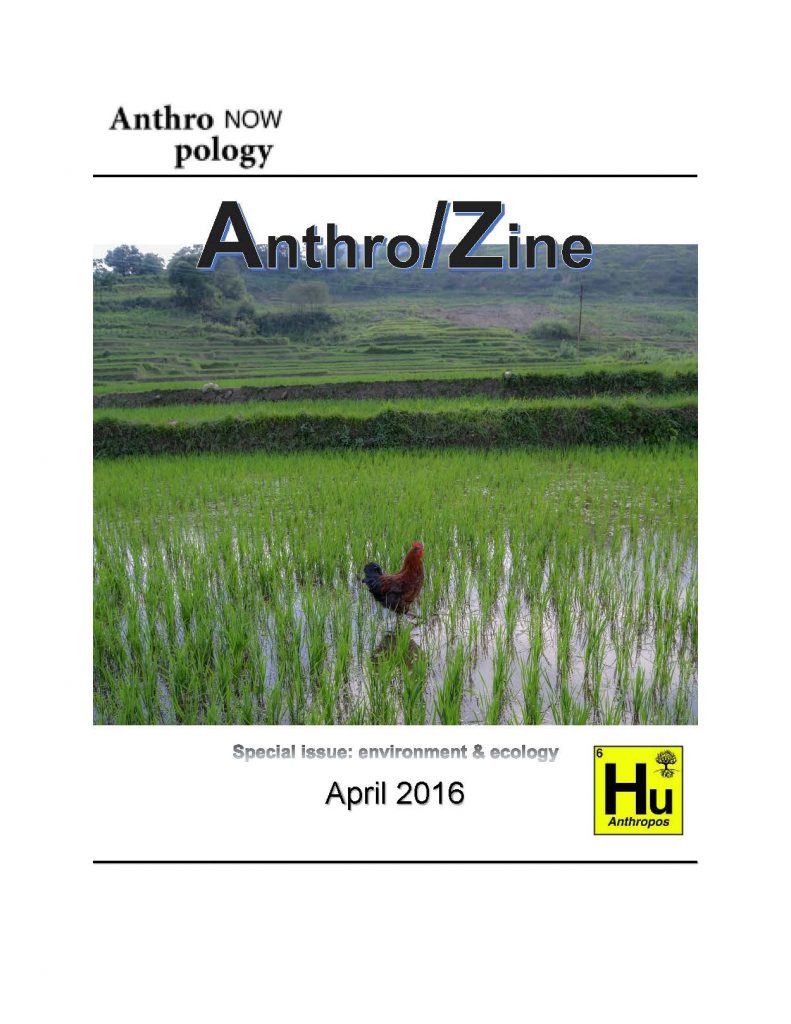
Anthro/Zine, a venue for undergraduate publication from the team behind Anthropology Now, has entered its second year of publication. The premise behind the project is to provide a space for college students to reflect on how anthropology, in all its myriad forms, has touched their lives. As editor I have been completely blown away by the quality and creativity of our submissions which have included not only essay, but also art, poetry, photography, fiction, and what I call “briefs” — very short pieces. There are now four issues, open access and CC-BY, available at the link above. Check out our latest issue below!

Anthro/Zine publishes April, September, and December coinciding with each new issue of Anthropology Now. If you are a student or recent college graduate and would like to make a submission of some sort that is relevant to anthropology then we would like very much to see what you have to offer. We are most interested in seeing work that is creative, personal, and short. Original research is welcome but we do not publish term papers. Do not submit to us what you have given your professor, your peers are your audience here. Reflect on what you have already accomplished and tell us about your experience of encountering anthropology.

A/Z is not a venue for graduate students, however it is appropriate for grads to submit their work directly to Anthropology Now, please see their guidelines here.

Students or faculty with questions can reach me at mthompson@marinersmuseum.org, if you would like your work considered for the September issue than make your submission by August 1.

Click on the cover or the hyperlink below to download a pdf of our latest issue:

~~~~~~~~~~~~~~~~~~~~~~~~~~~~~~~~~~~~~~~~~~~~~~~~~~~~~~~~~~~~~

Anthro/Zine | April 2016Anthro/Zine | April 2016

Continue reading

Vale Edith Turner

Edith Turner — Edie as she was universally known — passed away on 18 June 2016. Perhaps the quickest and least accurate way to describe Edie is “Victor Turner’s wife”. But her importance in anthropology is pretty much totally erased by that description. Edie was a tremendous influence on Vic, and all of his work should be read with the recognition that there is a silent second author on the piece: Edie. But even reducing Edie to merely a co-author of some of the most important anthropology ever written doesn’t do her justice. Edie outlived Vic by 33 years, producing her own brand of anthropology with flair and originality. Edie produced around five books between Vic’s death and her passing — that is to say, after she was sixty-two years old, an age when most people are on the verge of retirement! In them, she crafted an audacious, unapologetic anthropology of religion that parted ways with secularism, science, and over-seriousness… and never looked back.

Continue reading

Participant Observation and PTSD

One of an ethnographer’s most important instruments is his or her body. What has been called an “affective turn” in the social sciences has entailed thinking of the body as more than a set of significations in the performance of an identity. Writing in anthropology along these lines has provided a refreshing appreciation of how discursive approaches do not adequately capture the body that lives, moves, and senses. “From a phenomenological perspective, the living body is considered the existential null point from which our various engagements with the world—whether social, eventful, or physical—are transacted.” 1

Doing fieldwork with people displaced within Ukraine this summer has taught me a lot in this regard. When I most fully appreciated this was last night. I noticed as I was going to sleep that it was raining. Then, as I was dozing off, I heard what I thought was bombing. Gunfire. Then car alarms in my neighborhood began going off.

With my heart pounding, I leapt out of bed, and started to climb under it. Then I thought better of that idea, threw on my clothes, and grabbed my wallet and passport with the thought that I do not want to die in pile of rubble here and now. I ran around the room in circles a few times thinking about what else to take before deciding my belongings were, at that moment in time, irrelevant. Then, as I was breathing rapidly and turning the key in the lock, I stopped to think about what I was hearing. Continue reading

Ramadan Diaries: Week Two

Ramadan Diaries takes you into the Ramadan experience of two students of anthropology at Washington University in St. Louis, Oguz Alyanak and Dick Powis. They will be fasting amongst Muslims in two Francophone contexts, Strasbourg, France and Dakar, Senegal, respectively. By sharing brief notes on the fasting experience, the aim is to provide a reflexive account of participant observation as it is undertaken by two scholars with distinct backgrounds and field sites. This is the third entry in the series, you can read the Introduction here and Week One here.

Oguz Alyanak: On Ramadan Diet: A Vegetarian’s Perspective

Without a doubt, one of the challenges of doing fieldwork is dietary. While some may be open to dietary change, and willing to experience new dishes, others, like myself, may be less inclined in giving up on dietary restrictions. Continue reading