In the face of highly productive biological anthropologists, as well as the blog Somatosphere, I think I managed to curate a pretty well-rounded Around the Web Digest for this week. If you have a blog post or article that you would like mentioned next week, shoot it to me at richard.powis@gmail.com or on Twitter. Of course, if this were any other blog, my first link would say, “Hey, go check out Savage Minds’ new design!” but alas, you’re already here. What I bet you didn’t know is: The whole site is back up, archives and all. I mean, look at this gem that I found from 2005! (Gawd, I wasn’t even a twinkle in my advisor’s eye.) Continue reading
Attention Former Savage Minds Bloggers and Guest Bloggers!
Since 2005 over a hundred and thirty sixty people have blogged on Savage Minds. (And another 44 have written “invited posts.”) We have email addresses for most of them, but not all, and some people may have changed their email address, so the easiest way I know to reach everyone is by posting this here. Hopefully they still read the site! (Everyone else feel free to ignore this post.)
Ghosts, Wolves, and Distractions: Student Debt and the Development Anthropologist
This is an invited post by Douglas La Rose for the Anthropologies Student Debt Issue (#20). Douglas is a graduate of San Diego State University’s Applied Anthropology M.A program. He is an applied environmental anthropologist who has been living and working in rural Africa since 2005. He worked as a consultant for both the United Nations Development Program and the African Adaptation Program, and also established his own agroforestry project in Ghana in 2011. Currently, he works for Nuru International Ethiopia as an agriculture program specialist in the Southern Nations, Nationalities, and Peoples’ Region of Ethiopia. His writing on Nuru Ethiopia’s agriculture program can be found here.
In order to make a real difference, you have to go deeply into “debt.” You have to take out a massive personal capacity-building loan to prepare yourself for the rugged terrain that is the world of international “development.” If you carry the heavier cross of wanting to entertain post-development notions – of deconstructing the way the North interacts with, represents, and perceives the South while “practicing” development – you must also drag along its corollary baggage: being a naysayer in an industry of entrenched professionals and experts. If you have had the misfortune of being trained beyond the capacity that is desired of a development professional – a reflexive applied anthropologist always willing to intervene with a “now, wait a second” – then you suddenly become less an asset than a perceived enemy or an implant.
In this academy-abandoned landscape of moving forward with a kind of loosely defined and intensively critical development philosophy, the very contours and nature of debt become something like a ghost. Debt becomes something that is difficult to believe in as a real entity. It is negative capital that must be plodded through to realize a sense of personal freedom. But at the same time it exists in a realm of voices, letters, phone calls, and news articles. One is constantly reminded of it – even distracted by it – but as it howls it is difficult to feel the substance of its howl. The wolves at the door appear to be more holograms than threats. Why throw your livelihood to these beasts when you have a child to feed? Why acknowledge their scratchings when your real task at hand is to co-create an agriculture program in Ethiopia or bring attention to indigenous adaptations to climate change in marginalized areas of Ghana? The ghost of debt becomes something like a joke. The voices, the letters, the phone calls, the news stories, the “bubble” – all of it collapses under the immensity of its absurdity. Of course, this is all wrong and unpatriotic. Right? Continue reading
Week 6: Savage Minds Writing Group Check-in
What is your process? How to get your creative juices flowing…and keep them flowing? This week’s Writers’ Workshop guest author Kristen Ghodsee gave us a sneak peek into her writing process in My Ten Steps for Writing a Book, confiding that she had not even been fully aware of it until she sat down to consciously think it out. After six weeks of purposeful writing as part of this writing group, what new practices have you added to your process? What is helping you get where you want to be in the writing?
Four more weeks to go, so this might also be a good time to not only check-in on last week, but also assess your goals for the remainder of the writing group, and also tune in on Monday for our next Writers’ Workshop post, this time from Zoe Crossland, professor of archaeology at Columbia University.
Finally, if you missed it, there is still time to add strength to your writing support network—create an Anthropology Zombie Apocalypse Team! I made mine yesterday and got Sam Beckett, Kurt Vonnegut, and Franz Boas. This week I’m going to see if I can’t channel some Kurt Vonnegut in my writing. This could be interesting….
Can anthropology save you from the zombie apocolypse?
Everybody knows you can defeat real zombies with salt, but which anthropologists would you want by your side in mankind’s final stand against the Evil Dead?
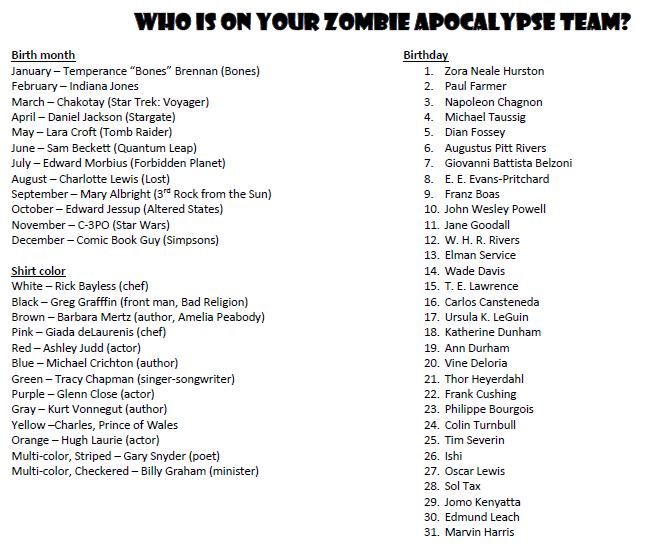
Did you survive?
anthropology + design: anne galloway.
[This post is part of a two-week series featuring interviews with designers reflecting on anthropology and design.]
ANNE GALLOWAY. designer. ethnographer. archaeologist.
ANTHROPOLOGY + DESIGN.
My sense of anthropology is very materialist so I think it made a lot of sense for me to gravitate towards design. I originally trained as an archaeologist and did ethnographic fieldwork on Andean textile production, so I’ve always been interested in the things that people make. Of course, as anthropologists we’re taught the importance of context and I think that bringing anthropology and design together really stresses contextual meanings. For me, the most interesting connection between anthropology and design can be found in how each practice enhances the other. Anthropology provides a kind of thick description that contextualises design processes and products, and design offers anthropology creative means of exploring and representing what it means to be human. I also enjoy the explicit combination of thinking, doing, and making—of blurring boundaries between analytical and creative practice, between rational and emotional experience.
Sometimes, in design, we talk about research about, for, and through design—and I think that anthropology is well suited to contribute to each endeavour. As we know, ethnography (including material, visual, and discursive culture) can tell us a lot about the roles of design in everyday life. Ethnography also provides us with valuable information that can be used to design “better” things—or to design nothing at all. And although research through design is perhaps less obviously related to anthropology, I think that every kind of anthropological research could create and employ objects and images with as much nuance as we’ve come to use words.
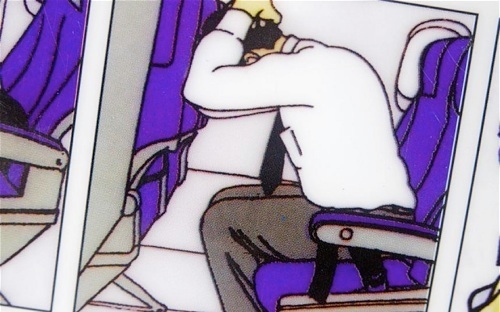
Assume the Crash Position
As I mentioned at the beginning of the month, we are getting ready for some big changes around here. To ensure that everything goes smoothly, we will be taking the site offline sometime on Friday evening (Eastern Standard Time). If all goes well, the site should be back up early Saturday morning with the new layout and the restored archives in place. I’ll keep this post active as a place for you to post your reactions (good or bad) to the new site, as well as for catching any bugs in the code.
UPDATE: Welcome to the new/old site! It is new because we have a fresh new look, and it is old because all our archives going back to 2005 have been restored. We are still working on ironing out a few things here and there, so please let us know if anything is broken, not working, or not to your liking. And if you like the new site, please don’t hold back from sharing your praise!
Why my book is not open access
The short answer is: I was tired.
My Ten Steps for Writing a Book
(Savage Minds is pleased to run this essay by guest author Kristen Ghodsee. Kristen is Director and the John S. Osterweis Professor of Gender and Women’s Studies at Bowdoin College. Her prize-winning books include: The Red Riviera: Gender, Tourism and Postsocialism on the Black Sea (Duke University Press, 2005), Muslim Lives in Eastern Europe: Gender, Ethnicity and the Transformation of Islam in Postsocialist Bulgaria (Princeton University Press 2010), Lost in Transition: Ethnographies of Everyday Life After Communism (Duke University Press, 2011), and Professor Mommy: Finding Work/Family Balance in Academia (Rowman & Littlefield, 2011). Her fifth book, The Left Side of History, is forthcoming with Duke University Press in 2015. She blogs about ethnographic writing at Literary Ethnography.)
When Carole McGranahan asked me to blog for the Savage Minds writing group, I wasn’t sure what I was going to write about. I’d recently finished my fifth book, and was in the early stages of a sixth manuscript, so it seemed like I should have something to say about how to get a big project done.
But I never realized I had a process until this morning. To get the creative juices flowing, I sketched out a flow chart of how I tackle a project from start to finish. The chart surprised me. My quirks and old habits turned out to be a defined system, one that I have implemented for each of my books without even knowing it.
Welcome Dick and Angela!
Dick’s beat me to the punch — please join me in welcoming Dick Powis and Angela Chen as our new interns! Dick will be writing up our weekly roundups and Angela will be helping me with comments moderation.
When we put out a call for comment moderators, we expected a half-dozen entries. Instead we got two dozen — all great applicants, from many walks of life. In the end, reading all the apps and doing video interviews with the shortlist ate up so much of our (my) time that we ended up giving the top two people positions in the blog, rather than run a separate and equally time-consuming search for a second position. Apologies to people who were waiting for that second position to be advertised — we just had a choice of either writing for the blog or reading resumes, and decided on the former.
Please welcome our newcomers on board — I hope you will see them around more and more on the site as we continue to grow and expand in 2014.
Around the Web Digest: Week of February 16
Greetings all! My name is Dick Powis and I’m one of the new interns here at Savage Minds. You may know me from my own blog, Anthropology Attacks!, where I yammer on and few listen. As an intern, I will be taking over the Around the Web Digests from Matt Thompson. I intend to post new Digests weekly, starting today, and as you’ll see, I’m going to be doing it a little differently. If you come across any stories or articles that you think I should mention in next week’s Digest, please email me at richard.powis@gmail.com. I’m also looking forward to connecting with other anthropology bloggers who would like to have their works promoted, so please follow me @dtpowis on Twitter.
So I’d like to start off my first Around the Web Digest with my dilemma. Should I curate a collection of links in honor of Black History Month? On the one hand, I think that featuring a collection of articles related to Black History/Anthropology would be a great gesture on behalf of the kind of diversity that we want to see in anthropology. On the other hand, my opinion of Black History Month is not unlike that voiced by many of my colleagues in the humanities: it is a hollow attempt at equity, the designation of the shortest month of the year in honor of a history that we somehow distinguish from American History. At the very least, I want you, the readers to know that this dilemma existed. And so, this Digest will not be curated in honor of Black History Month, but I will, here and now, make a commitment to maintaining diversity in all of my Digest posts – of authors and of topics.
So here are the greatest things brought to you by the internet in the last seven days: Continue reading
What Comes After the Public University?
This is an invited post by Ann Larson for the Anthropologies Student Debt Issue (#20). Larson is a graduate of the PhD program in English at the CUNY Graduate Center where she researched first-generation students in higher education. In academic exile, she has worked as an adjunct professor, as a public relations assistant, and as a (volunteer) communications and technical coordinator for Strike Debt. Her writing on debt can be found here, here and here. She writes about academia on her blog.
![YOUARENOTALOAN[1]](/wp-content/uploads/2014/02/youarenotaloan1.jpg)
With total student loan debt over one trillion dollars, millions of students and families can never hope to repay what they owe, especially since there are no individual solutions to the problem. Student loans are not dischargeable in bankruptcy, and student loan lenders can and do garnish debtors’ wages and social security checks. The powers of lenders to collect are unprecedented in the history of creditor/debtor relations.
Yet, belief in upward mobility through education is still a profoundly American ideal. In the midst of the latest recession, politicians and elites have argued not for the redistribution of wealth but for making college “more affordable” in the belief that increasing access to education makes more fundamental social changes unnecessary. Forgotten, too, in the emphasis on college financing is that education is not just a path to a job. It’s a site of human desire, aspiration, and hope for the future. Continue reading
anthropology + design: silvia lindtner.
[This post is part of a two-week series featuring interviews with designers reflecting on anthropology and design.]
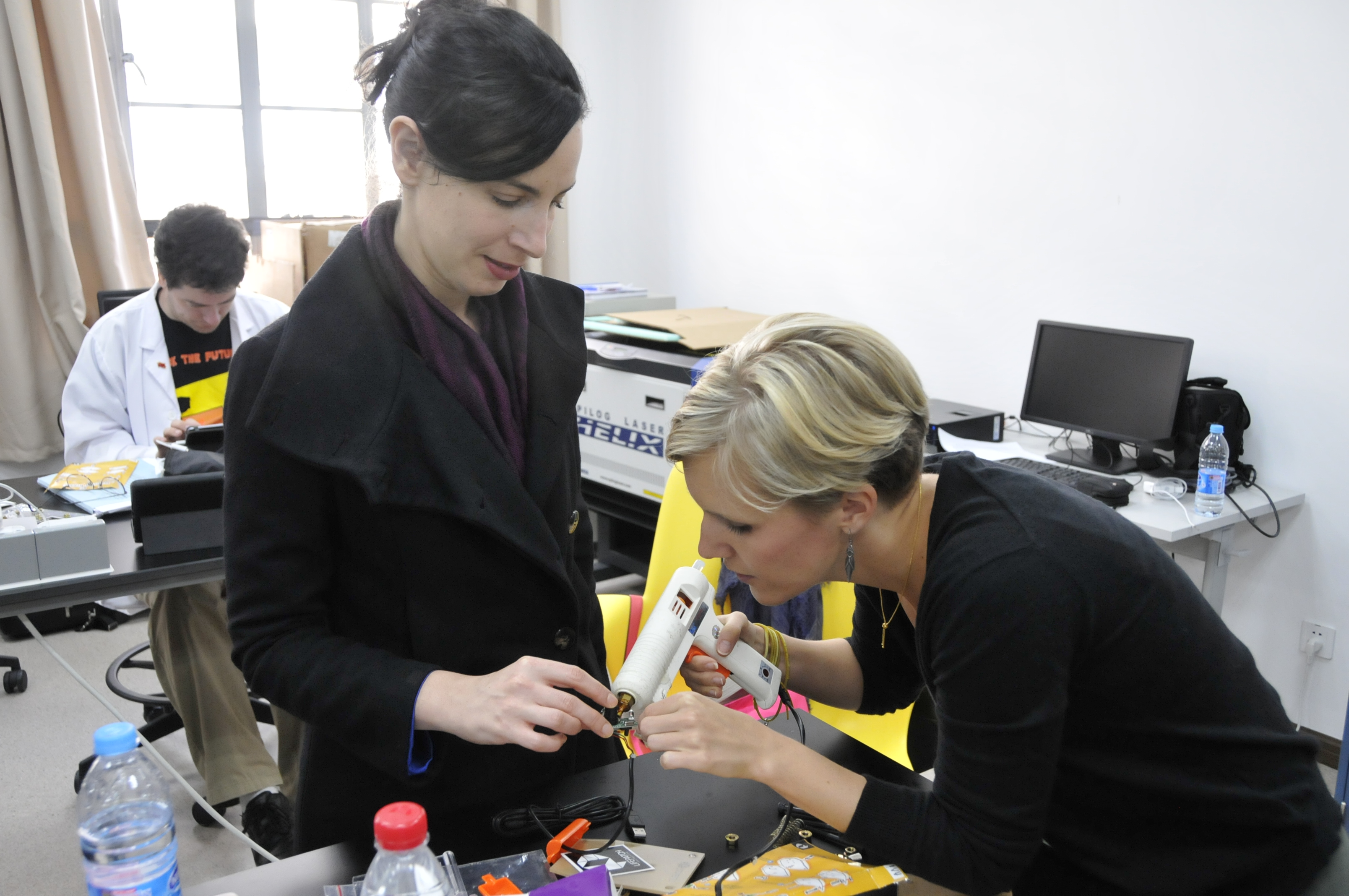
SILVIA LINDTNER. DIY maker, hacker, and ethnographic design researcher.
ANTHROPOLOGY DESIGN.
Many disciplines and fields often work with competing notions of what counts as design, claiming authority over the term, practice, and definition. Think for instance about efforts in critical design (e.g., Dunne & Raby 2007) and the strong oppositions its practitioners often make to product design. Critical design is aimed at engaging people in critical ways with commonly used products. As Jeff and Shaowen Bardzell illuminate, critical design is positioned in opposition to affirmative design—the latter considered as “the common practice, and this practice is amoral and ultimately a dupe for capitalist ideology, while critical designers are described as moral agents who seek to change society for the better” (Bardzell & Bardzell 2013).
It is important to not shy away from the politics of design, or to brash aside such heated debates over definitions, terms, and authentic practices–many of which are legitimizing efforts of new approaches in an overly competitive market (both industry and the academy). The question is how to engage the politics of design in a way that remains open to multiple viewpoints and approaches. At numerous times in my research, I have heard people argue that the process of making and designing itself is apolitical. There is much that refutes such statements–think for instance of questions of labor when we turn towards sites of production that manufacture the technological products we use on a daily basis, or listen to debates of hackerspace members over what counts as hacking versus making versus product design. What is important here is to consider the differences that lie in designing as a mode of inquiry, a leisure practice, or central to one’s profession and livelihood.
Week 5: Savage Minds Writing Group Check-In
And then there were five.
Five weeks, that is. We are half-way through our ten weeks of writing together. Phew! Are you still here with me? Our numbers are dwindling, and if you’re anything like me, these check-ins seem to be coming much too frequently! If you are someone who hasn’t checked in every week, do not despair or feel you can’t jump back in. Check in when you like, and if not, then at least keep writing.
What in your writing is worth telling? What stories need to be known by others? What commitments have you made to others, and have others made in sharing their stories with you? This week’s guest essay by Bianca Williams–Guard Your Heart and Your Purpose: Faithfully Writing Anthropology reflected on finding courage and faith in the writing. Acknowledge vulnerability. Discern purpose. Have faith. There are stakes involved in our writing as she so clearly reminded us…and herself. Continue reading
Doing Anthropology in Public

I’m not going to link to a certain New York Times columnist who inspired this post. His piece about how there are no good public intellectuals anymore is a pathetic attempt to troll the academic community. He clearly doesn’t read widely enough to know better. Or he does, but he chooses to pretend otherwise. I do, however, want to say something about anthropologists as public intellectuals. It may be an obvious point, but it is something I think all too often gets overlooked when we have these discussions. The thing is, anthropology is full of public intellectuals. You see anthropologists across all different forms of media, from leading newspapers to blogs, to local talk radio. You see anthropologists working on behalf of communities all around the world as well as working as bridges between communities. And you see anthropologists working daily with the large portion of the public that is in school, training the next generation of public intellectuals.