Styles of Writing, Techniques of Mentorship: A Tribute to Michel-Rolph Trouillot

(Savage Minds is pleased to run this essay by guest author Michael Ralph as part of our Writers’ Workshop series. Michael is Assistant Professor of Social and Cultural Analysis, and Director of the Metropolitan Studies Program at NYU. He is the author of the entries on Commodity, Diaspora, and Hip hop in Social Text 100, and of the forthcoming University of Chicago Press book Forensics of Capital based on his research in Senegal.)

The idea of having your own writing style is an illusion. In fact, we learn to write by digesting the writers we love. We obsess over the elegant turns of phrase they appear to deliver effortlessly, and pore over our own drafts hoping to wrench beauty from passages that have been pummeled by angst and uncertainty. If we manage to enjoy success in writing (or really, in editing), it is generally because we have been well trained. At some point, someone made it her mission to instill in us a sense of conviction about the words we wield. We learned to appreciate the magic of authorship. But, it is easier to trace the blessed path to writerly righteousness in retrospect. Learning to write (which means learning to think and plan more carefully) can be a curious kind of training, in part because we don’t always know when it is happening. In reflecting upon my own training, I decided to dedicate this column to the person who initiated me into the anthropological guild, Michel-Rolph Trouillot. Continue reading
Around the Web Digest: Week of March 9

There have been very many language/linguistics-related items this week, so the first several links will be related. Also, this week I’ve decided that I’m going to start drawing your attention to one particular article in the Digest. This is to say, if you read just one article here, I highly recommend “this one.” As always, if you have any blog articles or suggestions, send them my way at richard.powis@gmail.com and be sure to follow me on Twitter @dtpowis. Continue reading

Animating History and Memory

Savage Minds welcomes guest blogger Aimee Villarreal

Corn Dancers

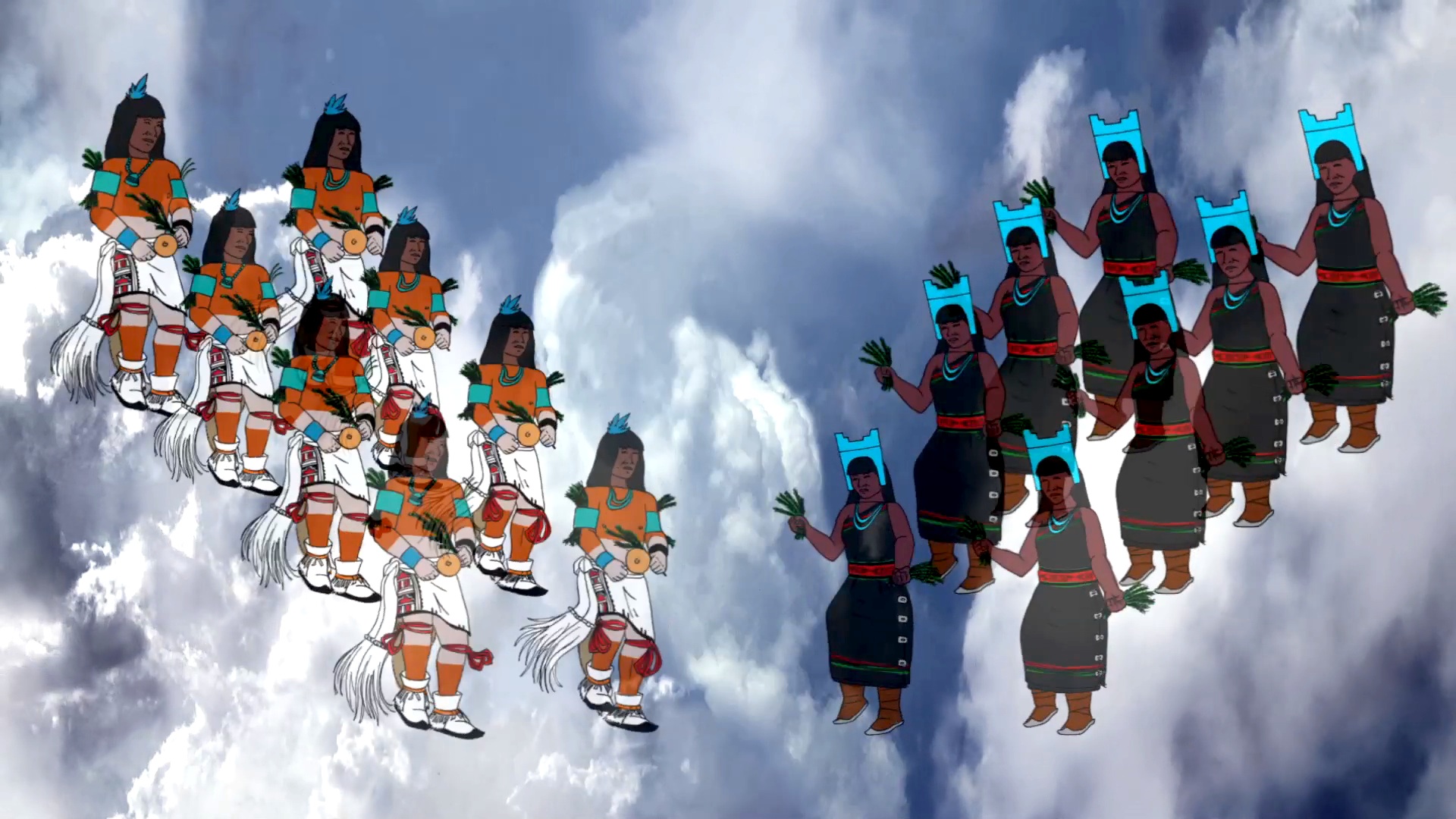
The late Pueblo historian, Joe Sando, a member of Jemez Pueblo in New Mexico called the Pueblo Revolt of 1680 the “first American Revolution.” Although this event remains mostly unknown and may seem distant history to an outsider, the Pueblo Revolt in New Mexico is living history. It is evoked continuously today and remembered in Pueblo and Nuevomexicano communities as a seminal moment defining Pueblo autonomy and cultural sustainability. In popular culture, the Revolt is retold in historical commemorations, performed in ceremonial dances and religious celebrations, and is increasingly the inspiration for works of art. Continue reading

Cultural Anthropology and Psychiatry: SMOPS 11

“Cultural Anthropology and Psychiatry” is perhaps the best summary of Sapir’s approach to what would become known as the ‘culture and personality’ movement in anthropology. But this brief, rich, and intelligent essay is more then that. It is also a statement about the nature of culture, the role of human agency in culture, and the complex, differentiated nature of culture. It is a remarkable piece that demonstrates the incredible clarity and sophistication of Sapir’s thought.

Cultural Anthropology and Psychiatry
, by Edward Sapir, edited and with an introduction by Alex Golub

Continue reading

anthropology + design: kat jungnickel.

[This post is part of a series featuring interviews with designers reflecting on anthropology and design.]

KAT JUNGNICKEL. ethnographer. maker.

kat 1

ANTHROPOLOGY + DESIGN.

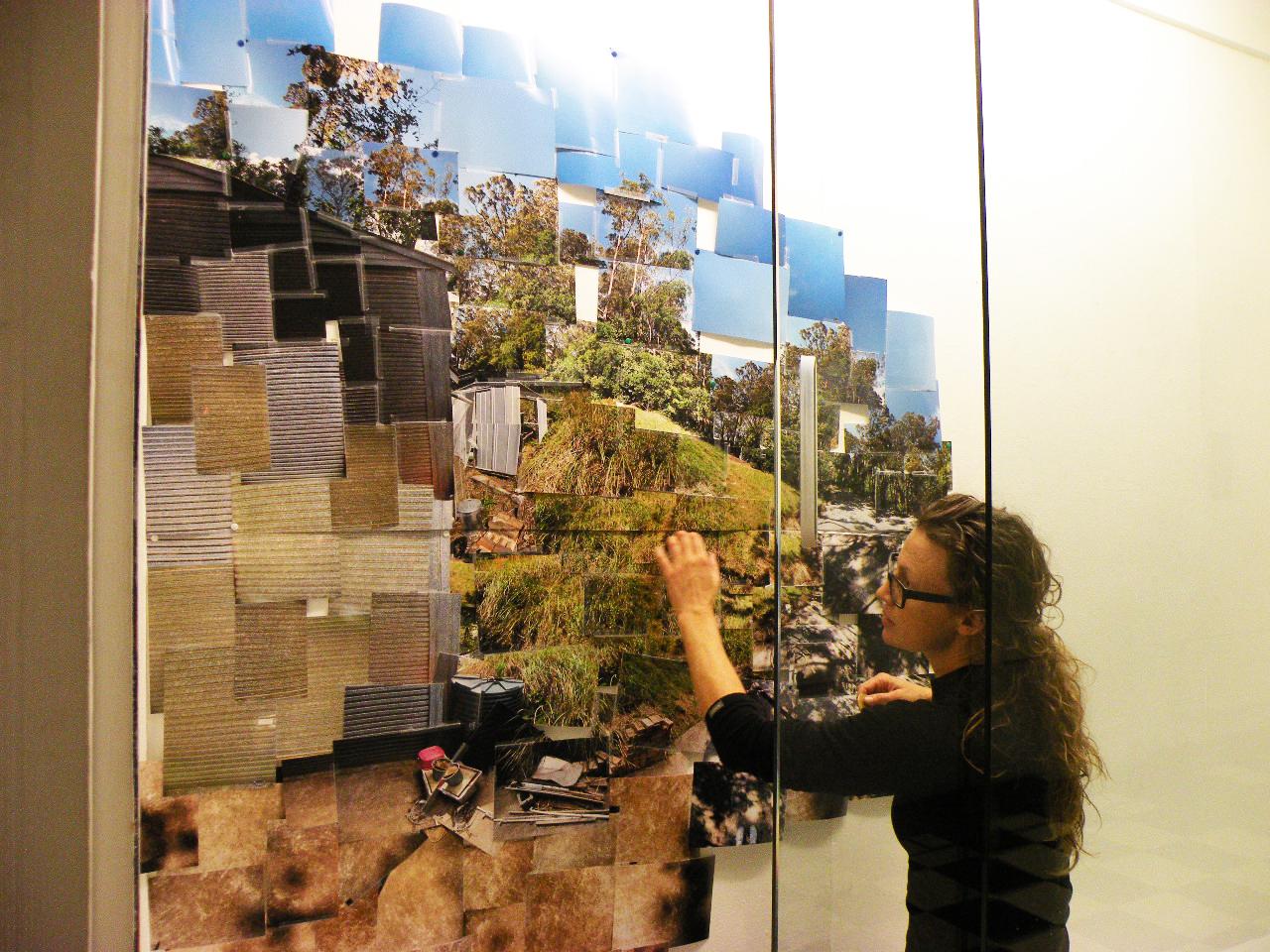
I’ve always made a bit of a mess. I’ve splashed around darkrooms, attempted to stitch interdisciplinary collaborations, and knit a research blog. I’ve hosted exhibitions, printed ‘zines and folded origami-inspired data boxes. I regularly collaborate with colleagues to build and perform dubiously welded “Enquiry Machines,” and I’m currently sewing a range of new Victorian women’s cycle wear as a means of thinking about public space, mobility, and gender. Continue reading

Dr. Funding, or: How I Learned to Stop Worrying and Love Grant Writing

(Savage Minds is pleased to run this essay by guest author Robin Bernstein as part of our Writers’ Workshop series. Robin is Associate Professor of Anthropology at the University of Colorado. She works on how growth and development is shaped, both across generations and among species, in humans and nonhuman primates, and is currently conducting research in rural Gambia. Her recent publications include articles in the American Journal of Primatology and the American Journal of Physical Anthropology.)

As an anthropologist with a field site on another continent and a laboratory that needs a full-time technician to operate properly, I am dependent on continuous external funding to keep things going. There was a time when I resented this, and felt utterly exhausted and desperate in the context of the endless application-rejection cycles, waiting on the edge of my seat to find out whether I could continue my projects uninterrupted, keep my employees employed, and offer any resources to my students. Continue reading

Around the Web Digest: Week of March 2

A couple weeks ago, when I took helm of the HMS Around the Web Digest (yeah, it’s British – it’s my ship and I do what I want), I was naïve enough to think that I would curate collections of themed articles. Alas, there is just so much good stuff that it’s really difficult at the end of the week to select the things that I don’t want to share. I do my best to cut the chaff (yeah, I just went from running a ship to processing wheat), so I apologize if it’s overwhelming. I am open to feedback! Anyway, if you have a blog article that you would like to be shared in the Around the Web Digest, just hit me at richard.powis@gmail.com or on Twitter @dtpowis. So here we go. Continue reading

Comments Now Working! (We hope…)

For some reason, since we launched the new site, our security software was preventing people from leaving comments. That should be fixed now. Sorry about that!

Also, we previously posted that people would have to register to leave comments. That is not the case. In fact, we’ve turned off the feature that let people register and deleted most of the new registrations from this week because we were getting hundreds of SPAM users registering for the site. You can use your WordPress.com, Facebook, or Twitter account to leave comments, or simply enter any valid email address. (We will monitor this policy and change it if needed.)

Please let us know if you are having any problems that are making it difficult for you to use the site. Right now we are focused on squashing critical bugs. If you have more general feedback (good or bad) about the design, feel free to leave that as well, but please note that we won’t be making any major revisions to the new design till this summer.

A Personal Request

Since we launched Savage Minds in 2005 the only time there were ads on this site was the short time last year between when we moved to WordPress.com for hosting and when we paid to turn them off. We apologize for that. The fact is that most of us use ad-blocking software so we didn’t notice the ads until they were pointed out to us and then we promptly got rid of them. We don’t intend to put ads here, and — even though we all put in a lot of work (and money) behind the scenes to keep the site going — we aren’t asking for your support…

OK, enough with the “we.” Although this is a group site and we make all major decisions (including posting this request) together, this is very personal for me. For the past three months I’ve been working non-stop behind the scenes to move to a new server, restore the archives, and redesign the site. If you paid a professional to do this kind of work it would cost at least $2,000, and maybe as much as four times that. I did it because I care about this site. If you also value this site and the work that goes into it, I’d like to ask you to support an organization that is very important to me: Budhan Theatre.

Continue reading

Writing Archaeology

(Savage Minds is pleased to run this essay by guest blogger Zoë Crossland as part of our Writers’ Workshop series. Zoë is Associate Professor of Anthropology at Columbia University. She works in highland Madagascar and writes on semiotics, and archaeologies of death and the body. Her most recent publication is Ancestral Encounters in Highland Madagascar: Material Signs and Traces of the Dead ( Cambridge University Press, 2014).)

Like fiction, archaeology allows us to visit other worlds and to come back home again. So, it can be a useful exercise to juxtapose archaeological texts with historical novels, poems and other forms of writing. Just as a novelist does, a writer of archaeology has to attend carefully to the conventions that shape the stories we tell. The written past demands some kind of narrative coherence, a consistency in our compositional form, and in the internal logic of the world we bring into being. Like poets, we have to choose our words carefully. In this comparison we can identify the shared techniques used to evoke other worlds and to draw in the reader. We can also consider the narrative possibilities that are excluded from our archaeological writing, and ask what opportunities might be opened up by allowing different forms of voice and language. Continue reading

Best of Savage Minds

Because our archives were lost to the internet for the past year a lot of great content has been offline. (Google is now slowly re-indexing all of it.) If you just started following Savage Minds recently and would like a quick overview of our best posts for the past seven years, please take a quick look at our annual highlights. These are our yearly end-of-the-year round-ups which highlight our best content from each year. We started doing these in 2006, so we don’t have one for our first year, 2005, but it’s otherwise pretty comprehensive. Enjoy!