anthropology + design: laura forlano.

[This post is part of a series featuring interviews with designers reflecting on anthropology and design. This is our final post!]

LAURA FORLANO. writer and design researcher.


WHAT I DO.

I’m an ethnographic time traveler. For much of the last 10 years, I’ve been studying the ways in which the use of communication technology enables emergent socio-cultural practices around working and living in cities. For example, I’m interested in peer-to-peer networking, bottom-up organizing, co-located online collaboration, user-driven social innovation and open source urbanism, to name just a few. I’ve watched teens use mobile phones in Tokyo, observed activists building Wi-Fi networks on rooftops in Berlin, interviewed freelancers in Starbucks cafes in New York, watched doctors use computers in operating rooms, tested iPhone applications for navigating college campuses, visited design studios in Barcelona, and hung out with hackers in Budapest.

写真

Continue reading

Around the Web Digest: Week of March 23

You guys. There were so many good articles this week. Excellent, excellent articles. I was pretty overwhelmed, to be honest, especially when I was trying to select the one article that I wanted to highlight this week. I can’t put them all up, but I think I’ve picked some of the best (or at least thought-provoking). As always, if you have any links that you want to share, please send them my way at richard.powis@gmail.com or on Twitter @dtpowis.

To the Digest! Continue reading

Beyond Surveillance Fridges and Socialized Power Drills: Social Media and the Financialization of Everyday Life

written with John Carter McKnight, Department of Sociology, Lancaster University

This past weekend, two prominent socio-technical critics have given us radically different versions of the future of capitalism in the age of social media. Evgeny Morozov, author of The Net Delusion: The Dark Side of Internet Freedom, argues in an op-ed for FT for a dystopia of toothbrush analytics, trash bin surveillance, and our personal lives being turned into marketing data and sold back to us as irresistible products and services. Meanwhile, Jeremy Rifkin in the New York Times sees similar trends leading to “The Rise of Anti-Capitalism.” These big-picture visions are important for steering us towards futures we’d rather live in. However, studying companies and consumers at the forefront of the transformative interaction of social media and financial services gives us a different picture entirely: one where old and new, privacy and sociality, onrushing corporatism and peer to peer pushback are producing a tangled, complicated, often contradictory mess – and along with it, the future we’ll probably see.

As kids growing up in Nancy Reagan’s “just say no” 80s we endured a lot of propaganda regarding drugs. One was the myth of the “gateway drug.” We were told that drugs like marijuana with few medically provable harms were highly dangerous because they were gateways to harder more evil drugs. Gateway drugs are like linkbait, hooks that bring unwitting subjects from a one innocuous practice to one more pernicious.

Morozov claims that social media is a gateway drug for the financial sector to hook us on a new range of products and services, while increasing its control over our lives. We hear that the dark insides of our mouths, fridges, rubbish bins, and cars will be scrutinized by networked and image-recognizing surveillance cameras. Videos will be algorithmically analyzed producing “data portfolios” which will be automatically used (for a fee) by third parties to adjudicate our credit worthiness, employability, and romantic fitness. As longtime admirers of Morozov’s guts and wit we’ve been pleased to see him begin (finally) to use the name and identify the problem head-on—neoliberal capitalism galvanized by ubiquitously networked humans. Continue reading

Week 10: Reflections on the 1st Savage Minds Writing Group

Phew. We did it. This week concludes the first ever Savage Minds Writing Group. Launched in January with seventy people expressing interest in joining in, our writing group was designed to provide community, inspiration, and a schedule or some sort of accountability in the writing process.

Writing is such a solo activity at times, yet one that requires the support and involvement of others. Imagination is key to this, imagining the people one is writing about, imagining readers, as are face-to-face conversations with friends and mentors as you write. I hoped an online writing group of anthropologists in many different places around the world might complement these relationships, and provide a sense of community of others engaged in similar processes, similar difficulties, similar joys in the writing. Continue reading

The curse of the moveable stacks

This year my wife was elected to the faculty senate. I already know her friends and enemies in her department, but since this puts her in contact with new colleagues it gives me perspective on different parts of her school. Now I’m privy to a whole new level of gossip and hearsay.

One running joke between us is that I’ve been to her campus library more than she has. For the most part she uses electronic resources, but on occasion she will need a book from my campus. Her campus has a smaller collection and all of it is set in moveable stacks. It seems that one of her secret fears is getting trapped between the moving walls of books and crushed as another person is shifting the stacks. I shake my head and tell her that’s not possible, but she insists that it is and so on the rare occasions she needs a book she fetches it under a cloud of distress. Quickly she dashes in and out without lingering.

Real estate on her campus is tight and the library is popular, so to expand the library will be hugely consequential because there is not much space. Or, I should say that the library is popular but the stacks are not. All of this is fodder for discussion in the senate. Students come to the building to use the coffee shop and commons more than the books. In discussion with her fellow senators about how to get more students to use books it was suggested that the proposed library expansion intersperse work areas throughout the stacks, so that students would have to enter that space in order to get to the desks and carrels.

Then one senator addressed the elephant in the room. If the library was to expand the stacks would that mean there would be more moveable stacks? He had always been afraid to go in them for fear of being crushed. And a second person rose to agree, she too never went in there. What if someone rolled the stacks on top of her?

See! My wife declared, other people are afraid of the moveable stacks too. It’s not just me.

Apparently this is a thing? Be honest. Are you afraid to go into your libraries moveable stacks?
Unpacking an Erotic Icon: The Sexy Librarian

I recently came across the blog post Naughty Librarians and the Eroticism of Intellect, which purports to explain the enduring appeal of the image of the “sexy librarian” in modern life. Aside from the post’s dismissable evolutionary psychology conclusions, the author raises some interesting points about the ways the image of the librarian in our culture intersects with and embodies certain aspects of modern eroticism, grounding his or her (the author is identified as “J.M. McFee” with no bio) argument in a highly individualized literary psychological approach.

The trope of the sexy librarian as an aspect of the American sexual psyche has interested me for a long time — in fact, it was what triggered my academic interest in sex in American culture and eventually drove me into Women’s Studies. So I was quite interested to see what this J.M. McFee had to say. Unfortunately, in the absence of any sort of historical or cultural context, I found McFee’s musings rather toothless. For example, the contention that “eyeglasses and print media are already sufficiently antiquarian to have become as fetishized as garter belts and riding crops” could be true (though I rather doubt it, since eyeglasses and books are very much part of our daily lives in a way that garter belts absolutely aren’t) but even so, it doesn’t tell us very much about why librarians have become so idealized and not, say, book store clerks, editors, or opticians.

The sexualization of the librarian does not stand alone in our cultural erotics, nor can it be cleanly separated from the whole structure of American (possibly Western) sexuality. While I can’t profess to have the whole story, I hope here to give at least an outline of what the whole story might look like. Continue reading

On the Defense of Confucius Institutes: At the University of Chicago, For Example

(This piece is a long guest blog by Marshall Sahlins. In an article titled “China U” published late last year in The Nation, Sahlins took issue with Chinese government’s global educational/political enterprise called “Confucius Institutes” (CI). These institutes teach Chinese language and culture which, together with cultural performances, films, celebrations of Chinese festivals, and the like, portrays China as generous, beautiful, and harmonious. Since the CI program was launched in 2004, some 400 such institutes have been founded in colleges and universities world wide—the US presently has 97—and nearly 600 “Confucius Classrooms” in secondary and primary schools. Sahlins argued that CIs exist “as a virtually autonomous unit within the regular curriculum of the host school”. Indeed, according to the standard agreement signed with host schools, the Confucius Institute Head Office (commonly known as “Hanban”) provides the teachers and textbooks for these courses.

In his article, Sahlins argued that CIs function in a way that is antithetical to academic values because they are intended to spread the political influence of the PRC. CIs, he argued, differ from other cultural institutes — such as the Goethe-Institut and Alliance Française — because they are located on university premises and are completely governed by state officials. By giving a foreign government charge of instruction, he claimed, universities promote censorship and self-censorship that are too much like the government prohibitions on discussion of politically-charged topics in Chinese universities.

Continue reading

From Different Throats Intone One Language?

(Savage Minds is pleased to run this essay by guest author Matt Sponheimer as part of our Writers’ Workshop series. Matt is Professor of Anthropology at the University of Colorado. He conducts research on the ecology of early hominins in Africa, among other topics including Neandertals and poetry. He is the author or co-author of numerous articles, including “The diet of Australopithecus sebida” in Nature 2012. Note: The title is from Jeffers’ Natural Music.)1

I’ve been thinking a lot about collaborative writing of late, and not the internecine conflict it sometimes engenders within U.S. anthropology departments. We are all certainly aware of subdisciplinary differences with regard to multi-authored manuscripts and the occasional contestation that occurs when credit for such undertakings must be meted out.2 No, I’m talking about something rather different, and I also hope much less charged. I’ve been gingerly contemplating the act of collaborative writing itself, both what it represents from a practical standpoint and as an intellectual exercise.
Continue reading

Around the Web Digest: Week of March 16

Student protests in Taiwan, International Day of Happiness, and the Society for Applied Anthropology meeting in Albuquerque – it’s been a busy week. If you went to SfAA this week, and you have a blog or some sort of coverage that you’d like to share with us, please let me know – as with anything you might want to see in the Digest – by email (richard.powis@gmail.com) or on Twitter @dtpowis. Anyway, as I said last week, there is one article that I’d like to highlight for those that might be short on time. Now, it might just be the goth kid in me that I’ve been trying to suppress since just after high school, but I really enjoyed Miia Halme-Tuomisaari’s critique of happiness (or, at least measures of happiness). Check it out below. Continue reading

anthropology + design: daniela rosner.

[This post is part of a series featuring interviews with designers reflecting on anthropology and design.]

DANIELA ROSNER. design researcher. ethnographer. science studies scholar.


ANTHROPOLOGY + DESIGN.

I think design and anthropology have the potential to reinforce each other’s aims.  Anthropology could help develop a more socially informed design process, and design could help clarify anthropological investigation. That’s the goal, but not always the end—design can over-simply or misinterpret anthropological insights, and anthropological inquiry can overdetermine or stifle design. What’s helpful in an anthropological interpretation of design is how it helps reveal an instance of design as just one (of many) located and specific moments of change. Lucy Suchman articulates this nicely in her writing on the limits of design, suggesting that “conventional design methods are (necessarily) silent on matters that anthropology would be interested in articulating” (2011:3).

Conversely, design can open up creative possibilities overlooked by other modes of investigation, and help anthropologists communicate in the field. For me, design often involves studio-based explorations. Design can take on many forms for different people, but as someone with an undergraduate degree from the Rhode Island School of Design, I base my own methods on those early days—thinking with materials and building intuition through hands-on explorations.

daniela 1

Continue reading

No funding? Don’t do it! (on getting a PhD in anthropology)

The following is another installment for the Anthropologies/Savage Minds issue on Student Debt.

Well, it’s that time of year when prospective grad students around the country are anxiously pacing around their mailboxes waiting for responses from all the PhD programs they applied to.  Many are wondering who accepted them, who rejected them, and, of course, if they got funding.  That’s the big question.  Getting a full-funding offer is the highest mark of acceptance and application success.  It’s like getting the golden seal of academic and departmental approval.  It means you’re in.

Getting accepted without a funding offer is a not-so-wonderful middle ground.  Like getting a happy-face sticker that says “Great Job!” when you really needed a paycheck.  It feels sort of like acceptance, but there’s something hollow about it.  A lot of people decide to enter PhD programs without funding, thinking that at least it gets them in the door.  If they happen to have piles of extra money on hand, or family support, or a full-time job, or maybe even a partner who is working, it might be a reasonable choice.  Might being a key word there.  But many people simply don’t have access to those kinds of financial resources.  In these post-economic crash, disintegration-of-the-university-as-we-knew-it times, I think more students need to seriously reconsider entering PhD programs without full funding.  Why?  Because it doesn’t make any sense to go into debt trying to get a PhD in anthropology (let alone plenty of other disciplines).  Sarah Kendzior said it best on twitter not too long ago:

Continue reading

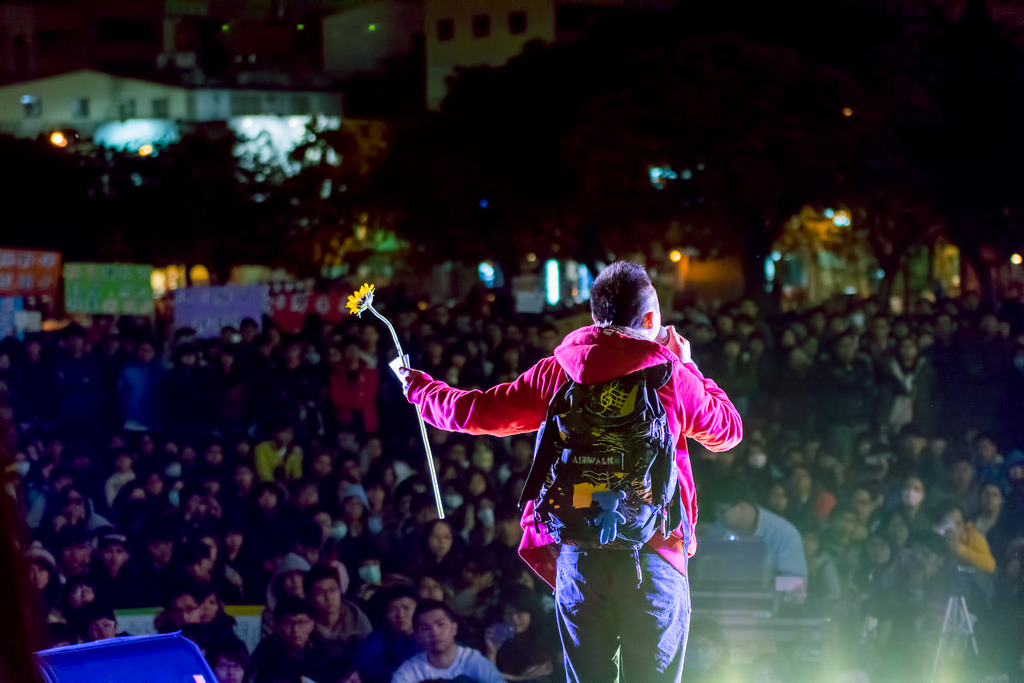
Sunflower Student Movement

What is happening1 in Taiwan?

The best introductory text to the events immediately preceding the protest is this piece by J. Michael Cole in The Diplomat:

Thousands of Taiwanese were surrounding and occupying the Legislative Yuan (LY) in Taipei on March 19 after legislators from the ruling Chinese Nationalist Party (KMT) expedited the review process of a services trade pact with China that many fear could have damaging repercussions on Taiwan’s economy and sovereignty.

Continue reading

Week 9: Savage Minds Writing Group Check-in

Nine weeks down, one week to go. The first ever Savage Minds Writing Group is winding down. Let’s check in now about our past week of writing, but also reflect on how our styles of writing are indebted to our mentors.

This week’s Writing Workshop post by Michael Ralph–Styles of Writing, Techniques of Mentorship: A Tribute to Michel-Rolph Trouillot–was heart-stirring in many ways. The process of becoming an anthropologist, a scholar, a writer, is one that involves so many people as mentors along the way. In the field, at your university, at large in the discipline.

So much of this piece resonated with me, and with others whom I’ve spoken with this past week:

On the physical constitution of the scholar,

on writing as re-thinking as well as re-deploying,

and

on the need for teachers.

Thank you, Michael Ralph, for this piece. And thank you to my mentors too. My thinking and my writing are indebted to them in ways I am still realizing.

Ontology and wonder: an interview with Michael W. Scott

Thanks to the incredible incredibilicity of our intern Angela, I’m happy to present an interview I recently did with Michael W. Scott. Michael is currently an associate professor of anthropology at the London School of Economics. He has a Ph.D. from the University of Chicago and his book, The Severed Snake: Matrilineages, Making Place, and a Melanesian Christianity in Southeast Solomon Islands, appeared in 2007. Michael frequently uses the concept of ‘ontology’ in his work, so I sat down to talk with him today about this and other aspects of his intellectual project. I’ve broken the interview down into sections, so scroll down to read Michael’s thoughts on Marilyn Strathern and Roy Wagner, wonder, whether reality exists, politics, and how to do fieldwork.

Continue reading

How do you pronounce “革命ing”?

Last night over 300 students and demonstrators took over Taiwan’s Legislative Yuan in protest of a secret trade agreement with China. For some background and context over the protest I recommend reading Michael Turton’s excellent blog posts on the ECFA trade agreement. And there is also an English language live-blog of the protest for those who wish to follow the news as it develops. What I want to focus on here, however, is one image from that live blog: Continue reading