Savage Minds Native Anthropologist Biographies (SMNAB)

Savage Minds welcomes guest blogger Matthew T. Bradley

Over the next four weeks I will be posting a series of biographical sketches of indigenous anthropologists. The genesis of my month’s guest blogging lies in a late October biographical post on Ely S. Parker I put together for my personal blog. Rex contacted me after seeing the post to broach the idea, motivated in part by the intention to “alter how Google remembers [indigenous anthropologists].” I never walked to school barefoot in the snow, but I do remember a pre-recap era Internet back before fresh content had less shelf life than a quart of milk. Call me a geek, but the opportunity to craft something digital and durable struck me as authentically exciting.

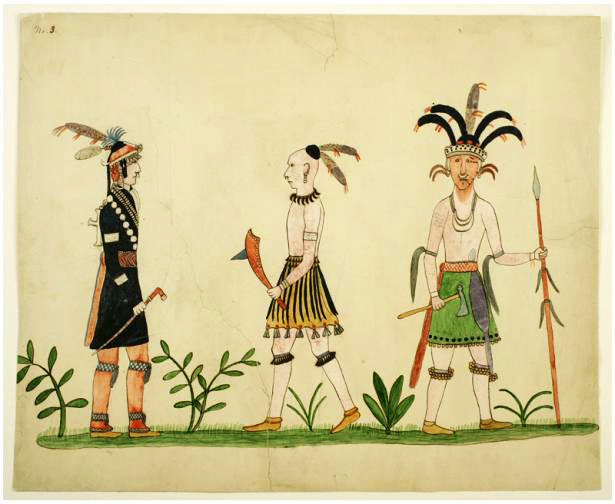
“Three Iroquois in Diverse Costumes,” c. 1827 watercolor by Tuscarora ethnologist David Cusick. Henry Luce III Center for the Study of American Culture, object no. X.521, New-York State Historical Society.

Continue reading

Read More, Write Less

[Savage Minds is pleased to publish this essay by Ruth Behar as part of our Writers’ Workshop series. Ruth is the Victor Haim Perera Collegiate Professor of Anthropology at the University of Michigan. She is the author of numerous articles and books including Translated Woman: Crossing the Border With Esperanza’s Story (Beacon Press, 1993), The Vulnerable Observer: Anthropology That Breaks Your Heart (Beacon Press, 1996), An Island Called Home: Returning to Jewish Cuba (Rutgers University Press, 2007), Traveling Heavy: A Memoir In Between Journeys (Duke University Press, 2013), and is co-editor with Deborah Gordon of Women Writing Culture (University of California Press, 1995).]

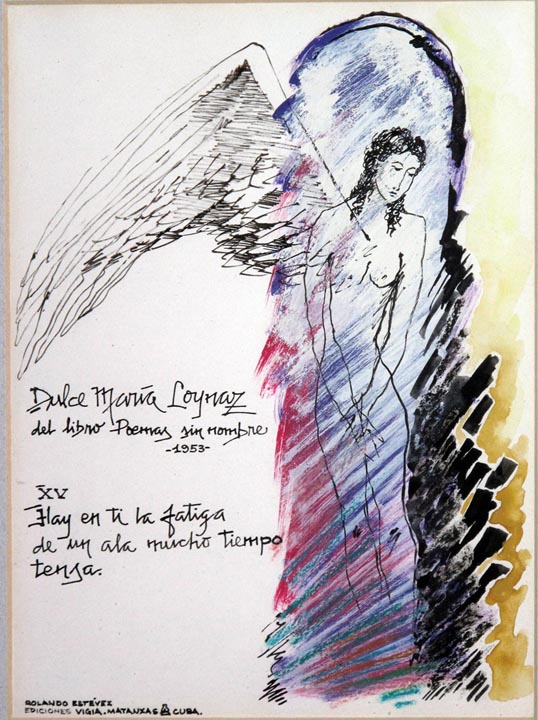
Rolando Estevez painting-Loynaz-Poema XV ala tensa


Years ago, when I started returning to Havana, the city where I was born, I had the good fortune to be welcomed into the home of Cuban poet, Dulce María Loynaz. By then she was in her nineties, frail as a sparrow, nearly blind, and at death’s doorstep, but enormously lucid.

Inspired by her meditative Poemas sin nombre (Poems With No Name), I had written a few poems of my own, and Dulce María had the largeness of heart to ask me to read them aloud to her in the grand salon of her dilapidated mansion. She nodded kindly after each poem and when I finished I thought to ask her, “What advice would you give a writer?” Continue reading

Angry White Buddhists and the Dalai Lama: Appropriation and Politics in the Globalization of Tibetan Buddhism

[Savage Minds is pleased to publish this essay by Ben Joffe. Ben is a PhD candidate at the University of Colorado. He holds a MA from the University of Capetown, and a Wenner-Gren Foundation for Anthropological Research dissertation grant for the project “White Robes, Matted Hair: Tibetan Renouncers, Institutional Authority, and the Mediation of Charisma in Exile.”]

You know that guy. He talks about ‘Tantric yoga’ in casual conversation. Maybe he has dreadlocks. Maybe he’s shaved his head. He’s definitely not had a beverage with regular milk in it for years. He’s probably white and affluent. He’s probably been to India. And he probably wears Buddhist prayer beads as jewelry.

It’s easy enough to compare this stereotype to the ‘serious’ convert to Buddhism, who though they too may talk about Tantra, sport distinctive hairstyles or be white and affluent, seem at least to wear their prayer beads as more than just a fashion statement. Yet, how easy is it to identify where religious conversion begins and cultural appropriation ends? Continue reading

Why I like typewriters

This is my last post as a guest blogger for Savage Minds. I have enjoyed this experience of connecting with so many anthropologists. I want to thank the Savage Minds team for giving me this opportunity to discuss ethnographic writing, and to everyone who offered their thoughts and comments on my posts. Since this is my final contribution, I thought I would end on a personal note and share a short homage to typewriters.

A vintage German business typewriter from the 1930s.

As you may have noticed, many images of old typewriters accompanied my posts on writing this month. These photos are not culled from the Internet, but are pictures of my own growing collection of European manual typewriters, which I now use to write my fieldnotes and my first drafts. I am not a luddite, nor am I paranoid about the NSA reading my fieldnotes. And although I am old enough to have written many early college papers on a typewriter, my trusty Smith Corona was an electric model. I switched to a basic word processor, and eventually to a personal computer as soon as I could afford one. Writing on a manual typewriter is a newly acquired preference.

Skywriters

Over twenty years after I retired my electric Smith Corona, my partner surprised me with a vintage Skywriter as a birthday present. The Skywriter hails from the 1950s and was Smith Corona’s attempt at a portable machine that itinerant writers could use on airplanes. Last spring, I began writing research notes, letters, and first drafts of my work on that typewriter, mostly because I loved the clack of the keys, and the fact that email, social media, and the lures of the World Wide Web couldn’t distract me while I worked.

Continue Reading

Legality, race, and inequality: An interview with Ruth Gomberg-Muñoz (Part I)

Ruth Gomberg-Muñoz is an assistant professor of anthropology at Loyola University Chicago. Her 2011 book, Labor and Legality, explores the work and social lives of undocumented busboys in Chicago. Since 2011, Gomberg-Muñoz has been conducting ethnographic research with mixed status couples as they go through the process of legalization; a book manuscript based on that research is in the works.

Ryan Anderson: For decades many of the debates about immigration in the US focus on legality. Politicians and pundits often speak in terms of following — and breaking — the law. But in your work you talk about the “illegalization” of migrant workers. What do you mean by this?

Ruth Gomberg-Muñoz: Migration is only “illegal” when laws prevent mobility. Historically, U.S. immigration policies have encouraged migration of workers deemed essential to the U.S. economy, a long-standing practice of labor importation punctuated by deportation and restrictionist campaigns in times of economic downturn. For example, Mexican migrant workers were imported to the United States by the millions in the mid-20th century to help fill labor shortages brought about by World War II and an expanding U.S. economy. Laws were created, negotiated, and adjusted to allow U.S. employers access to these workers; a contract worker program was instituted, and Mexicans and other Latin Americans were exempted from the quotas that limited immigration from elsewhere in the world at the time.

In the 1960s, the laws changed. An explicitly race-based U.S. immigration system was altered to prioritize family reunification, and Mexican workers became subject to numerical restriction for the first time ever. Over the next four decades, widespread demand for Mexican migrant labor persisted, while free trade policies undermined the ability of millions of Mexican farmers and workers to make a living in Mexico. Not surprisingly, numerical restrictions did not ultimately curb the migration of Mexicans to the U.S., but they did make it far more difficult for Mexicans and other Latin Americans to migrate legally. In this context, barriers to lawful immigration have produced unauthorized migration by “illegalizing” long-standing patterns of migration at a time when workers needed them most. Continue reading

Seeking New Around the Web Intern for 2015

[UPDATED: Added a FAQ at the bottom of the post.]

With Dick Powis now a full time contributor, Savage Minds is looking for someone to fill his shoes as our Around the Web editor. This position is called an “internship” because we see it as a way to cultivate new talent. (Also because it isn’t paid, but then nobody here is paid.) Doing the weekly roundups is not only a great way to force yourself to pay closer attention to the anthro blogosphere, but it also gives you a seat at the table behind-the-scenes at Savage Minds, helping select guest bloggers and discussing the future of the blog. Interns are encouraged to blog as well – but it isn’t required. Full time contributors like Dick Powis and Matt Thompson started out as Around the Web interns, but there is no requirement to stick around more than a year if you don’t want to. (We hope you do…) Continue reading

Why you shouldn’t take Peter Wood (or Anthropology News) seriously

In this piece I would like to explain, in detail, why I think Peter Wood’s recent piece in Anthropology News is fundamentally misguided. For a lot of readers, there will be no point in my doing so — they will just write Wood off as ‘racist’ and move on. I’m, shall we say, extremely sympathetic to this point of view. But I do think that Wood’s piece deserves some scrutiny to explain why so many people find it so misguided.

In his piece, Wood takes issue with four essays in Anthropology News responding to the shooting of Michael Brown and the subsequent reaction in Ferguson. Wood  argues that the essays are “a retelling of… the left’s canonical myth of Ferguson: facts submerged in a sea of fiction”. He goes on to argue that these authors’ accounts of Ferguson ignore “the record of events established by the grand jury”. He claims that the concepts of “structural violence” and “structural inequality” used in the essays are “intellectually lazy simplifications of complex social circumstances” which “remove all moral and social responsibility from the actors who are portrayed as victims”. In doing so, he claims, anthropology “erases the motives of key participants and reduces them to objects acted on by invidious external forces”. In the end, Wood claims, it is a “just-so story that America is a nation run by privileged whites determined to maintain their privilege.” In  fact, he says, “this is, quite plainly, a myth. There is nothing in the realm of fact to support it.”

These are amazing claims, and it is difficult to understand how Wood can make them in the face of an overwhelming body of evidence that proves exactly the opposite of what he claims. Wood is clearly not stupid. Charitable readers will assume that he is not evil. The nicest interpretation of Wood’s position, therefore, is that he is simply ignorant.

Continue reading

Announcing the Spring 2015 Writers’ Workshop Series

What are you writing right now? Are you writing right now? An article, a paper, a book, a dissertation. A poem, a report, a proposal, an exam. A blog post. Who are you talking to about your writing? Who is reading your writing?

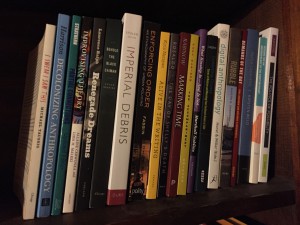
book shelf


One year ago, we launched the Writers’ Workshop series here on Savage Minds to provide a new space for reflecting on writing. We’ve now had two successful seasons with twenty-one anthropologists contributing: Continue reading

A Political Suicide and the Return of the Greek Left

The results of yesterday’s Greek elections, which the radical left coalition, SYRIZA, won in an historic landslide, reminded me of a humble pharmacist named Dimitris Christoulas. What follows is an excerpt from an essay I wrote in his honor back in 2012.

I hope his spirit rests a little better today.

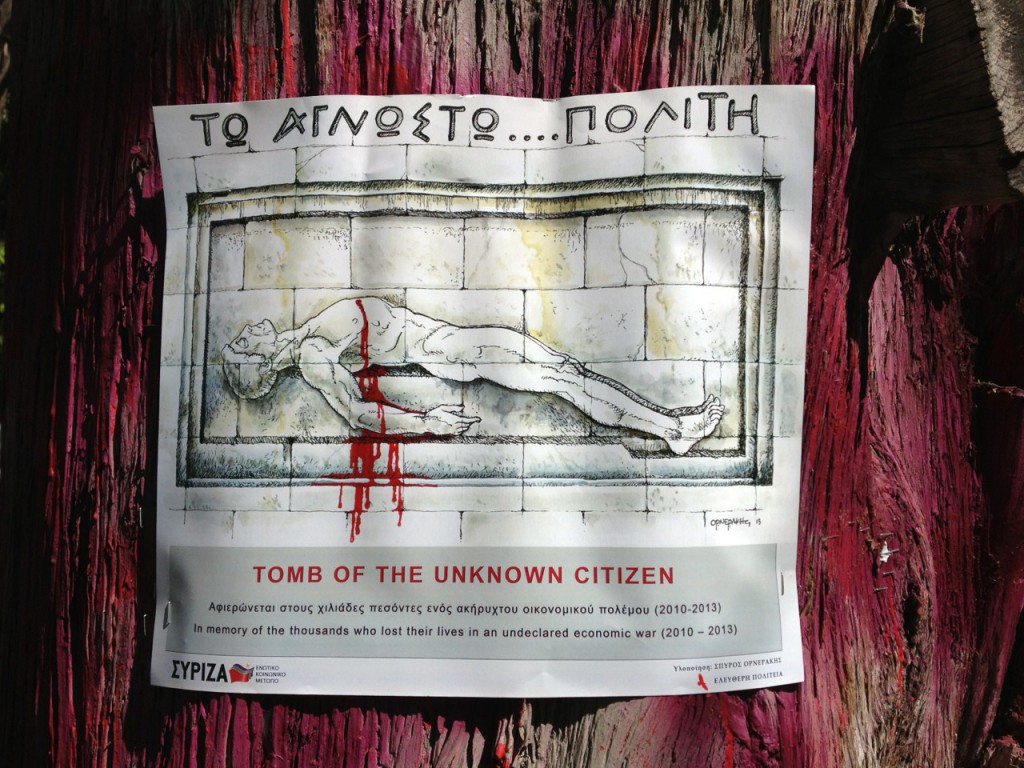
A sign posted on the tree where Dimitris Christoulas shot himself in 2012. "In memory of the thousands who lost their lives in an undeclared economic war."
A sign posted on the tree where Dimitris Christoulas shot himself in 2012. “In memory of the thousands who lost their lives in an undeclared economic war.”

It was a Wednesday when I read about the suicide. At 8:45 am on the morning of April 4 2012, 77-year-old Dimitris Christoulas killed himself amidst a rush of morning commuters near a metro station in front of the Greek Parliament. I choked on tears when I finished the article.

I was probably surfing the Internet, perendinating as usual. I’d just returned from a research trip to Bulgaria, and had been unceremoniously rocket launched into the second half of my spring semester. On top of writing lectures, teaching, grading, and supervising my students, I had four composition books full of hand-written fieldnotes that needed to be transcribed. But I was restless and feeling depressed about the world of academic knowledge production.

Probably my existential mood made the news of the suicide afflict me so deeply. Mr. Christoulas had leaned his head against a cypress tree. It meant he considered the logistics before he pulled the trigger. He knew that his head might jerk away from the force of the bullet. The cypress tree provided the answer. I imagined him with one temple pressed against the bark and the other temple pressed beneath the barrel of the handgun. I could see his body crumpling to the ground in Syntagma Square, the blood from his head soaking into the spring grass still wet with the fresh morning dew. It would be Orthodox Easter soon. Despite the divine reference in his surname, there would be no resurrection for Mr. Christoulas.

Continue Reading

420 ways to teach “Pigs For The Ancestors”

Pigs for the Ancestors is an iconic ethnography, taught for decades in introductory courses and graduate seminars alike. Rapport’s theoretical ambition, the richness of highland PNG life, the detail in the ethnography — it all works together to produce an ethnography whose life has exceeded its sell-by date for decades. And now, the University of California San Diego provides 420 new ways to teach it: a massive, open access collection of 420 photos taken by Roy Rappaport across the course of his career.

Not all the pictures are from Papua New Guinea, so I guess technically there aren’t 420 images that you can use when teaching Pigs. But in this case, it is important to emphasize not just quantity, but quality. The pictures are high-quality, and they are very well cataloged: each one has extensive metadata describing when it was taken, and what and who is in each picture. They are organized by topic so you can see, for example, just the pictures with pork in them if that’s what you’re into.

In the interests of full disclosure, I’ll state right away that the people who did this work are friends of mine, so I’m hardly an impartial observer. But it seems to me that collections like this are The Future. As the Internet gets more and more turgid, filled with ad-encrusted crud and unverifiable assertions, carefully curated open access collections like this are so, so welcome.

The Rappaport photos are hardly novel. Museums and libraries all over the world are making their collections available — just check out the institutions participating in the Flickr Commons project. But the key step between availability and use is discovery: making sure people know about all the great resources out there.

That’s hard to do for libraries, for whom just producing digital collections is work enough. We need to use these collections regularly, and credit them when we do use them. It’s only when word of mouth spreads that people will really develop a sense of the many hidden treasures out there available for research and use.

So this week, the next time you need a picture for a powerpoint, why not get this process rolling and use a picture from the Roy Rappaport collection?
Sustainability is everything–and nothing

November 2012.  I’m at a community meeting in Cabo Pulmo, Baja California Sur, Mexico.  It’s a gathering that includes members of the community of Cabo Pulmo, scientists, economists, planners, representatives from national and international NGOs, residents from surrounding communities, and development experts.  The subject: the future of Cabo Pulmo and the East Cape.  The problem: mass tourism development is slowly encroaching on the region.  While the East Cape remains relatively undeveloped at present, this won’t last for long.  Development is coming.

Only a few months before, Cabo Pulmo and its allies celebrated when “Cabo Cortes,” a massive tourism development project that was proposed for the region, was cancelled by former president Felipe Calderon (on national TV no less).  Calderon cited environmental concerns as one of the primary reasons why he 86-ed the project (and left the presidency with a nice “green” feather in his cap to boot).  The project plans for Cabo Cortes included approximately 30,000 rooms, a marina, residential units, multiple hotels, a separate community for workers, and multiple golf courses.  It was, effectively, a plan to build a new tourism city in a region where the largest population is approximately 5,000 people.  Cabo Cortes was the epitome of the kind of development that has dominated in Mexico for decades: big, fast, and profitable, with a long tail of problems that nobody wants to deal with over the long haul.  Places like Cancun and Los Cabos exemplify this type of rapid, mass-tourism development that looks wonderful from the national level and often disastrous at the local community level (see, for example, M. Bianet Castellanos’s book Return to Servitude). Continue reading

A History of Times We Did Not Laugh

[The following is an invited post by Ritu Gairola Khanduri. Ritu is a cultural anthropologist and historian of India. She is Assistant Professor of Cultural Anthropology at the University of Texas, Arlington. In addition to her research on media, she is currently completing a book on Gandhi and material culture. Research for Caricaturing Culture in India has been supported by the Social Science Research Council, the Fulbright Foundation, the Institute for Historical Research-Mellon Foundation and the Wenner-Gren Foundation’s prestigious Carley Hunt Postdoctoral fellowship.]

These past months have seen carnage of unimaginable magnitude. But none has attracted the outpouring triggered by the Charlie Hebdo killings. What have cartoons got to do with this?

For many, but not most of the world, the experience of freedom is now salient in speech and expression. In this struggle for freedom and rights, and its maintenance, cartoons have become the severest testing ground. We reprimand cartoons. We summon cartoons. We make demands on cartoons.

This generative force of cartoons is at the heart of my book Caricaturing Culture in India: Cartoons and the History in the Modern World.  It is a story of how cartoonists became central to newspapers and politics in India. It is also a history of why cartoons provide a new context for offence and the refusal to laugh.

Continue reading

Ethnographers as Writers: Write First Drafts in One Go

Many doctoral students fail to earn their PhDs because they never finish their dissertations. They complete their coursework, pass their qualifying exams, and do all of their research, but writing the thesis proves an insurmountable barrier. Why does the dissertation present such a challenge? Because students can’t push past the first chapter. Too many dissertators start with their introduction and find that they have nothing to say. Or they realize they have no idea what they are trying to introduce.

"How do I cut and paste on this thing?"
“How do I cut and paste on this thing?”

In Anne Lamott’s brilliant book, Bird by Bird: Some Instructions on Writing and Life, the author advises all would be writers to embrace what she calls the “sh*tty first draft” (SFD). Decide what you’re going to write, and then write it straight through without stopping. If you need an article, spend some time thinking of an abstract that captures the essence of your argument and the data you have to substantiate it. You can take a few days to put together a really good abstract. Once you have it, use it as you introductory paragraph and start writing.

Keep putting words on the page until you reach what you think will be the end. Never go back and read what you have already written. This may seem difficult, but you can learn to let your thoughts flow. If you find yourself stuck at a section or in need of a particular fact or reference not at hand, leave placeholders in your text. Phrases like “insert quote here” or “discuss relevant studies here” litter my first drafts. If I need to stop working for the day, I always type the letters “XXX” in my electronic document. When I come back to the file, I open the document and search for the “XXX,” thus bypassing the text I’ve previously written.

Continue Reading

The Four Types of Comments

The Four Types of Comments

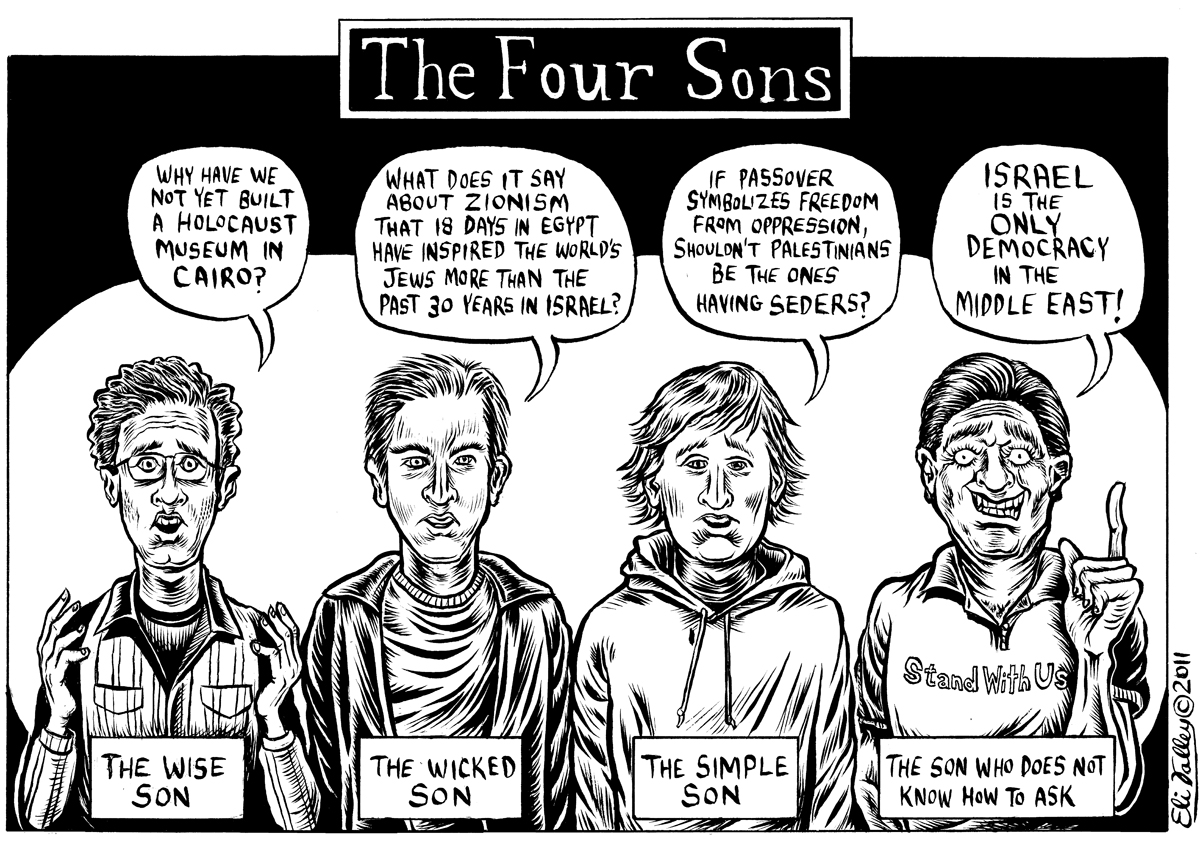
Passover is still a few months off, but I wanted to share a bit of wisdom from the Passover Haggadah because it has helped guide me through many an online debate. There is a section which tells the story of the four sons (we always read it as “sons and daughters” at my house): “one who is wise, one who is wicked, one who is simple, and one who does not know to ask” and “recommends answering each son according to his question.” Wikipedia can fill you in on the rest of the story and the traditional responses if you need help understanding the irony of the cartoon at the top of this post, but for my purposes I just want to focus on the central pedagogical insight: that different questions and questioners require different responses. That different questions call for different responses may not seem to be a particularly useful insight, but I think a lot of the pain involved in internet discussions can be avoided if one thinks clearly about this and learns to act accordingly.

For me, engaging in online debate means trying to think seriously about a comment1 and what work it is doing before I choose how to respond. This avoids the problem suggested by the joke of the cartoon: that one’s ideological stance will shape how one interprets the comment. I’m not saying that one can respond to comments in a way that is completely free of ideology, just that focusing on the comment text itself rather than your assumptions about the person leaving the comment can help a lot. Yes, interpretation of the motivation and character of the commenter is important, but in this approach it only enters into the equation after you have determined what type of comment you are dealing with. What follows then is my adapted typology of the four types of comments one finds on the internet, and how best to respond to each one. Continue reading