Inside Higher Ed is running a brief “interview with John Willinsky”:http://insidehighered.com/news/2005/12/20/access, the authror of “The Access Principle”:http://mitpress.mit.edu/catalog/item/default.asp?ttype=2&tid=10611. Like many scholars interested in copyright reform and open access scholarship, I preordered this book some time ago and I’m looking forward to reading it. It certainly seems poised to summarize what so much of us have been arguing for a long time now, and on all accounts it is a lucid and thorough treatment of the subject. I highly reccomend it, and will blog more after I get my hands on a copy just to make sure that my positive views are actually justified!
Tag Archives: Books and Articles
Googling Levi-Strauss on Freud
I’ve been playing around with Google Print, and it is amazing. I’ve already found several books I’m likely to buy as a result. I won’t go into how stupid the lawsuits are, as that’s been well covered elsewhere. But I think it is worth showing just a few examples of how useful this can be. For instance, suppose you wanted to find all instances of the word “Freud” in Levi-Strauss’ work. Unfortunately, not all his books have been scanned yet, but this search will get you results from seven of his books, and this one will search just within Totemism.
In addition to limiting searches to an author, you can also limit searches to a year. Like this search for both Freud and Levi-Strauss in books written during the 1960s. Not surprisingly, this turns up a quote on page three of Turner’s The Ritual Process.
Most books limit your ability to browse page-by-page, but older books which are in the public domain have no such limitation. I wasn’t able to figure out how to limit a search to only public domain books, except by looking for older books. For instance, Boas’ early Chinook Texts (which I found by looking for Boas books published before 1900) is in the public domain.
Golf at Sundown: Segregation in America
Recently the Washington Post reviewed sociologist James Loewen’s Sundown Towns, a new book which looks at the hidden history of towns throughout America which have historically used violence and intimidation to maintain their ethnic homogeneity. For example,
Loewen charts the course of segregation in Wyandotte, Mich.: In the early 1870s, whites there drove out a black barber; in 1881 and 1888, they expelled the town’s black hotel workers; in 1907, four white men beat and robbed a black man at the train station; nine years later, a mob of white townspeople “bombarded” a boardinghouse, driving out all the African Americans and killing one. “In the 1940s,” Loewen writes, “police arrested or warned African Americans for ‘loitering suspiciously in the business district’ or being in the park, and white children stoned African American children in front of Roosevelt High School.” In the early 1950s, a University of Pennsylvania professor who grew up in Wyandotte told him, all the members of a black family who moved into town ended up dead.
Loewen claims to have “personally verified the existence of roughly 1,000 sundown towns between 1890 and 1930,” and estimates that the number could be anywhere between three and fifteen times that number.
Continue reading
Eskimos and “Hippie-Yippee Philosophy”: An interview with Asen Balikci
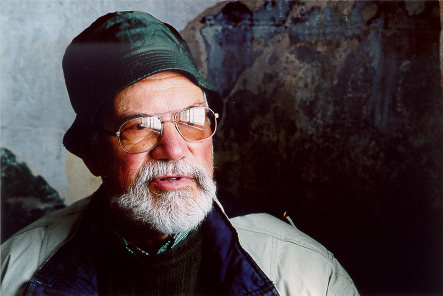
[Asen Balikci in, Through These Eyes, by Charles Laird.]
In the December issue of American Anthropologist Jay Ruby reviews Charles Laird’s 2003 film: Through These Eyes, a film which interestingly seems to locate the origins of the current culture war in the Cold War era:
At the onset of the space race in the 1960s, the U.S. government feared its educational system was slipping behind the Soviet Union’s. A controversial science initiative grew out of its response, Man: A Course of Study [MACOS], a program with the ambitious goal of teaching American children what it was to be human. At the program’s core was a benchmark of visual anthropology, the Netsilik Film Series, capturing a year in the life of a small Inuit community on the cusp of contact.
Adjuncting like it’s 1955
I recently finished Michael Barber’s scrupulously researched biography of Alfred Schutz, “The Participating Citizen”:http://www.amazon.com/exec/obidos/tg/detail/-/0791461416/qid=1130017375/sr=8-1/ref=pd_bbs_1/002-1728795-4172847?v=glance&s=books&n=507846. One of my favorite parts of the books involves Maurice Natanson’s correspondence with Schutz as he attempts to find a job shortly after finishing his dissertation. In the course of a two-year job search Natanson applied for five hundred positions before landing a position at the University of Houston in 1952. Natanson’s anecdotes of teaching ministers in training in Texas after years of immersion in emigre German philosophy in lower Manhattan demonstrates that the ‘liberal academy’ and ‘conservative Christian values’ have been in conflict for more than just the past couple of years:
I mentioned something in one of my classes about the _problem_ of immortality and one of the students said, “Do you mean the _fact_ of immortality?” When I suggested that philosophy does not begin by presupposing the dogmas of religion, a sudden chill spread over the class and people drew back as if I were going to lure them into a life of dishonor.
Natanson also notes that “When the head of the philosophy department mentioned the existence of “higher criticism”:http://en.wikipedia.org/wiki/Higher_Criticism of the Bible, a minister in his class hurled his briefcase at the teacher, rushed to his desk, and screamed ‘You son of a bitch, I’m going to stomp you through the floor.'” and that when he mentioned Darwin in one of his classes “one student became hysterical and screamed again and again, ‘Prove the earth is that old! Prove it! Go ahead and prove it!'”.
I have never had experiences like this in my classes before, but Natanson’s reflection on the financial position of the adjunct is one with which I am all too familiar:
I have entered at long last a euphoric state: I no longer have any financial worries! My situation is by now so clearly disastrous that bills and financial demands make no impression on me at all. In fact, I have entered what might be termed the “aesthetic” of finance: my interest in bills and monetary letters is with respect to the quality of prining, the type of paper, the various systems of book-keeping, the different creditors used, etc. I am like the financier who has been wiped out on the market and then continues to watch the ticker tape machine, losti n fascination of the intricate machinery that announces disaster. As both Father Divine and William Saroyan used to say: “Peace, it’s wonderful.”
Wild Thoughts
It’s time now for another installation of “Wild Thoughts” (previously and unimaginatively entitled Updates and Shorts ), in which I catch up on all the stories I’ve been saving for a “future post” which never seems to get written. First, some updates:
- In Party Like it’s 1954 I described the loyalty oath requirement recently imposed on adjuncts in my school. After a lightning-round of research on the Constitutionality and legality of the oath, and after communicating with a Faculty Senate member, I decided to sign the oath and pursue the fight once I’d secured my job. I’ve learned of an unsuccessful legal challenge that was mounted by a full-time faculty member some time ago, and am hoping to get more information from him.
- The Meskwaki adoption case I described as “settled” in my earlier updates post has encountered new complications. The motehr in the original case, who after being disallowed by the tribal government to allow her newborn son to be adopted by a non-Indian couple outside of the community, has turned the child over to Human Services after being involved in a drug-related arrest and herself testing positive for marijuana and drug use.
- Meanwhile, in the world of establishing ethnicity through DNA testing , the LA Times adds some context to the Wired piece mentioned by Kerim earlier. What’s intriguing to me about the turn to DNA testing is that it essentially substitutes the uncertainty of competing sociocultural claims with the uncertainty of scientific claims — DNA testing has, so far, not come one whit closer to establishing ethnicity than the methods it replaces, but has become preferred for its air of scientificity. What will be interesting is when the Pakistanis get wind of all this and start applying for tribal enrollment (Pakistanis often come up as “Native American” with current DNA testing methods).
And now for some things completely different:
Continue reading
Beyond Rationality, or Simply Lacking Enough of it?
I’ve just finished reading Bent Flyvbjerg’s Making Social Science Matter. The book ostensibly aims to explain “why social inquiry fails and how it can succeed again” by abandoning the rationalist project begun in the enlightenment and returning to Aristotelian phronesis, by which I understand him to mean ‘context-dependent values grounded on experience and common-sense.’ If all this sounds somewhat familiar, its because it is. It wasn’t that long ago Lyotard told us that the age of grand-narratives is dead, even if the rumors of their demise were greatly exaggerated. Moreover, most serious theorizing now attempts, in some way, to take seriously both contextual and processual knowledge, but Flyvbjerg attempts to prove to us that social science can only be saved by giving up theorizing altogether.
Don’t get me wrong, he is no Lyotard. He believes in empirical research. He explicitly challenges the textualism of the postmodernists. What he argues for is the creation of detailed narratives emerging out of case studies in close dialog with subjects of those studies. Nothing new here, and indeed, he holds up Geertz‘ “thick description” and the work of Bob Bellah as examples of the kind of work he endorses. It is a thought provoking book, and written in a very lucid and engaging style which makes it suitable for teaching, but it isn’t clear to me that Flyvbjerg understands what theory is. He seems to equate theory with “rules” which he contrasts with narrative and interpretation. This is particularly strange for someone who spends so much time discussing Aristotle, Habermas, and Foucault. What soon becomes apparent is that Flyvbjerg actually thinks of theory as a means to legitimate what social scientists do, rather than an explanation of what they do. In fact, drawing on Aristotle, he argues that the role of theory should be moral. While I don’t deny that theories have a moral and ethical component, I think Flyvbjerg is too quick to give up attempts at creating explanations of society altogether. He seems to feel that Weber’s definition of social science as “concerning itself with the interpretive understanding of social action and thereby with a causal explanation of its course and consequences” was mistaken in its enlightenment goal of seeking such a “causal explanation.”
Flyvbjerg lays out his argument with a discussion of the work of Hubert and Stuart Dreyfus, whose studies of human learning suggest that artificial intelligence isn’t about to replace human knowledge anytime soon because people with “expert” knowledge rely upon experience and intuition in ways which cannot be reduced to simple rule-based algorithms. Flyvberg provides the following example:
Continue reading
Brief Weberiana
I recently ran across the article “Remnants of Romanticism: Max Weber in Oklahoma and Indian Territory”:http://jcs.sagepub.com/cgi/content/abstract/5/1/53 which is a nice little piece of scholarship on two things that I usually don’t think of together — Max Weber and Native North America. Let he who has ears hear.
The Ph.D. Octopus
The arrival of the Internet is not the first occasion on which academics and dilletantes have sparred over the value and importance of official accreditation — William James’s short essay on the “Ph.D. Octopus”:http://www.des.emory.edu/mfp/octopus.html is always fun to help us rethink just how deep our cherished academic traditions may or may not stretch.
Although, to be fair, it’s not as interesting as him “taking nitrous and reading Hegel“:http://www.des.emory.edu/mfp/jnitrous.html.
Ghost Dancing in the New Millenium
Via BoingBoing comes Paul Saffo’s article on “The Ghost Dances” of the modern world. Using the historical Ghost Dance as a template, Saffo explores the myriad movements rising on all sides of the political and technological spectrum attempting to wrest control of people’s lives and communities from forces that have grown out of local control.
[It’s] dark history has made the Ghost Dance an anthropological shorthand for any millennial movement preaching a rejection of alien novelties and a return to traditional ways. The Ghost Dance is very much alive today. The global rise of religious fundamentalism is pure Ghost Dance, be it Islamic fundamentalists pining for a return to the Caliphate, Jewish fundamentalists battling moderate secularism, or Christian fundamentalists preaching an imminent Second Coming. The current opposition to evolutionary theory is an indelible example of the Ghost Dancing phenomenon. From this opposition has arisen “creation science,” a deeply contradictory belief system that attempts to use scientific method to discredit scientific theory to prove the literal truth of the Biblical version of creation.
Although I might question the device of an “anthropological shorthand” that generalizes and dehistoricizes a very specific complex of ideas — especially when anthropologists already have a general name for such movements (“revitalization movements”) — I think there is something useful in Saffo’s comparison, notably his recognition that such movements are never about a pure “return to the past” but are, rather, an attempt to “rescue” the past and re-deploy it to create a more satisfying present and future.
The Ghost Dance and it’s political-spiritual cousins are distinctly modern phenomena, in both their goals and their methodologies. As Saffo writes, “Embracing coveted portions of what one opposes in the service of returning an old order is a signature of the Ghost Dance.” Thus we have nuclear technology, the Internet, and the modern transportation system drafted into service in the interest of restoring the social order — even when the desired social order is Muhammad in Medina, the Jerusalem of the Second Temple, pre-contact North America, or even the New Primitivists’ pre-agricultural nomadism. Rather than rejecting modernity outright, these movements often accept the best aspects of modernity (though the definition of which aspects are “best” can vary widely) while rejecting the aspects that minimize individual human dignity (itself a very “modern” idea) or threaten the possibility of community/communion/communitas. That advancing the interests of the individual while protecting the sense of collective identity are often contradictory is only one of many contradictions that not only shape but motivate the modern Ghost Dancer.
The downside of Saffo’s comparison is that it tends to limit our responses. The original Ghost Dance was a response to very real pressures faced by American Indians at the end of the 19th century — yet the implications of the movement were threatening enough to the social order of the day that the Dance was banned and ultimately the movement destroyed, with much new suffering and bloodshed in the process. The labelling of modern reviatalization movements suggests only two avenues of response: either we destroy them, as we did in the late 1800s, or we watch them fade away. Today’s Ghost Dancers have vastly more leverage than the Native Americans of the American frontier — a handful of men with box cutters can embroil the entire world in conflict. The idea that we can destroy every instance of resistance to a growing techno-political world order is foolish — especially when more and more of us are finding ourselves on the other side of the techno-political divide. Without addressing the concerns underlying these movements, it seems unlikely that they will fade away, either — new movements will pop up as other movements run out of steam, because the alternative for most people is simply too grisly to endure for long. So far, the threat posed by the most extreme and most heavily armed of the modern Ghost Dancers has made any consideration of the issues they are responding to seem impossible, even treasonous, making it likely that these movements will continue to exist.
In a Durkheimian sense, though, perhaps the existence of Ghost Dancers is a necessary part of modernity itself, acting as a check on the worst excesses of the modern regime. For the average person in today’s world, these movements form the boundaries of human expression, lighthouses and buoys marking out the rocky coasts and allowing the rest of us to tack a more or less safe route through dangerous waters. Like Durkheim’s suicides, it may be that society produces its own discontents — that they are, indeed, the most modern among us.
Easter Island: Genocide or Ecocide
John Hawks has an extended discussion of Jared Diamond’s new book, Collapse, from which I discovered this recent paper [PDF] by archaeologist, Benny Peiser of Liverpool John Moores University. Titled From Genocide to Ecocide: The Rape of Rapa Nui, the paper tackles head on the evidence Diamond uses to assert that the residents of Easter Island (aka Rapa Nui) committed ecological suicide, or ecocide.
While his theory of ecocide has become almost paradigmatic in environmental circles, a dark and gory secret hangs over the premise of Easter Island’s self-destruction: an actual genocide terminated Rapa Nui’s indigenous populace and its culture. Diamond, however, ignores and fails to address the true reasons behind Rapa Nui’s collapse. Why has he turned the victims of cultural and physical extermination into the perpetrators of their own demise? This paper is a first attempt to address this disquieting quandary. It describes the foundation of Diamond’s environmental revisionism and explains why it does not hold up to scientific scrutiny.
More for ‘first contact’ junkies
While Papua New Guinea (PNG) is on the minds of many for the first time recently, first contact in the Papua New Guinea highlands is a perennial topic for anthropologists (in fact it’s my original area of specialty) and Connolly and Anderson’s trilogy of films about first contact in Hagen and its aftermath — First Contact, Joe Leahy’s Neighbors, and Black Harvest — have been shown to Intro Anthro courses innumberable times. Now my ASAO homies tell me that the ABC (That’s Australian Broadcasting Corporation, for all the yanks out there) has just released Bob Connolly’s memoir of making Black Harvest, entitled (duh) “Making Black Harvest”:http://shop.abc.net.au/browse/product.asp?productid=161709. I haven’t read it but I have no doubt that, like the rest of Connolly and Anderson’s work, it will do its topic justice.
ABC has tons of great stuff on PNG. If you are interested in learning more about the country’s history “Taim Bilong Masta”:http://shop.abc.net.au/browse/product.asp?productid=235649, a long radio documentary, is now available (and it has a couple of episodes on first contact). If you are interested in reading more about the country, there is always my Amazon list of “good books about Papua New Guinea”:http://www.amazon.com/exec/obidos/tg/listmania/list-browse/-/1G0AWY4SJEX79/.
Wars and Words
A little horn tooting:
My Language in Society book review on both At war with words and War of words: Language, politics and 9/11 has finally been published!
Here’s the abstract:
Daniel Nelson writes that “we talk our way into war and talk our way out of it” (Dedaic & Nelson [henceforth DN], p. 449). Drawing on a diverse array of methodological and theoretical perspectives and an equally wide range of subject matters, Mirjana Dedaic and Daniel Nelson’s edited volume on the role of language in war, and the effects of war on language, is a sprawling, perhaps unwieldy collection that opens up a number of important avenues of investigation in this gravely important but as yet undefined field of study. Sandra Silberstein focuses her book much more narrowly on the language of politics and news media in the wake of the September 11 tragedy. Despite their differences, both books address similar themes: (i) declaring war, or the language used by political leaders to justify military action; (ii) propaganda, or the construction of a war narrative by the media, and the use of political discourse to divide populations; (iii) language politics, or how wars shape language policy; and (iv) controlling speech, or the language used to grant or deny legitimacy in political debates. With the exception of language politics, not touched on by Silberstein, these themes are addressed equally by both books.
OK, it isn’t an article, but I’m put a lot of work into it! It was hard to adequately discuss so many different essays in such a short space (one of my criticism of At War With Words is that the material doesn’t all gel together into a coherent volume), and I think I did a good job of it.
I.Q.
There’s the old joke about the guy looking for his keys under the lamplight because, even though that’s not where he lost his keys, the light’s better there. I feel that way about studies of I.Q.. When critics, like Howard Gardner, object that such measurements fail to capture important aspects of thought, psychometricians reply that concepts like Gardner’s “multiple intelligences” don’t produce the same kind of “stable” test results they get from I.Q. tests, so they need to keep using I.Q.! It strikes me that what we have here is a concept that has been perpetuated in order to legitimate the continued existence of a discipline, and of a testing regime, rather than because it tells us anything important about the mental abilities of those tested.
I’ve been looking at this issue because four of the top political bloggers (Atrios, De Long, Kevin Drum, and Matt Yglesias) have ganged up on Andrew Sullivan for his recent endorsement of the central tenants of The Bell Curve. As a result of all these posts we get a great list of online articles debunking the book, to which I’ve added a few more and grouped them all here for your reference. The critiques vary in whether or not they accept the notion of I.Q.. Some accept it, but claim it isn’t genetic, others accept a genetic component, but deny that this correlates with race, while others (like Howard Gardner and Stephen Jay Gould) are more critical of the very notions of intelligence that are supposedly being measured in the first place.
- Thomas Sowell’s American Spectator article, in which he discusses the “the work of James R. Flynn, who found substantial increases in mental test performances from one generation to the next in a number of countries around the world.” Findings which disprove any link between genetics and I.Q. (originally linked in this DeLong post, and metioned in Matt’s post as well.)
- Nicholas Lemann’s debunking in Slate: “What Herrnstein and Murray used to measure IQ is actually a measure of education as well as intelligence.” (also from Matt.)
- “Intelligence: Knowns and Unknowns.” The report by the American Psychological Association which I make fun of above, but which is well worth reading – especially with regard to whether there is any link between intelligence and race. (via Kevin Drum.)
- Samuel Bowles and Herbert Gintis 2002 paper, “The Inheritance of Inequality” [PDF] which debunks the notion that social inequality is genetic. (via Brad DeLong, who has a summary of the findings.)
- Howard Gardner’s critique of The Bell Curve in The American Prospect, in which he elaborates on the limitations of I.Q.
- Two defenses of I.Q.: One by Linda S. Gottfredson in Scientific American, and another by Christopher F. Chabris in Commentary.
- Responses by Flynn, Gardner, and others to the article by Chabris.
- Wikipedia pages on The Bell Curve, Race and Intelligence, IQ, the Flynn Effect, Gould’s book, The Mismeasure of Man, and Howard Gardner’s concept of Multiple Intelligences.
Brain Boy
When writing my previous post about the National Anthropological Archives and Human Studies Film Archives, I came across the web page of the director, Robert Leopold. On his page he has a link to a page from the 1960s comic book, Brain Boy:


Here is Robert’s description:
He’s a dashing young man with extraordinary powers, an under-cover agent for a clandestine branch of the Secret Service called the Organization of Active Anthropologists. If you read comic books in the early ’60s, you know him as Brain Boy, the studious superhero who appeared in six full-length color comics published by Dell between 1962 and 1963.
Brain Boy was versatile, battling Latin American dictators and extraterrestrials between the covers of a single issue — and always in a suit and tie.
Sounds like the comic book version of “Anthropologists as Counter-Insurgents.”
UPDATE: The B-Log has more.