Category Archives: Invited post

Introducing Guest Blogger Eleanor King

In a series of forthcoming posts, my friend Eleanor King is going to reflect upon the tsunami in Japan and the use of social media in attempts to resist the ways in which catastrophes are taken out of time and spun according to particular political, economic, and social trajectories that in turn shape our modes for consuming images of disasters.

Please give her a Savage welcome!

This is how others describe her:

A third year graduate student in Cultural Anthropology, Eleanor came to the University of Iowa with an M. Div from Union Theological Seminary in New York.  Before landing in Iowa with her two cats, Eleanor worked a variety of non-profit jobs from facilitating social justice seminars at the Church Center for the United Nations to assisting elderly New York and displaced New Orleans jazz musicians through the Jazz Foundation of America.   Eleanor’s interests are diverse, but she continually returns to issues of ethnographic representation, technology, desire, the (gendered, racialized, sexualized) body, and new formulations of personhood and “life”. After writing her Master’s paper on voice, language ideology, and early film narration in Japan, Eleanor continues to explore the effects of new technological forms in Japan.  For her dissertation research she will be looking into the relationships, subjectivities and affects created between humans and machines, and the ethical implications of such encounters.

What Tim Hetherington Offered to Anthropology

Tim HetheringtonOn March 15th, I moderated a panel at RISD called Picturing Soldiers: The Aesthetics and Ethics of Contemporary Soldier Photographs featuring photographers Lori Grinker, Jennifer Karady, Suzanne Opton, and Tim Hetherington, who as killed today in Libya.

One of the amazing things about the work of each of these artists is how resonant it is with what we do as anthropologists. Like ethnography, their images are not simply about ‘documentation.’ They are about conveying something of lived experience that allows us, provokes us, to ask questions about how some particular lives come to look they way they do. They invite us to linger on the lives of soldiers long enough to think about how they are, and also are not, like others.

It strikes me that in our disciplinary conversations about what various modes of anthropological engagement might look like, we often fail to recognize the possibilities of such resonances. These possibilities are especially promising when the lives we explore are characterized, in one way or another, by war. Here, issues of politics and ethics lie both close to the surface and close to the bone. Tim Hetherington’s work was powerful proof of these possibilities.

For example, he said many times that he hoped Restrepo, his thoroughly ethnographic Afghanistan war documentary, co-directed with Sebastian Junger, would offer a new and more productive starting place for thinking about the war and US military intervention.

As Tim put it in an excellent interview at Guernica where he responds to Leftist criticism of the film:

While moral outrage may motivate me, I think demanding moral outrage is actually counter-productive because people tend to switch off. […] Sure, the face of the U.S. soldier is the “easiest entrée into the Afghan war zone” but it has allowed me to touch many people at home with rare close-up footage of injured and dead Afghan civilians (as well as a young U.S. soldier having a breakdown following the death of his best friend). Perhaps these moments represent the true face of war rather than the facts and figures of political analyses or the black and white newsprint of leaked documents.

In a more personal mode, Tim offered the experimental film Diary, which reflects something of the compulsions, rhythms, and senses of his movement into and out of ‘zones of killing’, as he suggested we might think of such spaces. Here too, we can find resonances with anthropological explorations of the particular vertiginous experiences of being in and out and in such spaces of violence, and of the uneven geographies of deadly violence.

News continues to unfold about the incident in Libya that may have also killed photographer Chris Hondros, and that seriously injured photographers Guy Martin, Michael Christopher, among others. And as we continue to hear more of Tim Hetherington’s death, and more remembrances of his life and work, I’ll also be thinking about what his work, and the work of other artists and journalists, has to offer us anthropologists; the places where our various projects meet, and the possibilities for thinking and acting that might begin from there.

Performing Technical Affiliation

By Patricia G. Lange, USC

There’s a new sociological variable in town, one which I call performing technical affiliation. Technically speaking, it is not a new way of thinking about identity. For many years, perhaps millennia, people have enacted aspects of identity by interacting with and through technologized objects, forms of knowledge and related practices and values. Nevertheless, technical affiliation is not recognized on the same level of analytical importance as are traditional variables—such as class, sex, gender, ethnicity, and social race—that are most often cited in anthropological studies of sociality. It is time that technical affiliations are brought more systematically into analyses of identity and negotiations of the self.

Continue reading

Social Media: From Meaning to Presence

by Jenny Cool, USC

I sometimes joke that I’ve been working in new media so long I can’t believe we still call it that. But longitude is no laughing matter in an age of time-space compression: and the persistence of novelty no accident. Yet, there is much to be gleaned from histories of the new. At least that’s what I contend in taking up Adam’s invitation to post about my 10-year study of Cyborganic, an influential group of early web geeks—producer-consumers of new forms, social imaginaries, and practices of networked communication and techno-sociality. Cyborganic spored and faded away by 2003, yet many of the genres, imaginaries, and practices that emerged out of this milieu (San Francisco’s South of Market area in the 1990s) have since become predominant on the Internet. Cyborganic members brought Wired magazine online; led the open source Apache project; and created dozens of Internet firms and projects, from bOING bOING to Craig’s List and Twitter. Continue reading

On Waxing Nostalgic about Ordinary Video

by Patricia G. Lange, USC

How do you define “ordinary” video makers? Given that online video is being generated at phenomenal rates (YouTube 2010), it is not surprising that studies are tackling previously ignored sets of everyday video practices. A number of important and insightful studies have been concerned with a special kind of the everyday, that which focuses on the so-called “ordinary” video maker. Such a figure is often ostensibly defined as a non-professional in the film industry. They have neither been trained nor are participating in mainstream film production or critique.

The focus on the ordinary video maker is initially a logical one, given that many researchers would like to understand how people learn to make videos, why they share them, and how everyday video impacts online attention economies in comparison to professional works. It some quarters, the focus on the “ordinary” is a reaction to what some see as well-covered fandom studies that focus on advanced amateurs producing cool stuff. However, it is time to re-examine what is meant by the “ordinary” and to consider how such a mythic figure threatens to reify the binary between the novice and the professional that grass-roots video making has long had the potential to challenge. It is time to explore lenses, such as collective nostalgia, that appeal to many different types of video makers. Researching generational or cultural forms of nostalgia and its influence on video making could provide a wealth of insight into the cultural desires and practices of particular social groups.

Continue reading

It’s a Mad, Mad, Mad, Mad Madison – by Eric S. Piotrowski

When I first heard of the Madison protests against Governor Walker and his attempt to squelch collective bargaining rights for public employees, I knew my friend of some fifteen years Eric Piotrowski would be taking the fight to the streets. I invited Eric, a high school English teacher, activist, musician, and avid wikipedian, to share his thoughts with us about the experience of being there in the protests and to outline what he saw as at stake in this struggle. –Matt

I wanted to join Scott Walker for his Fireside Chat on Tuesday evening. (Transcript here.) I was ready for some exciting debate, especially since the riots and chaos I had been promised by FoxNews were either exaggerations or (though I find it hard to believe, coming from such a reputable news organization) total lies. Alas, I was not allowed anywhere near Mr. Walker’s fireplace.

The past couple of weeks have been exhausting. Even more exhausting than my usual school schedule, which — I don’t mind telling you — is exhausting enough already. By Friday evening, my wife and I are usually worn out to the point where an evening out with dinner and a movie is usually replaced by delivery food and a rental DVD. On weekends we grade papers and try to regain our sanity before school starts again. (I teach at Sun Prairie High School; she works at the Wisconsin Network for Peace and Justice, and teaches at Madison Area Technical College.)

So when our pugilist governor announced his plan recently to (among other drastic measures) abolish collective bargaining rights for public-sector employees (which have been protected by Wisconsin law for 50 years), I knew I was facing a whole new level of physical exhaustion and psychic fatigue.

Continue reading

On the Front Lines in Wisconsin

by Gwen Kelly

Last Monday, February 14th, having heard a preview of the budget proposals to come, the Teaching Assistants Association (TAA) of the University of Wisconsin, Madison decided to try a different sort of tack in protest. Perhaps one that had never been tried before. They organized a campaign to get thousands of undergraduate and graduate students to sign valentines, big cards with hearts on them, saying “I <3 UW. Governor Walker, Don’t Break My Heart” (image below). It was a great idea, or at least it seemed so at the time, when we didn’t realize just how uncompromising Governor Scott Walker was going to turn out to be.  It goes to show how naive we were.  We knew something bad was coming, but we didn’t know how bad it would be.

Continue reading

Fleeting Togetherness in Smart Elevator

A guest post by Jenny Cool cool@usc.edu

The elevators I encountered at the 2010 AAAs were for me a kind of ethnographic readymade: those redolent objects and gestures through which “the social world seems more evident…than in the whole concatenation of our beliefs and institutions” (to cop a phrase from David MacDougall, 1999: 3). No doubt many of you made your own observations of the lifts at the Sheraton New Orleans. Hervé Varenne’s post “On an education into elevators” touches on some of the same phenomena I do in describing “impromptu conversations” that broke out in and around these elevators. And others have written more generally on “the anthropology of elevators” (Leslie, D’Costa) Like Varenne, I focus on the social and discursive learning I participant-observed riding the vertical rails at the AAAs.

Here were people negotiating a radically new interface—not alone at their keyboards or mobile devices—but in a pubic place, surrounded by fellow meeting goers. It was a rare opportunity to watch the encounter in a social setting quite unlike others I’d experienced in my research of computer-mediated communication and control. Continue reading

Anonymous vs. The Guardian

[This is a guest post by Gabriella Coleman. Gabriella is an assistant professor in the Dept of Media, Culture, and Communication at NYU. Her work examines the politics of digital media.]

So one of the reasons I was motived to write a post about the aesthetics of Anonymous was due, in part, to some problematic representations of the phenomenon in the mainstream press. The Guardian, in their latest article on Anonymous, managed again to offer up what is at best a crime-show television grasp of reality, when it comes to social communicative norms in digital spaces. I know that sounds especially harsh but I guess since I was misquoted, this time it is now personal.

One of the reporters emailed me letting me know he enjoyed the Savage Minds post and asked some questions, which I answered but none of that material made it in there. They instead provide this summary of my “position” providing a link to an Atlantic piece I wrote last week. They write:

Members of the group and outside experts such as Gabriella Coleman, a New York University professor who has studied Anonymous, estimate that up to 1,000 people are members of the broader network, who make their computers available to co-ordinated cyber attacks.

The irony is that my article they link to actually deconstructs the idea of a group and members. So they  use language of groups and members that I otherwise challenge in the piece they link to!! Also the numbers do not match at all: I never ever told them that up to 1,000 people are members of the broader network. The Atlantic mentions that thousands were involved, again not using a language of members or group. As to the theme of the article—hierarchy–to be sure, the issue of leaders and power must be interrogated and  there have bee discussions of this very topic among some Anonymous, but I would hardly call it a rigid hierarchy much less characterize it as some “group” where 1% hold the power and the other 99% are useless chaff.

You can read more about how some of anon has received the piece here.

The Aesthetic Face(s) of Anonymous

[This is a guest post by Gabriella Coleman. Gabriella is an assistant professor in the Dept of Media, Culture, and Communication at NYU. Her work examines the politics of digital media.]

aNJ3n

UPDATE: See Gabriella’s follow-up piece: Anonymous vs. The Guardian.

As an anthropologist of the digital I tend not to treat digital media as exceptional, except when it comes to the few exceptions that seem to rub up against our traditional categories and methodological tools. Anonymous, the online entity that has recently erupted full force engaging in wave after wave of protest following the Wikileaks drama, seems to be one such exception.

For those that know nothing about Anonymous it is a challenge to characterize in the course of a few sentences. But largely because of the recent distributed denial of service attacks, journalists have been on a spree to describe Anonymous, so far, largely telescoping on the DDoS and as one journalist put it, the “darkened” chat rooms many an anon are to be found. In the process, a number of them have correctly characterized the social dynamics that unfold on these chatrooms but they have also at times fallen prey to problematic descriptions and it is no surprise that I have highlighted “darkened chatrooms” to kick off the critique of the coverage of Anonymous that relies on outdated and inaccurate stereotypes of computer users. I will provide an alternative view focused on the aesthetic faces of Anonymous.

Continue reading

Why Thin Is Still In

Here is a guest blog by Ashley Mears, Assistant Professor of Sociology at Boston University:

Why Thin is Still In

In her new documentary, Picture Me, Columbia University student Sara Ziff chronicles her 4-year rise and exit through the fashion modeling industry, zooming her personal camcorder onto supposedly systemic abuses—sexual, economic, and emotional—suffered by fashion models.  Among the many complaints launched in the film is an aesthetic that prizes uniformly young, white, and extremely thin bodies measuring 34-24-34” (bust-waist-hips) and at least 5’10” in height.  It’s an aesthetic that many of the models themselves have a tough time embodying, pushing some into drastic diets of juice-soaked cotton balls, cocaine use, and bulimia—in my own interviews with models I discovered similar, but not very common, practices of Adderall and laxative abuse.  It’s also an aesthetic that has weathered a tough media storm of criticism, set off in 2005 with the anorexia-related deaths of several Latin American models, and which culminated in the 2006 ban of models in Madrid Fashion Week with excessively low Body Mass Indexes (BMI).  And yet, as a cursory glance at the Spring 2011 catwalks will reveal, thin is still in.  In fact, bodies remain as gaunt, young, and pale as they did five years ago, and it’s entirely likely that in another five years, despite whatever dust Picture Me manages to kick up, models will look more or less the same as they do now. Continue reading

Everything Flooded with Red by Andria Timmer

On October 4, 2010, a small Hungarian town named Kolontár was flooded with toxic industrial waste produced by a local aluminum plant as the retaining wall broke holding back a lake of sludge. Click here for a photo essay. Savage Minds welcomes ethnographer Andria Timmer for a one time blog post on the catastrophe. Andria is a lecturer of anthropology at Christopher Newport University and conducted field research in Hungary. She completed her PhD and MPH at the University of Iowa and her dissertation research concerned nongovernmental efforts to desegregate the education system and increase educational opportunities for Hungary’s Roma minority.

Everything Flooded with Red

Add another one to the list of recent environmental disasters. Just for fun go to Google Maps and search for Kolontár, Hungary in satellite view. The rust-colored square that you see there is a visceral reminder of the a red tsunami that overtook parts of Hungary last week when the metal reservoir of an aluminum plant burst. The deluge killed at least 8 people, over 100 were injured, and the residents of the village of Kolontár were evacuated. The country now prepares for a likely second spill.

Amidst the shocking images of houses and streets slathered with a substance reminiscent of blood, workers knee-deep in sludge, and, most disturbingly to dog lovers, a red-tinged komodor (a breed of dog typical of Hungary), come reports that it may not be as bad as expected. Hungarian and international officials are still trying to determine how severe the effects of the spill will be. Apparently, the levels of contaminate in the Danube River is at an acceptable level for human consumption. Fears that the sludge will enter the Danube in mass amounts have abated. The sludge itself is not fatally toxic in the short term and, although medium and long term effects are not known, if cleaned up efficiently should cause minimal long term damage. Prime Minister Viktor Orbán acted quickly to find someone to blame. The head of the company has been detained and documents have been seized. The government is taking over plant operations and trying to get people back to work.

The residents of Kolontár tell a different story. Veronika Gulyás, covering the story for the Wall Street Journal, reports that the villagers will not return to their village. The land is polluted and unsuitable for growing crops. All life in a nearby tributary of the Danube has been extinguished. And this will not be the last of it. The wall of the reservoir is expected to collapse releasing another wave of the red sludge, likely to be more toxic than the first. If this is not bad, what is it? If we cannot yet call this an environmental disaster, when can we?

Environmental concerns are not new to Eastern Europe. The Soviet era left its legacy in the form of polluted rivers and soil. High rates of blue baby syndrome (methemoglobinemia) in Romania are attributable to high levels of nitrates and human fecal matter in the drinking water supply. Much of the soil in Slovakia is contaminated with cancer-causing byproducts. The Chernobyl disaster in the Ukraine and the contamination of the Tisza and Danube rivers in Hungary with cyanide from abandoned Romanian factories are still in recent memory and are causing untold health effects (see Krista Harper’s work on environmental movements in Hungary). Many of the worst ecological offenses have been cleaned up with the help of EU and US funds and increased surveillance and regulations during pre-EU accession negotiations. However, it seems that many lesser offenses easily slipped through the cracks.

When they joined the European Union in 2004, Hungary was ahead of the curve when it came to cleaning up environmental messes which is why this latest catastrophe comes as such a surprise. Hungary also had the longest wait between application and admission to the European Union. During this time they were scrutinized on everything from environmental concerns to ethnic relations. One would expect that potential environmental threats would have been addressed. It begs the question, is this disaster an anomaly or a sign of things to come? What does this bode for the neighboring countries of Romania and Bulgaria who, in comparison, had a very short period of pre-accession negotiations?

The red sludge in Hungary, like the oil spill in the gulf, seems to be a sign of the times. Environmental disasters are becoming more and more common and it serves no one if we continue to downplay their severity. Hungary is a small country with a largely rural population with 30-40% living below the poverty line. The populace cannot afford a disaster of this magnitude. Orbán can be credited with acting quickly to find one responsible for this case of what he calls “human negligence”, and, I must admit it is refreshing to see someone jailed for environmental crimes. However, it is unlikely that the chief executive of MAL Hungarian Aluminum is wholly to blame.

Clean up efforts continue, the UN is sending a team to investigate the disaster, and EU officials have sent relief workers. In the meantime, however, mindent vörös elöntött – everything is flooded with red.

Kapah (Young Men): Alternative Cultural Activism in Taiwan

This post is an occasional contribution by Futuru C.L. Tsai. Futuru recently got his Ph.D. in July 2010 from the Institute of Anthropology at National Tsing Hua University in Taiwan. His dissertation is entitled Playing Modernity: Play as a Path Shuttling across Space and Time of A’tolan Amis in Taiwan. He was a training manager in a semiconductor corporation originally but quit to pursue a Ph.D. in anthropology. Futuru is also an ethnographic filmmaker and writer, who has produced three ethnographic films including Amis Hip Hop (45 min, 2005), From New Guinea to Taipei (83 min, 2009), and The New Flood (51 min, 2010), and a book: The Anthropologist Germinating from the Rock Piles (Shiduei zhong faya de renleixuei jia) (Taipei: Yushanshe, 2009).


Kapah (Young Men) /Lyrics & Music: Suming

Are there any young men who can sing out there? Are there any men who can dance? Are there any men who are good in school? Are there any men who are good at making money? Are there any men who are good at planting crops? Are there any men who are good at gathering? Are there any men who are good at spearing fish? Are there any men who are good at cooking? Are there any fun men out there? Are there any strong men? Are there any hard workers? Are there any men that work together? Yes, there are the young men from A’tolan!

A brand new music album with complete Amis lyrics by the Amis artist, Suming, was released in May 2010. It is not the first Amis music album but is the first one attempting to crossover into popular music market in Taiwan, combining indigenous melodies such as Amis polyphony and flutes together with techno-trance, hip-hop, and Taiwanese folk music. Among these songs, “Kapah,” which means “young men” in the Amis language, is the theme song. Lungnan Isak Fangas, a documentary filmmaker, who is also an Amis, made two music videos for this album, one of them is Kapah. Both the song and the music video not only represent aspects of local A’tolan Amis culture but also attempt to make this culture appealing to Taiwanese society at large.

There are currently 14 indigenous ethnic groups (referred to as “Aborigines”) officially recognized by the Taiwan government. The Amis is the largest of these austronesian speaking ethnic groups in Taiwan. There are two conspicuous characters of Amis society and culture relevant to understanding this video: One is that it is widely considered a matriarchal society, although its status as such is still under debate. Nonetheless, the image of the mother holds a central place in Amis society. The other one is the age-grade system with its rigid regulations. Age sets are organized around males who have passed the coming of age rites in the village within a given time period. Each age set (kapot) will include men born within a few years of each other. It is the main political unit, handling the affairs of both outsiders and insiders.

The song Kapah differs from earlier indigenous music in its depiction of indigenous modernity. Continue reading

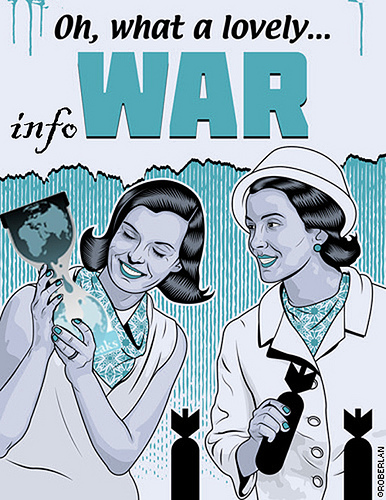
Raw and Cooked Facts in Wikileaks’ “Afghan War Diaries, 2004-2010”

Unless you’ve been living under a rock (where you probably don’t get WiFi and won’t be reading this), you’ve heard something about the release on Sunday of 92,000 primary documents culled from classified US military field reports from Afghanistan compiled by Wikileaks.org and given in advance to the New York Times , Der Spiegel, and The Guardian.

There is much think and say about this event and these documents. Apropos recent conversations at SM, I’d like to point out that there are probably better places to say some of these things.

One thing that strikes me as relevant for comment here is the way that ‘facticity’ and authority based in being there are at the heart of some discussions.

Take for example this interview from NPR’s All Things Considered between co-host Robert Segal and Wikileaks mastermind Julian Assange.

Here are the most relevant bits:

Julian Assange: The full story is only going to emerge over the coming weeks as that material is correlated to the witnesses who are on the ground, both the US soldiers and Afghanis

Robert Segal: [Challenging Assange’s comparison of The Afghan War Diaries to the Pentagon Papers] These are raw reports that are not confirmed and edited

JA: This material has its strength in that it is not an analysis, not written at the higher levels so it can be publicly massaged, it is in fact the raw facts of the war

RS: Some people would dispute your use of the word ‘facts,’ or indeed there might be something oxymoronic in ‘raw facts’

JA: The majority of reports are immediate reporting from the field from US military operations

What I see emerging here is an interesting conversation about textual authority, and one that resonates with our own disciplinary claims to authority based on ethnographic experience (see Clifford, Marcus, Gupta and Ferguson, etc. for some classic wailing on that old chestnut).

Assange begins by saying that these raw facts will only be fully cooked into a truthy pie once they are compared to the testimony of “witnesses who are on the ground.” And yet, when Segal notes the criticism that these raw facts are, in fact, too raw to be facts—that they need a little correlation before they can be safely consumed—Assange suggests that it is their very rawness that makes them good: Instead of truthy pie, he changes his order to sashimi.

The thing is, be they raw or cooked, pie or sashimi, these documents are not unadulterated. They are not like snapshots of the war, with all the claims to verisimilitude that visual medium implies (it’s worth mentioning that this connection between verisimilitude and the visual is also one way that witnessing stakes its authoritative claims). So, they are not like photographs. They are documents written within the generic constraints of military field reporting for a particular intended audience of surveilling authorities as official archival records.

Drop weapons are a concrete example of the things that are written out of these kinds of documents. Drop weapons are enemy weapons (like AK 47s) that US forces carry with them so that if they accidentally kill a civilian, they can ‘drop’ them by the body and have documentable proof that the civilian was actually an insurgent.

Drop weapons are useful because they alibi omissions (of the killing of civilians) from the After Action Report (AAR) which is part of the official record. But they are also useful because they enable the inscription of other things (the killing of insurgents) in the official record.

For a different and very interesting example directly from the Wikileaks docs, check out this corrective by Noah Shachtman, one of those on the ground witnesses.

The point is, however we choose to digest these documents, we need to consider them within the institutional and social context of their production, and whatever they are, they are not a diary.

“Please Eat the Gulf” by David Beriss, guest blogger

Please Eat the Gulf

David Beriss

I have never been an especially observant Jew, but when we moved to New Orleans in 1997, we joined a local synagogue.  I was told by a wise Jewish native that good New Orleans Jews observe the Yom Kippur fast and then break the fast with oysters, shrimp or crabs.  Except for the fasting part, I have since subscribed to this rule.  In fact, whenever I have wondered why I am still here, I remind myself that I am unlikely to find such an abundance of affordable seafood anywhere else I might want to live.  I am willing to put up with a great deal when raw oysters can be had for $3/dozen and a pound of fresh shrimp from the Gulf goes for $4 or $5.  I may not be a very observant Jew, but I am having a great time being an observant New Orleanian.

Or I was.  When the BP Gulf oil spew started in April, we all began to worry.  As the oil spread, more and more of the Gulf coast was closed to oyster harvesting and fishing.  Prices at local restaurants rose and some even stopped selling local seafood.  Efforts to stop the flow of oil kept failing and BP, parish, state and federal officials seemed uncertain of the best ways to prevent the spread of destruction.  Scientists suggested that the dispersants being used to prevent the oil from reaching land might be even more dangerous to the environment—and to people working on the cleanup—than the oil itself.  Much of the local seafood economy, from commercial and sport fishing to processors and distributors, ground to a halt.  When P and J Oyster Company, a New Orleans oyster supplier since 1876, announced it would cease shucking operations and lay off workers in early June, it was hard not to think that an era was ending.  Every time I bought shrimp at our local fish market or enjoyed soft shell crabs at a restaurant, I felt lucky.  What would we do without it?

Seafood is a key part of the local cuisine in New Orleans.  It has also been affordable and abundant here, so that crab, oyster, shrimp and fish remain available to people across class lines.  Seafood markets can be found in most neighborhoods and they often accept food stamps.  People know what to do with seafood too.  One of the best ways to start a conversation in New Orleans is to mention that you have some speckled trout or a few pounds of shrimp and you want some ideas about how to prepare them.  The answers you get will be better than anything you can find on epicurious.com.

One of the key complaints of food activists in the U.S. has been that Americans are alienated from the sources of their food.  The burger meat you pick up at the grocery store is hard to trace back to a cow—if, indeed, it actually came from just one cow.  Something like 80% of the seafood you get at your local store is imported.  Much of it is raised or harvested in ways that are not sustainable.  Some of it may not be good for you to eat.

In New Orleans, we generally know where our seafood is from.  Restaurants make a point of serving local seafood.  We can get our shrimp directly from the shrimpers, selling from an ice chest in the back of a pickup at the side of the road.  Or we have a relationship with the folks at the local market and we trust them to know where the seafood comes from.  Often, fish become part of the kinds of informal exchanges that build relationships.  A few days after we first moved to New Orleans, our neighbors showed up at our door with a gift of black drum they had caught.  Since then, we have often benefitted from the fishing success of friends.  From crawfish boils to holiday dressings and gumbos, seafood is not just about food.  We build relationships with seafood.

We have also tried to grow the seafood industry by making it a desirable brand.  Competition from cheap imports has made it increasingly difficult for Louisiana shrimpers, fishers and oyster growers to make a living.  The political environment and fear of pollution and disease—especially the risks associated with raw oysters—have created additional difficulties.  In 2009, the U.S. Food and Drug Administration proposed severely limiting the months when unprocessed oysters from the Gulf could be sold, claiming that oysters posed too much of a health risk to be consumed during warm months (from April to October, in their proposal) even though very few people ever get ill from eating oysters.  Local oystermen suspected lobbyists from West Coast producers were behind this effort, since Louisiana supplies about 40% of all the oysters consumed in the U.S. and West Coast oysters are far more expensive.  Effective lobbying by the state’s congressional delegation succeeded in stopping the FDA’s rule.  One strategy has been to promote the idea that Louisiana seafood is distinctive, a product of terroir, much like a fine wine or an artisanal cheese.  This has been pursued by the White Boot Brigade and by local Slow Food activists, who have taken Louisiana shrimp to New York and Chicago and persuaded famous chefs to put it on their menus.  The BP oil spew makes it much more difficult to suggest that the products of our terroir are especially desirable.

And oil complicates things in other ways.  The economy of south Louisiana is deeply tied to the oil industry.  Offshore oil drilling got its start in Louisiana.  In a state with a poor education system, the industry has paid high wages and provided training and education for workers.  It has contributed enormously to the state’s coffers.  We all know people who work in the oil industry as well.  In fact, many people work in both, sometimes trawling for shrimp, while at other times working on offshore rigs or in a wide range of other capacities.  Our world famous annual Jazz and Heritage Festival is officially “presented by Shell” on all of its advertising.  Morgan City, a town on the Gulf coast, has hosted the annual Louisiana Shrimp and Petroleum Festival for 75 years.  At the Audubon Aquarium of the Americas in downtown New Orleans, one of the main exhibits is the enormous Gulf of Mexico tank, containing a scale version of an offshore oil rig and dozens of the species that thrive on the artificial reefs created by the rigs.

This puts us in a terrible bind.  The federal moratorium on deep water exploration in the Gulf has been the object of much protest here precisely because it puts thousands of jobs at risk.  Some of those are the very jobs that people might seek when they can no longer make a living in the seafood industry.  In addition, we all know—or we should know—that the oil industry has played a key role in the destruction of the Louisiana coast over the last several decades.  We lose roughly a football field of wetlands to coastal erosion every 30 minutes in Louisiana.  Much of that is a consequence of dredging for thousands of miles of canals and pipelines to service the oil industry since the 1940s.  The long-term threat of coastal erosion is much more significant than the BP oil spew.  There are other environmental threats too, like the massive dead zone created by farm runoff where the Mississippi river flows into the Gulf of Mexico.

Last Thursday, I attended a Gulf seafood “eat in” at the Crescent City Farmer’s Market.  Several local chefs made dishes with local seafood.  Food scientist and advocate Gary Nabhan distributed copies of a pamphlet detailing some of the foods and foodways that are at risk in the Gulf.  The pamphlet contains articles by food activists, fishers, food writers, chefs and others from the region and provides a pointed illustration of some of the ways seafood is tied to the culture and economy of this region.  It shows that the BP spew is only the latest episode in a series of ongoing ecological and economic disasters that threaten one of the last successful American fisheries and one of the great food cultures of the world.  Erosion and wetland loss diminish our ability to survive hurricanes, destroy our fisheries and threaten to destroy communities throughout the region.  At the same time, cheap seafood imports are undermining an industry that supports thousands of people and a culture in which seafood plays a central role.  Ecological activists in New Orleans have been working since well before the spew started to promote restoration of the wetlands.  Food activists have struggled to find ways for the seafood of America’s “third coast” to be recognized as a great national resource.  One of the latest initiatives is have New Orleans declared a “UNESCO City of Gastronomy,” in an effort to earn international recognition for the region’s culinary heritage.  The region needs this to be a wake-up call for the rest of the United States.

On Friday, BP finally shut off the well.  As I write this, the oil seems to have stopped flowing into the Gulf of Mexico, although it is uncertain if this is permanent.  Maybe the fisheries will recover over the next few years.  Maybe the damage is not quite as extensive as we feared—the state reopened some areas to sport fishing over the weekend.  Should we be optimistic about the future or has the oil put a permanent stain on our seafood and culture?  People in south Louisiana are resilient, but this is a culture and an economy that often seems to be on the verge of collapse.   But one thing we ask of you: keep eating seafood from the Gulf of Mexico.  If it is in your stores, it is safe to eat.  As local chef and radio personality Poppy Tooker often reminds us, we have to “eat it to save it.”  We hope you will.