Category Archives: Invited post

anthropology + design: kat jungnickel.

[This post is part of a series featuring interviews with designers reflecting on anthropology and design.]

KAT JUNGNICKEL. ethnographer. maker.

kat 1

ANTHROPOLOGY + DESIGN.

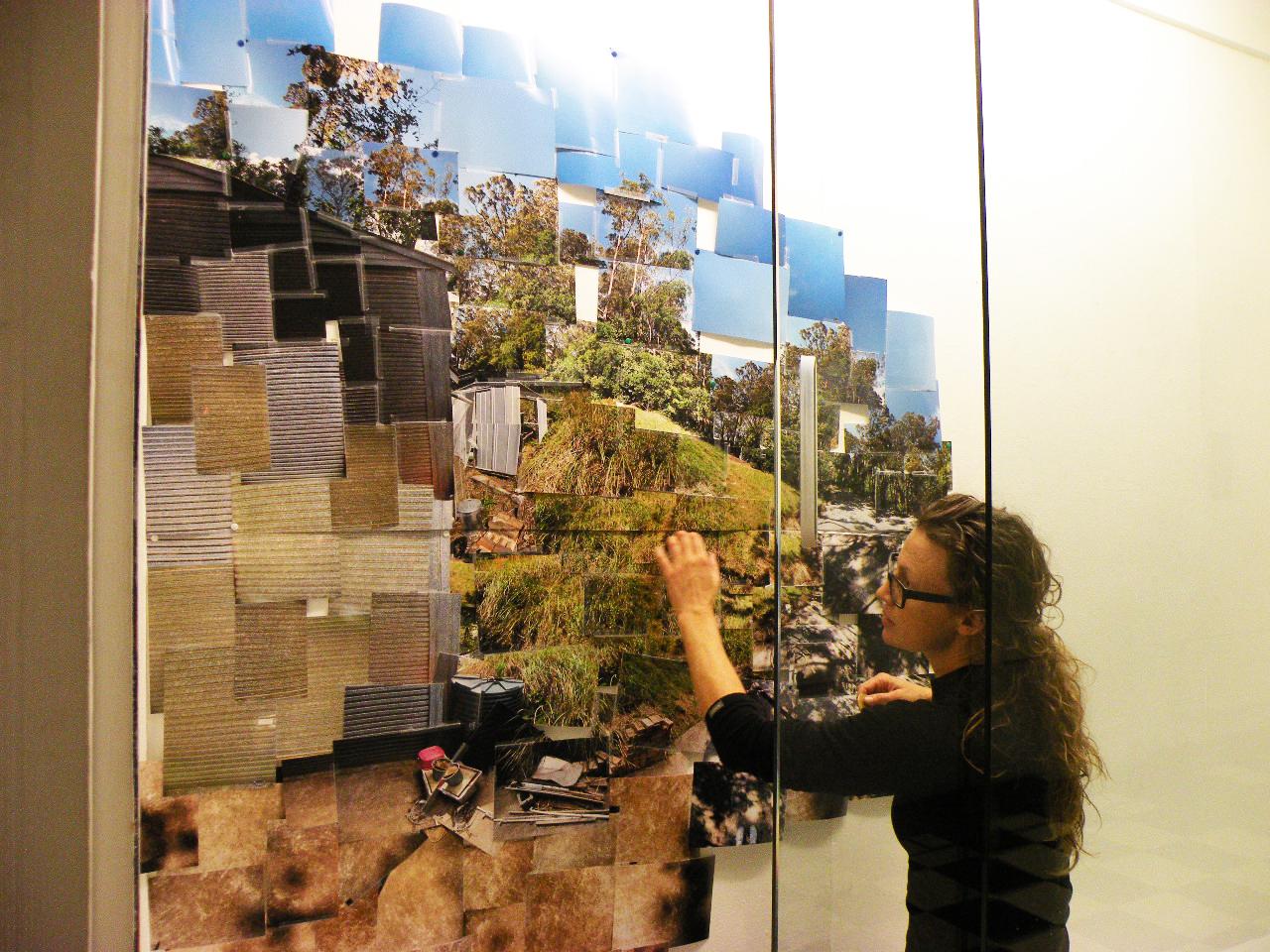
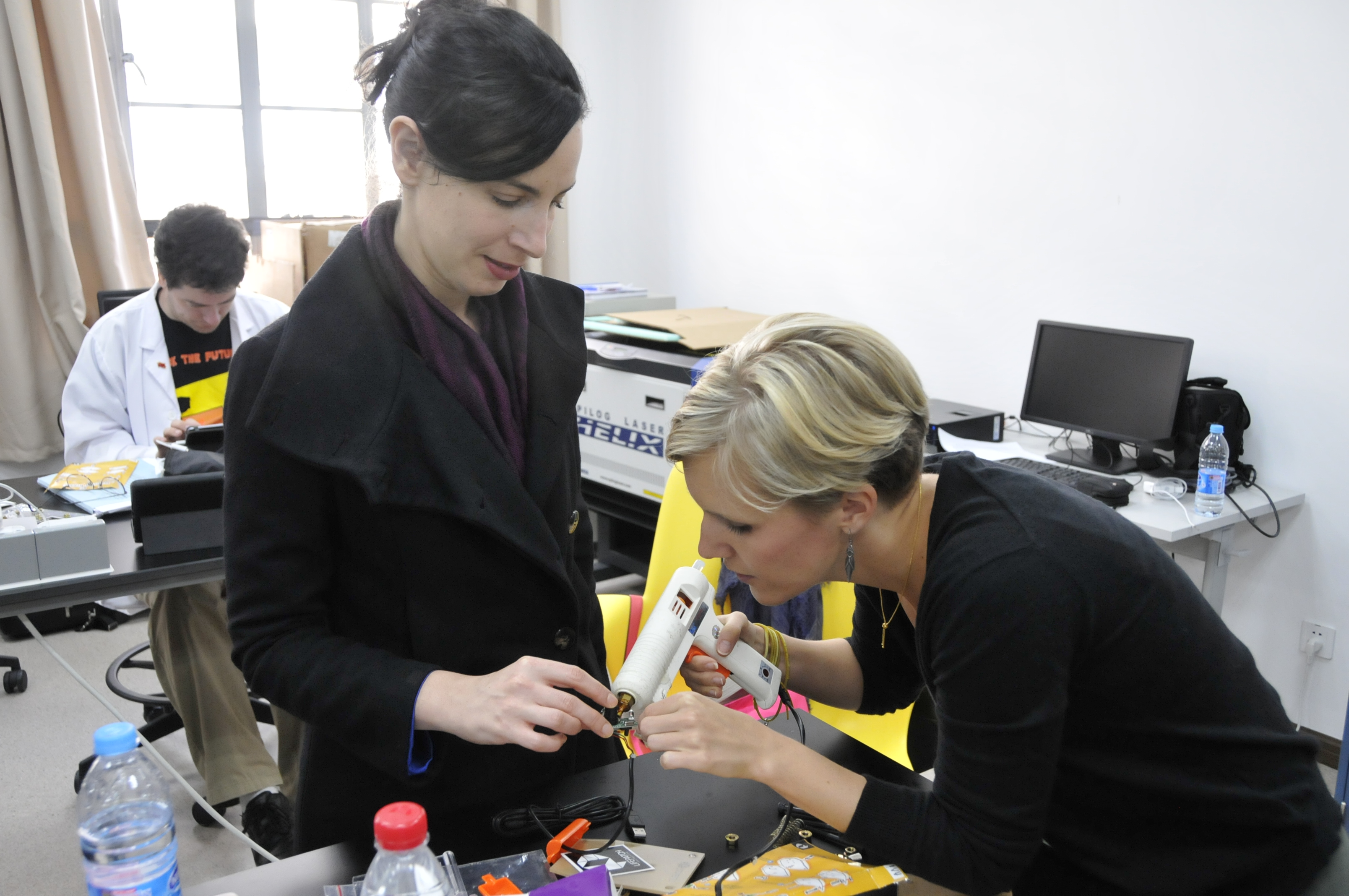
I’ve always made a bit of a mess. I’ve splashed around darkrooms, attempted to stitch interdisciplinary collaborations, and knit a research blog. I’ve hosted exhibitions, printed ‘zines and folded origami-inspired data boxes. I regularly collaborate with colleagues to build and perform dubiously welded “Enquiry Machines,” and I’m currently sewing a range of new Victorian women’s cycle wear as a means of thinking about public space, mobility, and gender. Continue reading

Dr. Funding, or: How I Learned to Stop Worrying and Love Grant Writing

(Savage Minds is pleased to run this essay by guest author Robin Bernstein as part of our Writers’ Workshop series. Robin is Associate Professor of Anthropology at the University of Colorado. She works on how growth and development is shaped, both across generations and among species, in humans and nonhuman primates, and is currently conducting research in rural Gambia. Her recent publications include articles in the American Journal of Primatology and the American Journal of Physical Anthropology.)

As an anthropologist with a field site on another continent and a laboratory that needs a full-time technician to operate properly, I am dependent on continuous external funding to keep things going. There was a time when I resented this, and felt utterly exhausted and desperate in the context of the endless application-rejection cycles, waiting on the edge of my seat to find out whether I could continue my projects uninterrupted, keep my employees employed, and offer any resources to my students. Continue reading

Writing Archaeology

(Savage Minds is pleased to run this essay by guest blogger Zoë Crossland as part of our Writers’ Workshop series. Zoë is Associate Professor of Anthropology at Columbia University. She works in highland Madagascar and writes on semiotics, and archaeologies of death and the body. Her most recent publication is Ancestral Encounters in Highland Madagascar: Material Signs and Traces of the Dead ( Cambridge University Press, 2014).)

Like fiction, archaeology allows us to visit other worlds and to come back home again. So, it can be a useful exercise to juxtapose archaeological texts with historical novels, poems and other forms of writing. Just as a novelist does, a writer of archaeology has to attend carefully to the conventions that shape the stories we tell. The written past demands some kind of narrative coherence, a consistency in our compositional form, and in the internal logic of the world we bring into being. Like poets, we have to choose our words carefully. In this comparison we can identify the shared techniques used to evoke other worlds and to draw in the reader. We can also consider the narrative possibilities that are excluded from our archaeological writing, and ask what opportunities might be opened up by allowing different forms of voice and language. Continue reading

Week 6: Savage Minds Writing Group Check-in

What is your process? How to get your creative juices flowing…and keep them flowing? This week’s Writers’ Workshop guest author Kristen Ghodsee gave us a sneak peek into her writing process in My Ten Steps for Writing a Book, confiding that she had not even been fully aware of it until she sat down to consciously think it out. After six weeks of purposeful writing as part of this writing group, what new practices have you added to your process? What is helping you get where you want to be in the writing?

Four more weeks to go, so this might also be a good time to not only check-in on last week, but also assess your goals for the remainder of the writing group, and also tune in on Monday for our next Writers’ Workshop post, this time from Zoe Crossland, professor of archaeology at Columbia University.

Finally, if you missed it, there is still time to add strength to your writing support network—create an Anthropology Zombie Apocalypse Team! I made mine yesterday and got Sam Beckett, Kurt Vonnegut, and Franz Boas. This week I’m going to see if I can’t channel some Kurt Vonnegut in my writing. This could be interesting….

anthropology + design: anne galloway.

[This post is part of a two-week series featuring interviews with designers reflecting on anthropology and design.]

ANNE GALLOWAY. designer. ethnographer. archaeologist.

ANTHROPOLOGY + DESIGN.

My sense of anthropology is very materialist so I think it made a lot of sense for me to gravitate towards design. I originally trained as an archaeologist and did ethnographic fieldwork on Andean textile production, so I’ve always been interested in the things that people make. Of course, as anthropologists we’re taught the importance of context and I think that bringing anthropology and design together really stresses contextual meanings. For me, the most interesting connection between anthropology and design can be found in how each practice enhances the other. Anthropology provides a kind of thick description that contextualises design processes and products, and design offers anthropology creative means of exploring and representing what it means to be human. I also enjoy the explicit combination of thinking, doing, and making—of blurring boundaries between analytical and creative practice, between rational and emotional experience.

Sometimes, in design, we talk about research about, for, and through design—and I think that anthropology is well suited to contribute to each endeavour. As we know, ethnography (including material, visual, and discursive culture) can tell us a lot about the roles of design in everyday life. Ethnography also provides us with valuable information that can be used to design “better” things—or to design nothing at all. And although research through design is perhaps less obviously related to anthropology, I think that every kind of anthropological research could create and employ objects and images with as much nuance as we’ve come to use words.

Continue reading

My Ten Steps for Writing a Book

(Savage Minds is pleased to run this essay by guest author Kristen Ghodsee. Kristen is Director and the John S. Osterweis Professor of Gender and Women’s Studies at Bowdoin College. Her prize-winning books include: The Red Riviera: Gender, Tourism and Postsocialism on the Black Sea (Duke University Press, 2005), Muslim Lives in Eastern Europe: Gender, Ethnicity and the Transformation of Islam in Postsocialist Bulgaria (Princeton University Press 2010), Lost in Transition: Ethnographies of Everyday Life After Communism (Duke University Press, 2011), and Professor Mommy: Finding Work/Family Balance in Academia (Rowman & Littlefield, 2011). Her fifth book, The Left Side of History, is forthcoming with Duke University Press in 2015. She blogs about ethnographic writing at Literary Ethnography.)

When Carole McGranahan asked me to blog for the Savage Minds writing group, I wasn’t sure what I was going to write about.  I’d recently finished my fifth book, and was in the early stages of a sixth manuscript, so it seemed like I should have something to say about how to get a big project done. 

But I never realized I had a process until this morning.  To get the creative juices flowing, I sketched out a flow chart of how I tackle a project from start to finish.  The chart surprised me.  My quirks and old habits turned out to be a defined system, one that I have implemented for each of my books without even knowing it.

Continue reading

anthropology + design: silvia lindtner.

[This post is part of a two-week series featuring interviews with designers reflecting on anthropology and design.]

SILVIA LINDTNER. DIY maker, hacker, and ethnographic design researcher.

silvia 13

ANTHROPOLOGY DESIGN.

Many disciplines and fields often work with competing notions of what counts as design, claiming authority over the term, practice, and definition. Think for instance about efforts in critical design (e.g., Dunne & Raby 2007) and the strong oppositions its practitioners often make to product design. Critical design is aimed at engaging people in critical ways with commonly used products. As Jeff and Shaowen Bardzell illuminate, critical design is positioned in opposition to affirmative design—the latter considered as “the common practice, and this practice is amoral and ultimately a dupe for capitalist ideology, while critical designers are described as moral agents who seek to change society for the better” (Bardzell & Bardzell 2013).

It is important to not shy away from the politics of design, or to brash aside such heated debates over definitions, terms, and authentic practices–many of which are legitimizing efforts of new approaches in an overly competitive market (both industry and the academy). The question is how to engage the politics of design in a way that remains open to multiple viewpoints and approaches. At numerous times in my research, I have heard people argue that the process of making and designing itself is apolitical. There is much that refutes such statements–think for instance of questions of labor when we turn towards sites of production that manufacture the technological products we use on a daily basis, or listen to debates of hackerspace members over what counts as hacking versus making versus product design. What is important here is to consider the differences that lie in designing as a mode of inquiry, a leisure practice, or central to one’s profession and livelihood.

Continue reading

Week 5: Savage Minds Writing Group Check-In

And then there were five.

Five weeks, that is. We are half-way through our ten weeks of writing together. Phew! Are you still here with me? Our numbers are dwindling, and if you’re anything like me, these check-ins seem to be coming much too frequently! If you are someone who hasn’t checked in every week, do not despair or feel you can’t jump back in. Check in when you like, and if not, then at least keep writing.

What in your writing is worth telling? What stories need to be known by others? What commitments have you made to others, and have others made in sharing their stories with you? This week’s guest essay by Bianca Williams–Guard Your Heart and Your Purpose: Faithfully Writing Anthropology reflected on finding courage and faith in the writing. Acknowledge vulnerability. Discern purpose. Have faith. There are stakes involved in our writing as she so clearly reminded us…and herself.  Continue reading

Guard Your Heart and Your Purpose: Faithfully Writing Anthropology

(Savage Minds is pleased to run this essay by guest author Bianca C. Williams as part of our Writers’ Workshop series. Bianca is Assistant Professor of Ethnic Studies at the University of Colorado, and holds a PhD in anthropology from Duke University. She is the author, with Tami Navarro and Attiya Ahmad, of the article “Sitting at the Kitchen Table: Fieldnotes from Women of Color in Anthropology,” and of the forthcoming Duke University Press book Exporting Happiness in which she examines how African American women use international travel and the Internet as tools for pursuing leisure, creating intimate relationships and friendships, and critiquing American racism, sexism, and ageism.)

“Above all else, guard your heart, for everything you do flows from it.”   Proverbs 4:23

Like many others, the blank page can terrify me. Simply starting a new blog post, an essay, or a book chapter can have me tumbling into hours, days, or shame-filled weeks of procrastination. These are the times that resistance and fear triumph, and I feel myself falling into a moody mixture of anger, frustration, sadness, and general feelings of incompetence. Oh, and sometimes there is crying. However, once I find successful methods for dragging the words that are in my head onto the page,[1] I then attempt to organize them in a way that makes sense, creates “new” knowledge, and contributes to multiple fields, ever aware that in some near future a committee will attempt to quantify my publication impact and decide whether they should grant me tenure. Surprisingly, for the past three weeks Writing and I have engaged in a truce—or I should say, she has decided to get off my back, give me some room to breathe, and allow the words that infiltrate my dreams and my meditation sessions to flow a bit easier onto the page. What is interesting is that this period of writing peace has resulted in a new issue: I keep getting my best writing ideas while I’m in the shower. Continue reading

“Divorce your theory” – A conversation with Paul Farmer (part two)

(This is the second half of an interview (the first half is here) by Ståle Wig. Ståle Wig has recently completed a research based MA in Social Anthropology at the University of Oslo, with a thesis on development workers in Lesotho. He is affiliated at the Center for Development and the Environment, and teaches a class in Science Outreach and Journalism at the University of Oslo.)

Last year I got together with Dr. Paul Farmer for a talk. In part two of our conversation, I ask Farmer about the limits of “applied” social science; the reasons for his apparent optimism; and whether, after all these years, he at all considers himself an anthropologist.

Continue reading

anthropology + design: nicolas nova.

[This post is part of a two-week series featuring interviews with designers reflecting on anthropology and design.]

NICOLAS NOVA. design researcher. ethnographer.

a-braincomp2

ANTHROPOLOGY + DESIGN.

The word “design” is problematic as it’s often related to furniture and glossy magazines at the local newsstand. And because this term is used in different fields, from engineering to management, you have different professions in which practitioners see themselves as “designers:” architects, engineers, people developing user interfaces for websites or video games, etc. A good way to approach design is to understand what “designers” do: they define the shape and the behavior of artifacts based on their understanding of potential users and the context in which they live or work. Said differently, they materialize “prospective futures.”

In order to speculate about near future possibilities, designers usually need to make their work relevant, useful, or believable by people. This is where the social sciences fit in. Knowledge and methods coming from anthropology–such as ethnography–are used and often repurposed by designers to help make different decisions over the course of a project. Observing people’s routines in a kitchen can inform the design of electric appliances, for instance. Interviewing users with a non-standard way of using their bike can also be curious and lead to new bicycle designs.

Continue reading

Week 4: Savage Minds Writing Group Check-In

An “exposed investment in someone else’s truth.” What an insightful, generous, weighty way to think about the responsibility of the anthropologist. These are Sienna Craig’s words from her essay On Unreliable Narrators. So much of what she wrote resonated for me. Thinking about how people try to reliably narrate an unreliable world. About the vulnerability of unreliability. Or the contagion properties of the unreliable, of how the category or label can move through a group, set in motion truths of a fiercely certain sort. And, of course, of the anthropologist as narrator, reliable or not? Continue reading

“Divorce your theory” A conversation with Paul Farmer (part one)

 (This guest post comes from Ståle Wig. Ståle has recently completed a research based MA in Social Anthropology at the University of Oslo, with a thesis on development workers in Lesotho. He is affiliated at the Center for Development and the Environment, and teaches a class in Science Outreach and Journalism at the University of Oslo.)

Paul Farmer was never an orthodox anthropologist. As an undergraduate I remember reading his article, An Anthropology of Structural Violence. It took me by surprise.

Not because I was unaccustomed to scholars arguing that we need to link the ethnographically visible to history and political economy – or, in Farmer’s words, “the interpretive project of modern anthropology to a historical understanding of the large scale social and economic structures in which affliction is embedded”. No, my class had already read Sidney Mintz. It was somewhat fascinating to read an anthropologist who at the same time was a doctor committed to heal the sick in his ethnographic surroundings. But that’s not really what got me, either.  Continue reading

anthropology + design.

Savage Minds welcomes guest blogger, Rachel Carmen Ceasar.

Chances are you know nothing about design.

Me neither.

nicolas_objects_big (1)

So when I was introduced to designer Laura Forlano at the Society for Social Studies of Science meeting in Sunny San Diego last fall, my interest in what design could do for anthropology–and vice-versa–was piqued.

For the next two weeks, I will be running a short series that features interviews with design researchers, ethnographic hackers, and field work makers with their take on anthropology and design. For the first interview, we will be talking with design researcher and ethnographer Nicolas Nova (that’s his toolkit in the photo above).

Rachel Carmen Ceasar (@rceasara) is a doctoral candidate in the Joint Medical Anthropology Program at UC Berkeley and UC San Francisco (California, USA). She writes about the subjective and scientific stakes in exhuming mass graves from the Spanish Civil War and dictatorship in Spain today.