 I subscribe to a ‘director’ at YouTube called ‘visualanthropology.’ A video popped up in the feed recently of some guys sitting around riffing off Paris Hilton and coming up with the idea that she is a Situationist. I thought the notion rather absurd and for some reason felt motivated to write a comment — and am now having a funny/serious discussion about ‘reading’ pop culture with someone who claims to have claimed that Paris Hilton is an anthropologist. Silly, but it’s Friday.
Tag Archives: Theory
Science Studies is Anthropology
I’ve just come off of a week long visit with Bruno Latour. He came to Rice as the “NEH Distinguished Visiting Scholar” and gave a public lecture, three seminars, screened a video about his recent art exhibit and participated in three classes (two in anthropology, one in architecture), in addition to dinners, lunches, talks with undergraduates and graduate students, trips to the mall, and a tour of Houston. In short, we got our money’s worth. It reconfirmed for me my sense that Latour is a gentleman and a fantastic teacher; his curiosity is boundless, as is his ability to converse, in depth, with an astonishing range of people–from scientists to lawyers to evangelicals to architects to philosophers to American historians to undergraduates to the wine buyers at Specs (The World’s Largest Liquor Store, about which Bruno said of its immense and varied selection from all over the world “Now I understand relativism. You know, you aren’t supposed to be that open-minded”). The only people he seemed unable to connect with were the French, which is not entirely ironic. He is a fantastic teacher– better at clarfying his ideas in person than in print–and incredibly patient with questions and the inevitable attacks that come based on his reputation (one colleague asked if he felt responsible for the Holocaust– I think this was meant to be “provocative” rather than puerile).
Continue reading
And the anthropologists went two by two…
I’ve been relatively silent on SM recently partially because I’ve been hard at work on another project that involves far more intimate knowledge of WordPress than any mortal and fully employed academic should ever have, namely The ARC: The Anthropology of the Contemporary Research Collaboratory. Some may recall previous mentions (1,2) on SM. ARC was started about two years ago by Paul Rabinow, Stephen Collier and Andrew Lakoff as an experiment on collaborative “concept work” in anthropology. This latest transformation represents not only significant progress in the work of the people involved, but a transformation of the infrastructure of collaboration and discussion, which will hopefully allow for a much wider array of people to participate.
Among the things that have been occurring in ARC are an ongoing discussion on “concept work” and the ideas of conceptual labor and a “laboratory” in the human science. George Marcus, James Faubion, and Rebecca Lemov have all contributed to this discussion as it has unfolded. In addition, the projects within the orbit of ARC have settled into a few different areas: a project on “Vital Systems Secuirty” looking at the genealogy of contemporary approaches to critical infrastructure protection, homeland security, syndromic surveillance and other such developments; a project comparing developments in synthetic biology and nanotechnology, primarily around ethics and ontology; and an ongoing discussion on biopower, biopolitics and their continued transformations in anthropology and elsewhere; and an experimental lab/seminar at UC Berkeley focused on concept work and graduate pedagogy. Continue reading
Reading Ivy in New Guinea
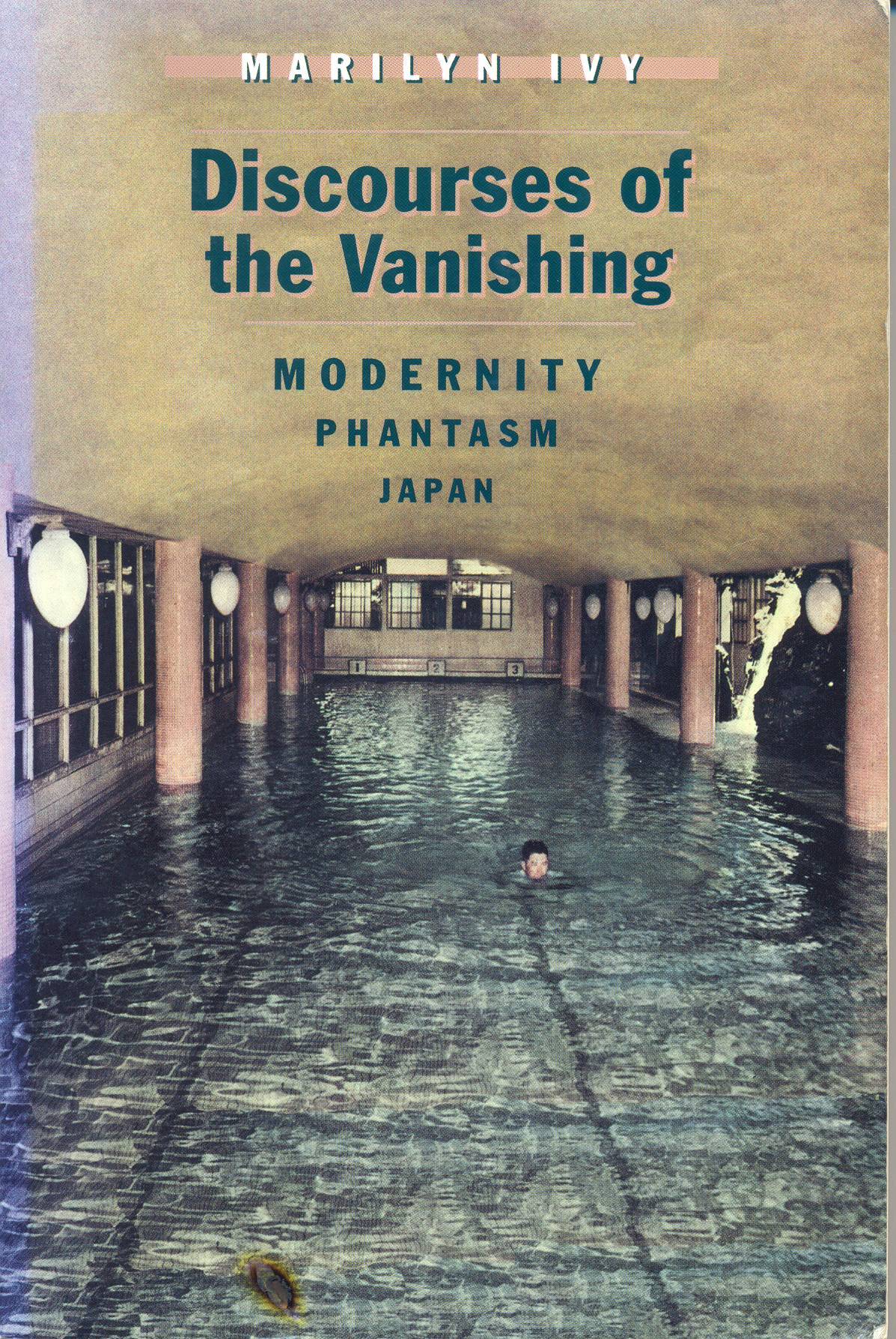 That is a small burn at the bottom of the cover of my copy of Discourses. No doubt from a flying ember sparked in the firepit of my fieldhouse. Since I was welcomed to the field by all kinds of spooky stuff (rumors of witchcraft and ghostly goings on), perhaps my mind turned to the Ivy text because of its thematics of ‘haunting.’ Yes, I read the book by lamplight. I had first encountered Discourses in Vincanne Adams’ “Transnational Culture and Power” seminar at Princeton way back in Spring 1995. I re-read it in the field in 2000. But it wasn’t exactly ‘phantasm’ that drew me back to a text that had initially struck me (and apparently Kelly & Kaplan) as difficult and unclear. It was specifically the idea of ‘vanishing.’ For in my fieldsite, men kept making a rather startling claim: they were [bodily] shrinking (see especially the work of Jeffrey Clark, among others).
I went to the field with just a few texts, all of them Melanesian ethnographies, and no novels. I remembered one colleague telling me that he only brought a ‘linguistics handbook’ or something like that to the field with him, noting that anthropologists in the field too often spend time reading and not enough time interacting. Once in the field, the notion struck me as absurd: I desperately wanted something to release me from interaction. So I wrote home to ask for some books. Among them, two complementary texts: Haruki Murakami’s Wind Up Bird Chronicle, and the Ivy monograph.
I got to thinking about Ivy as I contemplated the persistent claim amongst many of my informants that their ‘culture’ is ‘dying’ (a notion that was sometimes expressed in English: as in the sentence, “Our culture is dying”). I had been trained to be critical of such claims and to note that while my informants observed that their lives were fundamentally transformed, even ruptured, I could see that their culture was still being reproduced (see Robbins & Wardlow). The crux of my present work lies at the impasse presented by the juxtaposition of claims to cultural demise and anthropological faith in the integrity of culture. This is not at all a new problem for anthropologists. I like ‘modernity’ because it helps me to think about it. Continue reading
The (Very) Short 20th Century? Defining Modernity Down (part 1)
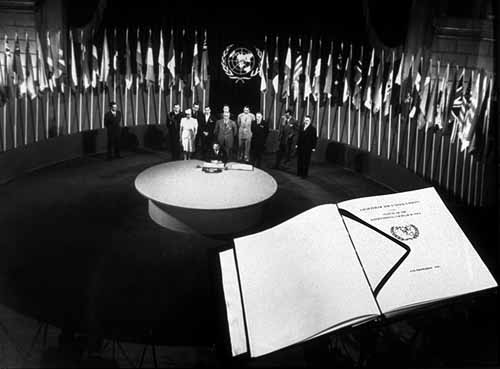
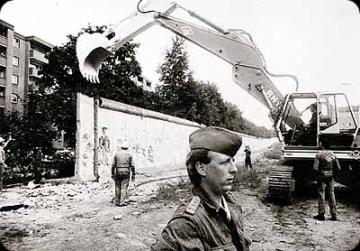
I allude to the ‘long nineteenth century.’ I tend to be uninterested in epochal pronouncement; it usually seems to me to be a rather egomaniacal gesture (as when intellectual X declares period Y over and done with; see below on fashions in theoretical prefixes.) Nevertheless, a hypothetical conversation I have been having in my head has got me thinking about how we will reflect upon and classify the 20th century in contemporary and future discussions. If the long nineteenth century referred to the period between the French revolution and World War I — a period of reconfigured sovereignty and unbridled Empire — perhaps a similar reconfiguration of the socio-political will be said to characterize the 20th. Could we periodize the ‘short’ 20th century (I depart here from other formulations) as beginning at or towards the end of World War II (perhaps with the creation of the United Nations or at Bretton Woods) and ending in 1989, with the fall of the wall? (I deliberately resist September 11, 2001, as an epochal marker, believing that to invoke 9/11 these days participates in certain ideological framings [as for example, the very idea of the ‘GWOT’] that I reject — and besides, the significance of 9/11 in many ways I think was prefigured by the dissolving of the ‘bi-polar’ world of ‘the Cold War’ represented by certain momentous events in Berlin.)
The hypothetical conversation is between John Kelly & Martha Kaplan and Marilyn Ivy on the question of modernity. An odd juxtaposition? Consider: they are centrally concerned with the transnational politics and history of the Pacific; they are critical interpreters of the ‘national-cultural’; and they all take World War II and its aftermath as the foundational moment for the emergence of contemporary ‘glocal’ social orders. But while Ivy I think performs captivating hermeneutical theatrics with the concept of ‘modernity,’ Kelly & Kaplan assiduously criticize the ways in which the construct ‘modernity’ operates to cover over the specific character of the exercise of power on the world stage today (an exercise of power that assumes an especially American face).
Random thoughts on scale
Human geography — and particularly Marxist human geographers such as the work of Harvey, Smith, and LeFevre — have developed the notion of ‘scale’ that have found their way into anthropological theory. Thus we have notions of scale making and scale jumping percolating into the works of Tsing, West, and so forth. These concepts have always seemed naggingly imprecise to me although it is difficult exactly to say why. I want to take a stab at explaining why here, even though I’m hardly an expert on this literature.
Scale, technically, is the representative fraction that indicates the relationship of a unit of distance on a map to a distance on earth — one inch to a mile, and so forth. ‘Issues’ of scale arise when geographers enter the realm of (as Neokantians might put it) problems selection and focus — what ‘scale’ is appropiate for a particular research topic? That of the country, the region, the city? Since geography is (almost by definition) catrographically inclined, issues of research focus and design are expressed in spatial terms.
This is all well and good, but when anthropology begins adopting these terms this spatial metaphor for problem selection — appropriate for cartographic endeavors — gets stretched to the point where it becomes a hinderance rather than a help. This is particularly true, I feel, in the case of the literature on globalization.
Continue reading
Rosen and Said
The excellent (but poorly advertised, on the Internet anyway) Boston Review is currently running “a review by Lawrence Rosen”:http://bostonreview.net/BR32.1/rosen.html of Robert Irwin’s book on Said. I’ve “discussed the Said-Irwin thang before”:/2006/12/10/edward-said-and-the-oppositional-canon/ as something that pretty much all anthropologists should keep up on, given the way that Said has become so central to the canon. Lawrence Rosen — a student of Geertz from the Morocco phase — has had a distinguished career (although not very similar to his contemporary Paul Rabinow) worrying out the interpretive end of law and anthropology and the Middle East.
The thing that I like about Rosen’s review is that it charts a middle course between Said and Irwin. It is tempting to diss and dismiss both of thee authors since there seems to be so little middle ground between not only their arguments, but their more general sensibilities. I like Rosen’s willingness to point out the way that Said’s shortcomings can be understood as part of a larger ‘unfinished’ project rather than as errors that doom the enterprise from the start. Above all, it ends by shifting the discussion away from the narcissistic examination of the careers of Western scholars and back to the issue at hand — what must be done for Standard Average European scholars to understand the Standard Average Muslim?
Two Styles in the Practice of Theory
In her comment in a “recent post”:/2007/01/06/pop-quiz-who-made-this-diagram/#comment-46735 Lilly Hope mentions the distinction betwee Marshall Sahlins and Michael Silverstein as anthropological theorists. Both of these people served as members of my dissertation committee, and Sahlins was my chair — as a result I have more than a passing acquaintance with both of their works. But Lilly Hope’s comments struck me as a little odd and I think that was because of the fact that we went through the same department, but at different time. I think that comparing Sahlins and Silverstein as theorists can tell us a lot about how anthropological theory is done and some of the main tendencies within it — after all as long-time colleagues Sahlins and Silverstein have influenced each other and their work is in some sense variations on a common theme.
Lilly writes that Sahlins has “a fluid style” and “a more-or-less universal and ahistorical model of how (social) structure happens” while Silverstein has “a more rigorous and richer model” While it does strike me as odd to someone who pioneered the field of historical anthropology ‘ahistorical’, I don’t want to quibble with Lilly’s comment so much as I want to do violence to the comment by wrenching it out of context and using it as a springboard for my own thoughts on the topic… 🙂
Continue reading
On Nostalgia: One Quote

I am in Tallinn, Estonia, en route to a conference on ‘memory’ in Tartu. I write in Stereo: the name of a super hip bar where everything is made of molded plastic; there is a wall of flat-screens showing trance-y imagery and morphing mood lighting everywhere. Outside are 13th-century walls. The juxtaposition is surreal enough to make you reflect on history, and what’s been lost, alright.
In Tartu, I am giving a paper on colonial nostalgia — nostalgia for colonial orders by those who were (are?) subject to them.
Probably the pre-eminent contemporary theorist of nostalgia and its complex genealogy is Svetlana Boym. Her book, The Future of Nostalgia, is a fascinating meditation on post-socialist memory, as well as a historico-philosophical disquisition on nostalgia as genred affect. (I can verb anything.) I share a quote by way of introducing a topic I will blog about more later on:
There is in fact a tradition of critical reflection on the modern condition that incorporates nostalgia, which I will call off-modern. The adverb off confuses our sense of direction; it makes us explore sideshadows and back alleys rather than the straight road of progress; it allows us to take a detour from the deterministic narrative of twentieth-century history. Off-modernism offered a critique of both the modern fascination with newness and no less modern reinvention of tradition. In the off-modern tradition, reflection and longing, estrangement and affection go together. Moreover, for some twentieth-century off modernists who came from eccentric traditions (i.e., those often considered marginal or provincial with respect to the cultural mainstream, from Eastern Europe to Latin America) as well as for many displaced people all over the world, creative rethinking of nostalgia was not merely an artistic device but a strategy of survival, a way of making sense of the impossibility of homecoming…
Neither poet nor philosopher, I nevertheless decided to write a history of nostalgia, alternating between critical reflection and storytelling, hoping to grasp the rhythm of longing, its enticements and entrapments. Nostalgia speaks in riddles and puzzles, so one must face them in order not to become its next victim — or its next victimizer.
The study of nostalgia does not belong to any specific discipline: it frustrates psychologists, sociologists, literary theorists and philosophers, even computer scientists who thought they had gotten away from it all — until they too took refuge in their home pages and the cyber-pastoral vocabulary of the global village.
I find Boym evocative, engaging, brilliant. I didn’t have The Future of Nostalgia to read while I was tracking ways in which the ‘past’ is portrayed in the Asaro Valley. But I did have Discourses of the Vanishing. More on that, soon…

Nuclear/National Intimacies

More than just a detector, the NukAlert™ is a patented personal radiation meter and alarm. Small enough to attach to a key chain, the device operates non-stop, 24/7 and will promptly warn you of the presence of unseen, but acutely dangerous levels of radiation.
A little ‘uncanny’ that I encountered the ad for the above product just after having finished reading Joseph Masco’s captivating The Nuclear Borderlands. Masco describes ‘the bomb’ as a ‘national fetish’ — a sort of subject/object that becomes an intense focus of quasi-sacred patriotic awe even as it conceals its own mechanisms of production. Technologies and institutions built to produce nuclear weapons, Masco argues, not only reconfigured American culture, they have literally transformed nature globally (by polluting it with contaminants that will be around for hundreds of thousands of years). And yet, partly because of U.S. government protocols of secrecy (that verge on the hilariously absurd), the actual operations of nuclear weapons research and production have remained largely concealed from public view. Thus, in the national-cultural consciousness, the nuclear, the atomic, the subterranean (literally) plutonium economy leaks into awareness as the uncanny return of the repressed. As for example, in the mobilization of cold war fears in the service of the ‘global war on terror.’ Masco writes:
Many Americans, for example, were gripped by an experience of the nuclear uncanny following the September 11 terrorist strikes, intuitively understanding the attack on New York and Washington, D.C., through a nationalized notion of violence developed during the Cold War nuclear stand off. One of the most powerful effects of the bomb, I believe, has been to nationalize a sense of apocalyptic violence in the United States, unifying the nation through images of its own end. The cultural effects of the Cold War nuclear standoff — the decades of life situated within the thirty-minute temporal frame of a nuclear war that may have always already started — has produced a new kind of psychic intimacy with mass violence. (pg. 334)
One has only to think of ‘ground zero,’ as Masco notes. And not just psychic: these days, you can wear that ‘new kind of intimacy’ in your pocket — with Nukalert.
Masco’s ethnography had me thinking about the forces behind contemporary globalization, and especially about John Kelly’s argument that rhetorics of ‘modernity,’ ‘the nation-state,’ and ‘American empire,’ conceal the unique and historically-specific circumstances that account for the shape of global relations today: viz., American military power deployed in specifically anti-imperial forms to secure access to and remunerative exploitation of global markets. (I hope to initiate a discussion of this argument in future posts.)
In any case. What forms of intimacy with violence does American global hegemony generate? There is the unthinkable (extraordinary rendition, followed by [by what? torture? that’s a secret…]), and the mundane (your toothpaste confiscated at a small airport in the Arctic Circle). We are invited to imagine disaster, we are interpellated as subjects of terror, in innumberable and everyday ways. But we have our keychains to protect us.
Edward Said and the Oppositional Canon
Gary Kamiya’s article over at Salon entitled “How Edward Said Took Intellectuals For A Ride”:http://www.salon.com/books/feature/2006/12/06/orientalism/ has a nice write up of Robert Irwin’s new book “Dangerous Knowledge: Orientalism And Its Discontents”:http://www.amazon.com/Dangerous-Knowledge-Orientalism-Its-Discontents/dp/158567835X/sr=8-1/qid=1165774790/ref=pd_bbs_sr_1/103-0032906-7355009?ie=UTF8&s=books. As is well known, Irwin’s book has been the focus of an enormous amount of attention after he was stung to death by a sting ray while filming his latest ‘Crocodile Hunter’ special. No just kidding that was Steve Irwin. Robert Irwin’s book caused a stir because it is — or so I’m told — a good book which criticizes Said.
Said, like Derrida and to a lesser extent Foucault, is one of these thinkers that has a lot of lousy critics who seem to be upset more by the way their work challenges their comfortable subject positions than by anything Said said. Irwin shares Said’s substantive politics but takes issue with his analysis. It sounds like an interesting book.
The idea that struck me in Salon was the idea that Said was a keystone of the ‘oppositional canon’. We all know that for every lousy critic of Said there is a uncritical admirer for whom Said is an exemplar of what a non-Haole, leftist, decolonizing academic can and should be. But I’ve never seen a syllabus entitled “The Oppositional Canon: Theoretical Genealogies”.
What else should be on there? What are the classics of the oppositional canon? What are the key articles that people focus on? Fanon? Spivak? Fabian? Do we read Mbembe or Cesaire or both? And which of them? I have a good sense of this for the Pacific (or at least Hawai’i) but not in general. I suppose this is because, subject-position wise, I’m the guy that people are opposing (I checked out “Exemplars”:http://www.amazon.com/Exemplars-Rodney-Needham/dp/0520052005/sr=1-1/qid=1165776136/ref=sr_1_1/103-0032906-7355009?ie=UTF8&s=books from the library to read over the winter break – MWoRN ftw!!!). But as someone who is going to be teaching an “Empire Strikes Backs” section of a grad-level theory course, what do you think I should be teaching?
Is motherhood natural?
Following Kerim’s excellent post regarding the sex/gender system and new efforts to bring an ethic of ‘self determination’ into the legal recognition of sexed and/or gendered bodies, a point about motherhood. As I have already written on this site, I have been teaching a course on kinship this term. The course is going well — I hope — and we are now moving from the classic ‘kinship and social structure’ type of analysis to the ‘cultures of relatedness’ stuff. Two segues: one, new reproductive technologies, which (again) may or may not animate ‘choice’/’self-determination’ in the context of the putatively natural realm of kinship. It’s almost as though laws in New York state and technologies everywhere are catching up to the radical feminist program of the 1970s: to undo compulsory systems of sex/gender domination by making them subject to individual negotiation (read: agency). Second, the history of marriage in Europe and the prohibition on incest. We have been reading Ariès’s contested thesis about the invention of childhood, Goody’s brilliant and contested argument about property and the church in the creation of modern marriage, and Duby’s sensitive ‘ethnographic’ portraits of kinship among the ruling classes of medieval Europe. It’s funny that the historians in this instance end up sounding more anthropological than the anthropologist: Goody reading Europe through the prism of inheritance/property flattens the cultural dynamics involved in church prescriptions regarding marriage (as N Z Davis, among others, has pointed out). So Duby’s histoire du mentalité ends up seeming rather like something that a cultural anthropologist would write. Which of course makes sense, given the intellectual background of these folks.
One thing that has come up over and over again in our course, and that I think I will consider the next time I teach it, is the putative naturalness of the mother-child relation. Many introductory kinship texts begin by pointing out that while fatherhood is frequently non-obvious, motherhood never is. The obviousness of motherhood makes theories of primitive promiscuity in relation to classificatory kinship terminology problematic (extension of the term ‘mother’ to cover over possibly previous promiscuity really doesn’t make sense). And the problem of motherhood and nurture also gets built into mid/late-20th-century accounts of gender assymetry, as in critiques of the public/private or political/domestic divide. My students ask: how can motherhood be culturally constructed? I now realize that when I next use materials from medieval Europe in my kinship course, I will also want to teach Bynum’s “Jesus as Mother.”
There are abundant materials for prying apart the supposed univerality (or ‘obviousness’) of the mother-child relation. Melanesia offers some, and I would just point to Marilyn Strathern’s claim, on re-reading Kelly’s analysis of Etoro: “Put simply, I cannot find any Etoro mothers — analytically speaking, they offer no starting point for analysis.” (See, Gregor and Tuzin.) We have also visited Middleton’s account of ‘how Karembola men become mothers.’
Another potential source is Scheper-Hughes’ powerful stories of the choices that poor women in NE Brazil are forced to make with regard to their children. Scheper-Hughes talks about her work in a video interview available here.
Examples can of course be multiplied. Suggestions?
Theory in anthropology since “Theory In Anthropology Since The 60s”?
One of the big problems I encounter when providing potted histories of anthropological theory is to figure out what has gone on since the late 1980s. Sherry Ortner’s article Theory in Anthropology Since The 1960s is now ubiquitous on theory syllabi and has had a weirdly hegemonic effect on our imagination of anthropology’s landscape. The other thing the late 80s were good for were strong statements in the field of political economy (Europe and The People Without History) and of course the ‘Writing Culture’ moment which was easy to clearly clustered around Writing Culture, Interpretation of Culture, and Anthropology As Cultural Critique. But since then… what? I’d like to nominate a couple of contenders for the potted-theory shortlist.
First, for a more British and less potted collection there is always Blackwell’s new Anthropology in Theory: Issues in Epistemology edited by Moore and Sanders which came out in 2005 and is more or less brand spanking new.
Second, there is Webb Keane’s article Self-interpretation, Agency, and the Objects of Anthropology: Reflections on a Genealogy which is, as far as I can tell, available on-line free of charge (as are many of his other excellent papers) which reflects on the ‘Gupta and Ferguson’ moment of 1997 featured both Anthropological Locations and Culture Power Place as well as Abu-Lughod’s Writing Against Culture which has certainly become representative of a certain approach to anthropology.
Third, there is Sherry Ortner herself, who has attempted to update her famous article in the first chapter of her book Making Gender in 1997 and it looks like her upcoming volume Anthropology and Social Theory will do the same.
Finally, there is Robert Brightman’s 1995 article Forget Culture: Replacement, Transcendence, Relexification which presents a sort of conservative counter-thrust to authors — Abu-Lughod chief among them — who want us to ‘forget culture.’
So there it is — from 2006 to 1995, some good places to continue the potted history of anthropological theory. What would you add to this list?
Verbal Privilege
Here is a different take on the legacy of what we write as scholars, and what kind of knowledge is produced as a result, a topic I’ve been exploring in some recent posts (here and here). This is from a poem by Adrienne Rich entitled “North American Time,” and posted (some time ago) to the blog Language Hat.
II
Everything we write
will be used against us
or against those we love.
These are the terms,
take them or leave them.
Poetry never stood a chance
of standing outside history.
One line typed twenty years ago
can be blazed on a wall in spraypaint
to glorify art as detachment
or torture of those we
did not love but also
did not want to killWe move but our words stand
become responsible
for more than we intendedand this is verbal privilege.
I can’t think of a much better way to explain why anthropologists should read Derrida, without making everyone feel all iterable.
Ask our readers: Is knowledge cumulative?
Here’s a question I think about a lot: Is knowledge cumulative?
It strikes me as an important question for how we think about the work that we do. Are we simply making utterances in an ongoing dialog, utterances whose echo will quickly fade, or are we adding to a general storehouse of knowledge which benefits from every additional sand of grain? I think how we answer this question underlies some of the differences between activist anthropology and what we might call “pure research” anthropology.
An activist thinks about her research as an intervention in an ongoing debate. While doing good research is important, even more important is the way that research might impact the contemporary political climate.
The “pure research” anthropologist is willing to spend their time on an obscure topic nobody is much concerned with at the moment because they are contributing to the expansion of human knowledge.
Of course, the reality is more complex than either of these caricatures. Work which is considered progressive at the time might be appropriated by conservative causes, while academic fashions may mean that the contributions of esoteric research lies in obscurity for decades or centuries before once again coming to light (i.e. when Rex blogs about it on Savage Minds).
While the promise of Google Scholar seems to speak to the fantasy of cumulative knowledge, there are some mitigating factors that must be taken into account:
Continue reading