Tag Archives: Ethnography

Ethnography is like fishing…(h/t Marcel Mauss and James Ferguson)

I have gotten a couple of comments regarding methods, access, etc. (thanks for the comments!); I will get to those issues later this week. Today I thought I would give a description of the early portion of ethnographic research that Bloomberg’s New York is based on–a narrative of what actually happened, rather than the packaged, fabricated narrative that we as academic professionals spend so much time self-consciously producing.

First a brief backstory: from 1998-2000, I attended urban planning graduate school. Halfway through, I realized I was far more interested in analyzing cities than planning them, especially because (at that point anyway) in NYC “planning” often meant little more than manufacturing windfall profits for developers. So I headed off to the CUNY Graduate Center to work with their flock of urbanists.

Flashing forward to 2003: my dissertation research begins. The idea is for me to investigate the process by which the “business agenda” comes to be. Basically, what I am trying to do here is use ethnography to explore what happens in the gap between the functional requirements of capitalist urbanization (as laid out by Harvey, Castells, Molotch and Logan, etc. etc.) and the construction of an actual elite agenda in a specific historical, cultural, and geographical context. My focus is on the public spaces of development policy formation, such as conferences and other professional meetings, city council hearings, etc., but also on more informal mechanisms. For the latter, I draw on the network of contacts I began developing in graduate school, and I soon find out that the development policy world in NYC is pretty small and interlinked (I had an excel spreadsheet with just a couple of hundred names on it). I begin talking to people, attending those conferences, interviewing, and so on.

As I do so, I quickly realize three things. First, the Bloomberg administration is up to something different than I expect, given the standard shape of neoliberal urban governance in NYC or elsewhere. The administration is engaging in citywide urban planning, moving away from the use of indiscriminate tax subsidies, and perhaps most interestingly pulling a lot of new people into City Hall. Not surprisingly, given the new Mayor’s background in business, this includes several people from finance and other private sector industries. Less expected is the hiring of a number of very well-respected planning and policy professionals to staff the top levels of the Bloomberg administration’s development and planning agencies. Such people had largely been excluded from previous administration in favor of folks drawn from the real estate industry or from the murky world of NYC’s public-private development agencies (which basically amounts to the same thing). Bloomberg’s City Hall is becoming a hotbed corporate and professional technocracy.

Second, the Mayor’s business background (along with that of the other private sector people he was bringing into government) actually seems to matter in substantive ways. Economic development officials are telling the city council about the thorough rebranding campaign underway; city officials are referring to companies as “clients”; City Hall was being physically remodeled along the lines the Mayor had used in his private company, Bloomberg LLP; and perhaps most remarkably, the Mayor is referring to NYC as a “luxury product.” Importing private-sector logic into government is nothing new, in NYC or elsewhere, but now it is being done by people who can (and do!) credibly claim to be running the city like a private company.

Third, everybody in the development and policy world is focused on the far west side of Manhattan. Everybody. Nobody wants to talk about the business agenda formation; they want to talk about the Hudson Yards (the plan proposed for the area). The Bloomberg administration is joining NYC2012 (the city’s private Olympic bid organization), the Group of 35 (an elite commission charged with stimulating office development in NYC), the New York Jets, and a number of other planning and development groups in targeting the area to the west of Times Square and Penn Station for redevelopment. And as it turned out, graduate school classmates of mine are involved in the growing conflict over far west side redevelopment in a number of ways–some working for city agencies, others working for community organizations that oppose the plan as currently formulated.

This was a key point in my research; suddenly focusing on the process of business agenda formulation seemed a bit boring, especially since I had a full-scale development battle emerging in front of me! I also had this interesting phenomenon of the ex-CEO mayor actually running the city as a business (rather than just for business), which seemed to have some unpredictable consequences (like a willingness to raise taxes and hire egghead professors and policy professionals and respect their expertise). Finally, I had all these professionals–city planners, professors, public health experts, markets, educational experts, former management consultants, etc.–talking about the new spirit of professionalism and competence in City Hall, and the new excitement about public service that they and their peers were feeling.

Realizing all this, I began to split my research onto two tracks. First, I began investigating the early years of the Bloomberg administration, i.e. late 2001 to mid-2003, using interviews with officials, government documents, transcripts of administration testimony to the city council, and various secondary sources. Second, I threw myself into the conflict over the far west side of Manhattan, attending every community meeting, rally, city council hearing, conference, and official planning meeting I could find, and redirecting my interviewing towards those engaged in the conflict. I’ll write a bit more about the second, more ethnographic of these two tracks next time.

What I am up to

I want to thank Kerim and all the Savage Minds folks for giving me the opportunity to share my work and thoughts. Its an especially nice opportunity for me because my relationship to the mainstream of contemporary anthropology has been, if not vexed exactly, then fraught. Though I received my PhD in anthropology, though I have taught in anthropology departments for the past five years, and though, in the classroom at least, I have become a believer in anthropology’s indispensability to the well-rounded undergraduate, my writing and research has always felt somewhat oblique to the discipline and its central concerns.

That’s because I investigate issues–urban governance and urban political economy in the contemporary United States–that have generally been addressed in interdisciplinary urban studies. However, the way I investigate them–using ethnographic methods and analysis, paying close attention to my informants’ words and to detail and particularity, and by taking seriously the impact of what I will gloss here as “cultural” matters in the context of urban governance–are very “anthropological,” or at least seem so to me.

Adding to this, the people I have for the most part studied–urban planners, city officials, economic development experts, developers and so on–are generally not studied in any real depth by anthropologists or by people in urban studies. Most urban anthropologists (not all, of course) tend to focus on relatively poor, or ethnic, or working class neighborhoods; when my “people” do show up, its usually only when City Hall and developers are trying to perpetrate some kind of nefarious development scheme. In urban studies, the folks I study typically are either subsumed into the application of some larger structuralist theory of urban governance (the urban growth machine, the capitalist urban state, urban neoliberalism, etc.), or (more common now that Marxist thought has been, if not displaced as dominant in critical urban studies, then theoretically hybridized, ethnographized, and made more flexible) incorporated into nicely context-sensitive empirical accounts in a relatively one-dimensional way, as inhabitants of government positions or as avatars of commodification, rather than as three dimensional individuals with class, race, gender, educational, and other biographical/social/cultural characteristics (that is to say, in the manner that anthropologists typically portray their informants).

Urban anthropology and critical urban studies do a lot of things really well–think of how much we know about the dynamics, complexities, and social organization of poor urban neighborhoods, or about why it is that developers so often get what they want from city government–but one thing they aren’t particularly good at is providing well-rounded and robust accounts of the formation, makeup, development, history, and internal tensions of urban elites. I think this is important to do for both analytical and political reasons.

So that’s what I am up to. Hopefully it begins to explain why an anthropologist would do something like study the administration of New York’s ex-billionaire Mayor Michael Bloomberg.

Fleeting Togetherness in Smart Elevator

A guest post by Jenny Cool cool@usc.edu

The elevators I encountered at the 2010 AAAs were for me a kind of ethnographic readymade: those redolent objects and gestures through which “the social world seems more evident…than in the whole concatenation of our beliefs and institutions” (to cop a phrase from David MacDougall, 1999: 3). No doubt many of you made your own observations of the lifts at the Sheraton New Orleans. Hervé Varenne’s post “On an education into elevators” touches on some of the same phenomena I do in describing “impromptu conversations” that broke out in and around these elevators. And others have written more generally on “the anthropology of elevators” (Leslie, D’Costa) Like Varenne, I focus on the social and discursive learning I participant-observed riding the vertical rails at the AAAs.

Here were people negotiating a radically new interface—not alone at their keyboards or mobile devices—but in a pubic place, surrounded by fellow meeting goers. It was a rare opportunity to watch the encounter in a social setting quite unlike others I’d experienced in my research of computer-mediated communication and control. Continue reading

Award Winning Anthropological Writing

I just went through the “Section Prizes” page of the AAA website and listed all the award winning books and articles listed there. I limited myself to works published after 2008 which I could find references to online. That means I included books listed in Amazon.com which only received “honorable mentions,” but did not list award winning student essays for which no online link was given. Unfortunately a lot of the links on the AAA site were dead, and many AAA sections don’t properly list their award winners, or haven’t updated their pages since 2007. The list is also missing award winning English language works from other anthropology associations outside the US. I’d love to add such works to the list as well if someone can point me to such lists. Or if you have a Mendeley account, you can add them yourself.

Since I haven’t yet read any of the linked works, I won’t comment on what the list tells us about the state of our discipline, but I imagine a thorough investigation of the listed works might be able to tell us something – especially if we were able to compare it with a similar list from a decade ago. I did notice that about half of the listed ethnographies are available on Amazon Kindle for about $15 which encourages me to think that I might actually read some of them!

Without further ado, here is the list.

Digital Labor

My colleague Ramesh Srinivasan and I just submitted an article to a journal in which we analyze social entrepreneurs’ digital labor practices. The argument we are making is that one needs to focus on (1) organizational missions, cultures and histories, (2) the nature of the labor (its level of creativity or its invocation of routinized, uncreative time-motion studies!) and the level of agency for workers to choose this labor versus various alternatives, and (3) the level of capitalization of the labor, notably who profits and to what extent from the contributed work. Our case studies, Samasource, a digital labor firm that brings digital work to developing world populations, including refugees and women, and Current TV, a cable network that self describes as “democratizing” documentary production, maintain an interplay between for/non-profit and social empowerment/exploitation. Instead of waiting the 4 months for reviews, or 8 months for publication we’d love some real time feedback on some of the more illustrative examples and concerns that drive this research. (I’ll be presenting this analysis at the American Anthropological Association meeting on Friday at 5 if you prefer embodied engagement).

Continue reading

Breaking Ranks

Since we’ve just entered the 10th year of U.S. military intervention in Afghanistan (well, 10 years this century) it seems a good time to say a few words about Breaking Ranks: Iraq Veterans Speak Out Against The War (University of California Press 2010) co-authored by Matthew Gutmann and Catherine Lutz.

Breaking Ranks recounts, largely through interview excerpts, the stories of six Iraq War veterans who became involved with Iraq Veterans Against the War (IVAW) and other military anti-war organizations and participated in the larger GI Rights Oral History Project. It takes us from their decisions to join the military, through combat, anti-war epiphanies, homecomings, and involvement in anti-war activism.

The patchwork composition of the book reflects the veterans’ attempts to piece together a narrative of their lives defined by the watershed of their experiences in Iraq. While book’s overall structure parses these experiences into a general arc of life—from enlistment, to the shock and fog of war, to political awakening, to struggles with trauma, to activism—it doesn’t smooth over the rough edges of these experiences or impose too clear an order on the muddle of reflexive memories that the soldiers offer.

As the authors note in the introduction, the book is an account of how these six people (five men and one woman; three soldiers, one sailor, one Marine, and one National Guardsman) found their way to a public, anti-war position and of “the striking and original ideas each developed to understand the war and what it meant. Their critiques are not simple matches to those of the civilian antiwar movement or to our own as authors” (8). Thus Breaking Ranks suggest that while it is possible to speak of a single anti-war movement, that singularity subsumes a multiplicity of different meanings and the ones we hear here are not always foregrounded.

Gutmann and Lutz’ Zinn-ian project of documenting the grassroots critiques so often written out of American History is well complemented by their anthropological attention to the little details of daily life (in the military, at war, and after) that aggregate into feelings of frustration and individual acts of political resistance, suggesting the complex and divergent paths through which soldiers come to, as they say, “speak out”.

Thought the text of the book is devoted to six stories, it is also peppered with facts and events that position these very diverse lives within a single post 9/11 historical moment which is also linked, by both the authors and the subjects, to the American legacies of the Vietnam War and its contemporary anti-war motifs.

In their curation of the stories, Gutmann and Lutz also demonstrate the ways that war insinuates itself into civilian life in America, making military service seem like the best possible option for many Americans whose lives are made hard or unstable by the exigencies of family expectations, national pride, poverty, and youth. The Introduction and endnotes are also full of data and resources for further reading about the ‘dark side’ (as Alex Gibney might say) of America’s war in Iraq.

Lately, ‘the good war’ in Afghanistan is consuming more and more of America’s attention and resources and, in the months since Breaking Ranks was released this summer, American combat operations in Iraq have been declared over (again) and the ‘draw-down’ of combat troops and ‘civilian surge’ there have begun. In this context, we can read in Breaking Ranks deeper questions about the different justifications for American military interventions in Afghanistan and Iraq at the level of individual experience and public discourse alike, as well as about the fundamental nature of wars in which nation-states confront non-state entities through the sanctioned, violent acts of their citizens. As our attention, and perhaps attitudes, to America’s two main post-9/11 military operations seems to be shifting, Braking Ranks can help readers think about how things have (and haven’t) changed in military life and policy at home and down range.

In addition to being a powerful documentary record and conversation starter about the Iraq War, Breaking Ranks strikes me as an important, accessible, and eminently teachable book that speaks of the conflicted experiences of soldiers in war, the political failings of America’s doctrine of pre-emptive war, and the contingent evolution of personal conflict into political action. It would be well suited to undergraduate classes on war, trauma, social movements, public or activist anthropology, and—given its format—methods courses that discuss life-story interviews and practices of ethnographic writing.

[A bit of full disclosure: Royalties from Breaking Ranks are being donated to IVAW; an organization with which I did some fieldwork in 2008 and which I’ve personally supported]

EPIC: Ethnographic Praxis in Corporations

One of the most vigilant members of the SM community, John McCreery (PhD Cornell, 1973), just returned from EPIC, Ethnographic Praxis in Corporations, a conference which took place August 29th-September 1, 2010 in downtown Tokyo with this guest blogger report. It was a local event for John who has lived in Japan since 1980. John is a pioneer in the creative application of anthropological training in corporate contexts having first worked as a copywriter and creative director for Hakuhodo Inc. (1983-1996) and later becoming a Partner and Vice-President of The Word Works, Ltd. (www.wordworks.jp). Kochira koso, John, for this excellent look at EPIC. –AF

An EPIC Experience by John McCreery

All is not well in the world of EPIC, Ethnographic Praxis in Corporations. That said, there is much to envy and admire. Having struggled over the last fifteen years to establish ethnography as an essential component in the corporate research toolkit, participants in EPIC 2010, held this week in Tokyo, confront an environment in which economic recession has slashed budgets and shortened projects, while acceptance has led to routinization, erosion of perceived value, and the threat of deskilling. Above all, corporate ethnography, like the survey and focus group, is threatened by the rise of analytics that draw on the Internet for near real-time access to changes in user behavior. There is, however, a notable lack of panic and despair in the EPIC community. These are, after all, people who have faced tough times before and created new roles for themselves.

Continue reading

Ethnographic Approaches to New Media

I myself am not currently doing research on new media, but because I am an active user of new media I keep getting asked for links to contemporary research on the subject. The best place to start is E. Gabriella Coleman’s Annual Review article, “Ethnographic Approaches to New Media.”

This review surveys and divides the ethnographic corpus on digital media into three broad but overlapping categories: the cultural politics of digital media, the vernacular cultures of digital media, and the prosaics of digital media. Engaging these three categories of scholarship on digital media, I consider how ethnographers are exploring the complex relationships between the local practices and global implications of digital media, their materiality and politics, and their banal, as well as profound, presence in cultural life and modes of communication. I consider the way these media have become central to the articulation of cherished beliefs, ritual practices, and modes of being in the world; the fact that digital media culturally matters is undeniable but showing how, where, and why it matters is necessary to push against peculiarly narrow presumptions about the universality of digital experience.

Beyond that, there are also two excellent and up-to-date online bibliographies: Max Forte’s Cyberspace Ethnography, and danah boyd’s Bibliography of Research on Social Network SitesFeel free to post additional resources in the comments.

Indigenous Theories of Published Informants

As anthropologists we research compact and ornate cultural practices that can scale up to something larger. Our informants usually aren’t aware of how their statements and practices reflect larger issues evident in broad social theories and histories—if they did than the world wouldn’t have anthropologists. They are often surprised to discover how meaningful their lives are upon reading our interpretations and manuscripts. That is, all subjects except those who have already done the literary and library work needed to contextualize their lives and passions within larger theoretical and historical trajectories. These informant-authors, in effect, know who they are–or at least who they would like to be. Anthropologists have studied text-makers–scientists, journalists, and governmental scribes–and their texts can be obliquely read as reflexive documents. Rarer still are anthropological accounts of living subjects constructing autobiographical, political, or social scientific texts. These well-published informants present a problem and opportunity that needs exploration.

It is wonderful to have hyper-literate informants, collaborators, and subjects who write and publish books, articles, and blogs and make films, documentaries, television programs, and online videos. In the history of anthropology, however, this is rarely the case and because of this paucity anthropologists are at pains to construct theories that are native to the informant. I do not envy the anthropologist who must contextualize their subjects’ interviews and practices in terms of theories and theorists that are not a part of the subject’s worldview. Using French literary and poststructural theory to describe nonliterate tribal practices seems profoundly unanthropological and yet such practices proliferate in academic journalis at an astounding rate. We need to interpret local actions and performances with the aid of indigenous theory somehow devised from observations and pronouncements of subjects. For instance, in The Gay Archipelago: Sexuality and Nation in Indonesia, Tom Boellstorff identifies a local indigenous theory of the self emerging from island life in Indonesia and uses it to guide the contextualization of his gay and lesbi informants. My job is certainly easier than Tom’s because self-publishing subjects provide so much more already contextualized information with which to construct a local theory of identity and community. My informant’s published social scientific work does much of the nuanced labor of theory building for me. The citations and name-drops in their texts make explicit the forbearers, influences, and heroes an anthropologist would archaeologically extract and artificially graft onto the informant in later chapters of extrapolation and upward scaling.

What are the rare opportunities and theoretical complexities associated with doing ethnographic investigation into subjects’ lives that are already reflexively situated in autobiographical texts?

The problems include the fact that the informant/authors offer autobiographical documents about their lives in richly theoretical prose that threatens to trump the work of the anthropologist. Without the reflexive published documents the anthropologist’s primary job is to proceed to first order contextualization–what was the cultural context of this practice? What is this practice like in a comparative sense to other proximal native practices? The opportunities for the anthropologist working with this citation-rich autobiographical literature is to take the level of extrapolation and abstraction one-step further. With bibliography dense self-authored accounts, the first tier theorizing is sufficiently complete–they tell you where they are coming from–leaving the second level of extrapolation open to answering questions like: within the field of all possible indigenous theories why did the subject gravitate towards these influences? How does this native epistemology compare to others in similar–or more daringly–dissimilar contexts? Anthropologists working without self-textualizing subjects surely can get to this second tier of extrapolation but it is more difficult and the conclusions made in that ethereal space are more tenuous.

All anthropologists work with edited documents. This includes interviews which are themselves performed edits of quickly self-truncated statements. These edits–oral, performative, or textual–makes for excellent granular units of data. But at the fieldwork stage, anthropologists need more data not less, we need less self-awareness and self-censorship and more roguish personalities, off-the-cuff actions, and improvisational performances. We need the backstage along with the front stage. Self-editing is a social fact of life but such highly edited texts cut out several important phases that would have been instructive if observed–the subject’s first impressions; selective shuffling, ordering, and prioritizing of issues; the gathering of supportive sources and examples–these are all in the data rich realm of practices and negotiations around which subjectivity and the social self are framed and performed. For example, a ghost writer is writing a book for one of my informants and I want to get the transcripts, edits, and feedback in this process to see how they are contextualized by themselves and the ghost writer for a perceived and corporately constituted audience. Finely edited books, combed over by agents, managers, editors, and colleagues do not furnish such raw data.

To what degree should we be critical about how these authors prefer to textually edit themselves into particular subjectivities? Contradicting or challenge author’s stated affiliations and origins is a practice in literary studies for revising the preferred automatic claims of dead authors but like stamping non-indigenous theory on indigenous data this too is quite unanthropological. The safe route is to step off from this first tier of reflexive theorizing into a higher level of abstraction. The more dangerous path is to read the authors cited by the informant and develop a still deeper sense of indigenous theory–this is going textually native–revealing where the informant glossed over contradictions and leaned on over-simplifications in arriving at their particular framing of the self. Using this critical textual reading of reflexive indigenous theory the jump into the second tier can be made along with the informant’s peers and mentors.

TV Free Burning Man

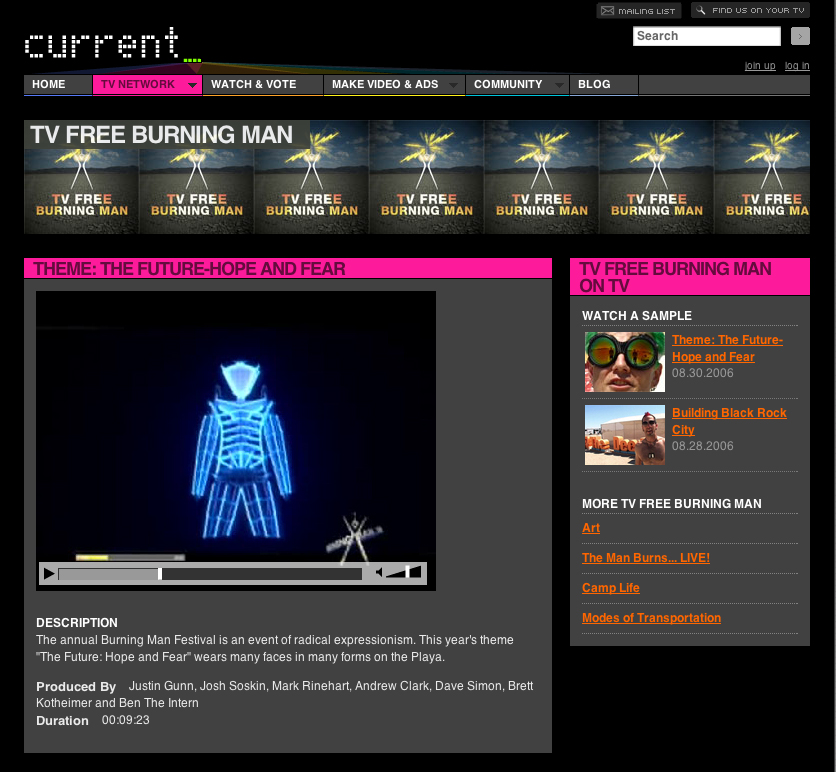
Next week as many as 50,000 people will inhabit Black Rock City, a temporary metropole constructed by volunteers for a week of personal expression and community celebration on the barren alkaline plains of a Nevada desert a half-days drive from Silicon Valley. This is Burning Man, a radically participatory event where a lot of people who labor in the digital creative industries work out collaborative utopias that make their way–the theory goes–into the social networking software and platforms they make and ask us to populate with our creative surplus, communal energy, and visually expressive humanity. The techno-culture historian Fred Turner states that Burning Man is a ‘sociotechnical commons’—the cultural infrastructure for the digital media industries of California. This is an attempt to document how and why Burning Man is a “proof of concept,” “beta test,” and practical experiment for the engineering of networked publics.

Here is the example. Burning Man influenced three projects to democratize media production initiated by Al Gore’s user-generated and citizen journalism cable network Current TV. Examples include Current’s Viewer Created Content (VC2) program, their social media website current.com, and TV Free Burning Man. Much like Burning Man, each project is an attempt to draw knowledge from the crowd and transform spectators into active producers. My observation is that Burning Man and Current’s emphasis on user-production business models is hemmed in by the looming pressures of capitalism.
Current is an example of what I call digital social entrepreneurship. It is a new media start-up and TV network deeply guided by both a mission and the market. At origin, so these firms go, the mission takes precedent over the market. As time goes by the market supersedes the mission. Current launched in 2005 with the mission to democratize media production and to provide a platform for others to discuss the future of democracy as well as view the cornucopia of voices that make democracy a dynamic guide for governance. Considering the tenuous state of democracies around the world, the consolidation of media systems by multinationals, the broadbanding of sectors of the globe, and the usability of graphic interfaces and professional grade video recorders the attempt to democratize media in 2005 was timely and prescient.

Current’s first idea about content producers was not to crowdsource content through the VC2 program. They didn’t intend to mine the producing audience for TV-caliber video submissions. Current originally planned to hire 20-30 digital correspondents to travel the world making content. A Current employee related to me how the programming executives, fresh from recent excursions to Burning Man in the early 2000s, used the open participatory model of Burning Man to argue against the exclusivity of the digital correspondent model by asking, “like Burning Man, why wouldn’t we let everybody in who wants to participate?” That spirit carried into the creation the VC2, a project to empower any amateur documentary producer to make content for television. This was the impetus behind the first user-generated television network.

From 2005-2008 Current’s website was www.current.tv. It was a space dedicated to VC2 producers to upload and critique short documentaries. In 2008, upper management decided that this was too elitist and they wanted more traffic so they put together a group of marketers, engineers, and creative executives to envision the new website, current.com. One of those creative executives, Justin Gunn, went into the first meeting to brainstorm current.com and

…hung up a map of Burning Man and I took an astronomy magazine and cut out pictures of stars and star clusters, and galaxies and galaxy clusters, and superclusters really beautiful Hubble imagery and positioned it around the  Burning Man map and I looked at [my colleagues] and said, ‘that is what we are going to make.’ And they said,’ what is that?’ And I said, ‘OK, work with me here. We are going to start with the organizational principle of Burning Man, it is a very light, lean organization. I could be wrong here but there is something like 12 full-time employees around the year everything else is all volunteer labor. But they build the structure, they set the rules, they define the parameters and then they invite anyone, anyone to come and do whatever they want as long as they stay within the confines, abide by the rules, and follow the predetermined parameters—they can do whatever they want.’…You start with an organization principle, a framework, here is how this thing works, here is the lattice, but it is empty, we will do a few key things, and we will invite anybody in as long as they abide by the rules and play within the framework, they can build whatever they want. So the constellations and star clusters were meant to represent constellations of information.

Using celestially graphic metaphors for the digitally engaged public they hoped to network together Gunn sought to inspire his co-workers to make a system as open and empty–and as charged with possibility–as the desert of Black Rock before the gates of Burning Man swing wide.

Using their shared interests in participatory community, self expression, and technology as a platform for dialogue–as well as their proximal offices mere blocks from each other in the Silicon Valley outpost of SoMa in San Francisco– producers at Current and organizers of Burning Man began to scheme about a more dynamic relationship. TV Free Burning Man was a result. Combining professional and amateur field production with a televisual aesthetic of first person documentaries and tone poems, the for profit mass media television firm Current produced content live from the playa for four years, 2005-2008. Considering Burning Man’s imperative to avoid all forms of commercialization and the strict media permitting process to even use a still camera at Burning Man, TV Free Burning Man is a testament to the shared ideals and aesthetics of Current and Burning Man.

——————————–
I’ve attempted to link an outrageous event to important technological and economic digital systems used by billions of humans. The goal is to see how internet practices in virtual spaces are coconstituted by actual world practices in material spaces. Savage Mind writer Rex coolly said CEO Mark Zuckerberg’s goal with Facebook is to “scaffold” sociality–strap supportive beams to the human-to-human communication network that presently exists or might not exist without the structured arena. Rex has it right. Social media and social events, like the virtual and the actual, are coconstructed. And yet, something still trumps this transcendence of body-mind duality.

The commercial imperative looms over the users of corporately-made social media just as the end of the week at Black Rock City haunts the freedom-accustomed Burner. In a series of moves, Current has increasingly pulled back from their mission to democratize media production. In a tense economy and with venture capitalist money running thin, Current has moved to capitalize on its major asset, its cable license, through abandoning the VC2 program and relying on traditional professional programming.

Burning Man, on the other hand, remains a valiant, excessive, and privileged materialization of the ideal sociality coded into and by internet culture. Last year around this time I wrote about the emerging tourism industry in Black Rock City, But for now, the Black Rock Foundation does a tremendous job with a skeleton staff, grants art funds to hundreds of artists, and facilitates a relatively commercial free environment. As a non-profit with a seasonal ecstatic event, Burning Man has an easier job than Current of retaining its mission, a for-profit firm in a fiercely competitive TV market responsible for 24 hours of programming 365 days a year.

Openness, liberation, transparency, relativity, democracy, trust, non-privacy, and collaboration are the shared origin myths of the activists and planners of the internet and Burning Man. These ideals are coded into digital architecture in Silicon Valley and other areas around the Black Rock Desert and distributed for free use throughout the world. These digital social systems and event organizations are molded by their missions and driven by the necessity to optimize the growth of their organizations. Every ideal has a shelf life cut short usually by the profit necessity. The compromises to the mission that commercialization requires are the instances to monitor when adjudicating the sustainability of the social entrepreneurship model.

Research Bleg: Collaboration Against Ethnography

For my next paper I’m exploring a case in which the will to do ethnography runs up against the desire to work collaboratively and ethically with one’s informants. It is not uncommon for ethnographers to agree not to talk about certain subjects for fear that doing so might cause their subjects harm, or because the subjects themselves were able to set certain ground rules for the research. Nor is it necessarily a bad thing, as the reasons for the refusal might be even more revealing about the lived experience of the subjects than the topic the anthropologist wanted to write about (or film) in the first place. It does pose some unique problems however, such as how to write about what you can’t write about without writing about it? Because of just this problem I don’t want to go into any more detail about my own paper just yet. But I would like to solicit references to books and articles which discuss this problem in interesting ways. This could mean anything from recent books on the topic of collaborative ethnography or ethnographic film which include discussions of this issue, to specific case studies from researchers who ran into similar problems and dealt with it in interesting ways. Thanks in advance for your suggestions!

Corridors: From Metaphor to Ethnography

It is not uncommon for us to refer to the corridors of academia as a kind of metaphor for the gossipy, informal, discourse which takes place outside of classrooms. Yet we rarely engage in ethnographic study of how academics actually use corridors. This is exactly what Rachel Hurdley has done. She wrote about her research in her paper “The Power of Corridors: connecting doors, mobilising materials, plotting openness.” I heard Rachel Hurdley talk about her research on my favorite BBC Podcast, Thinking Allowed.

Her paper is a response to efforts at moving academics towards more open, less walled-off spaces of the type which has become vogue in the business world.

the university is joining the latest movement in the public sphere towards open-plan, multi-functional, flexible, innovative structures which are constantly equated with ‘openness’, ‘innovation’ and ‘transparency’ by design experts and architects

Hurdley debunks the simplistic association of open spaces with the lack of hierarchy, pointing out the resemblance to feudal halls and much-despised modernist housing. She also highlights the creative and flexible ways in which people actually use corridors. Especially interesting is how she depicts corridors as resisting a single point of view, such as that embodied in Foucault’s panopticon:

These could be called processions of openings and closings between different knowledge domains or worlds: proffering left-overs, knowing not to eat them; talking by the printer, taking it away; putting her in the picture, writing his name in the gap. Similarly, static or one-way concepts of surveillance, spectacle and visibility are recast and mobilised. An ‘apex viewpoint’ at the turn by the director’s office is no more than a corner to a student; only the student can spot his supervisor’s office light.

In the interview she also discussed just how resistant faculty are to such changes. Some threaten to quit upon hearing of such proposed changes, while in places where they have already been implemented, many professors work at home.

Also mentioned during the interview was the fact that academics often use the corridor to “cancel e-mails.” That is, as they walk down the corridor they yell out through the open doors of their colleagues that they should ignore the e-mail they’d sent out earlier that day. She remarked that this seemed to fly in the face of our assumptions about the speed and ease-of-use of electronic communication, but I can totally understand this kind of behavior. Nobody wants to be the person who sends out a stream of e-mails correcting mistakes in previous e-mails, much better to yell it out as you walk down the corridor…

Place Hacking

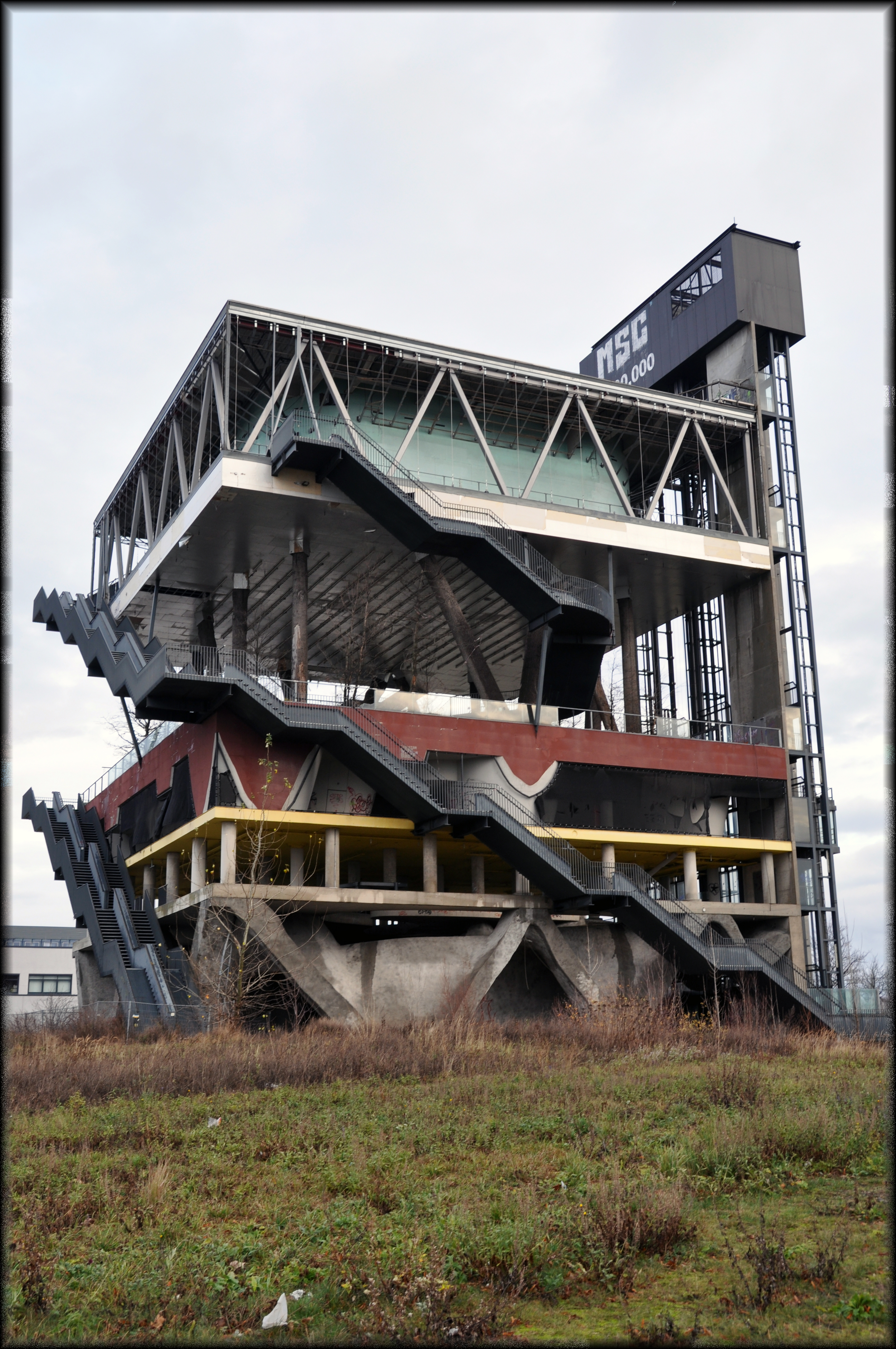
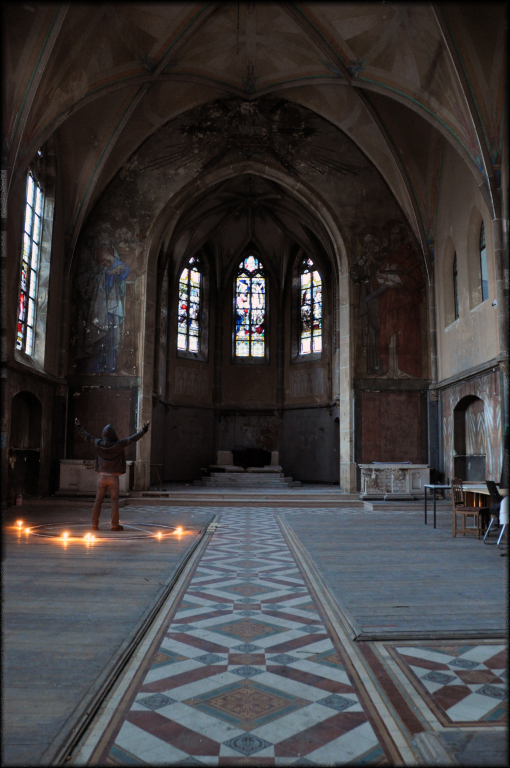
I rapped with reformed archaeologist Bradley L. Garrett regarding his recent visual ethnographic fieldwork about urban exploration. Here’s what we talked about, all images are his.
You are making two types of anthropological cinema. The first is  what you are calling a video article, such as in Urban Explorers: Quests of Myth, Mystery and Meaning, and the second is a participatory yet observational documentary on urban spelunking. The first are information-dense and interview-based, the second wandering handheld claustrophobia inducing visual documents. I have to admit the first is as yet too theoretical and the second is almost unwatchable. How are you going to reconcile these two voices, drives, tendencies?

Urban Explorers Quests for Myth, Mystery and Meaning was picked up early in its production by the Blackwell journal Geography Compass and was constructed as a sort of experiment in what visual geography could become (maybe in relation to visual anthropology which has been far more successful). Basically the idea is that it is a film and an academic article, so yes, blind peer reviewed, properly referenced and hopefully theoretical challenging, while at the same time using some visual techniques, such as cutaways, to get the message across in more visceral way. The tendency with urban exploration, because it is such a bodily activity, is that it tends to get undertheorized and overachieved. So I wanted to really sink my claws into it on the first run and try to get the theoretical gears turning around the practice. I think working this way will, in the end, produce a more effective movement and more respect for the practice.

In regard to your second thread there, I realized early on that when I was exploring I had little control over what I was shooting. When you are hiding from security, trying to get over a fence quickly or simply keeping yourself prepared to move fast should the need arise, you can’t have a huge camera on your shoulder and you can’t really shoot with much intention. In that way, it is a lot like citizen journalism in tough situations, shot when you can, however you can. So my footage is what it is, shitty, shaky handycam footage full of missed whispers and images of the back of people’s heads. But I think the nature of footage itself tells a story, it gives you a sense of how physically painful this work is; at times you can see the camera shaking with exhaustion and hear me panting, wrecked. The experience of exploration is sometimes nauseating and frustrating, why shouldn’t the record of it be as well?

As far as reconciling the two voices, I would love to be one of the few filmmakers out there that does not underestimate their audience. These voices are, in the end, the voices of ethnographic research and sometimes bridging the gap between research and life is difficult and painful. Think back to the classic ethnography Learning to Labour where Willis breaks the book into two sections because he can’t reconcile those voices. It still ends up being an evocative tale, perhaps in part because of that admission.

Maybe the strain will give the film something unique, a schizophrenicness that people who live their work will understand. I want this film to be more than entertaining, I want to take viewers on these journeys with us. I want theatres full of cynical intellectuals, confused and inspired students, rogue surrealists who snuck in through the back door and explorers who interrupt the screening by climbing the rigging to protest their misrepresentation. I want the film to inspire thoughtful action and a refuse to water it down intellectually or take out that horrible, shaky vomit inducing footage to that end. Whether or not those two voices are melded well, I intend to be brave enough to admit that they exist.

I was most excited about your research as a spring-board for criticism of deindustrialization in late capitalism. You followed this thread in your MA in underwater archaeology as you looked at the colonial technoscience behind the building of gigantic riverwide dams and their negative impact on Native Americans of California and Washington State. But as an interpretive archaeologist in the traditions of Chris Tilley and Michael Shanks, You seem more concerned with the poetics of place, the subjectivities of memory and memory loss, and the experience of adventure and abandon in abandoned localities. How are you going to discuss the history of the development of these spaces in terms of globalization, late-capitalism, deindustrialization, etc?

I do think that UrbEx is a wonderful lens for deconstructing the motivations, extravagances and failures of capitalism. A few weeks ago, we took a road trip to Germany to do some urban exploration around Berlin. On the way back, we stopped in Hanover to camp in a ruin that was left behind by the Netherlands government, part of the 2000 World Fair. As we pull up to this derelict building, Winch, one of the explorers on this road trip, says to us “Funny isn’t it? The theme of the 2000 World Fair was ‘a new world arising’, and the only things left behind from it are a few derelict buildings (the other one being a giant yellow structure we dubbed the “Lithuanian Party Box”).

So yeah, I see the failures of capitalism and industrialization all on an almost daily basis and I’ve read some brilliant work that has tried to reason through those issues. A collapse of a building is also a collapse of corporate power structure, of industrial social systems. The failed company town stands vacant, profits drained from the mine, workers dismissed from their homes and lives as a result. We poke the corpse, probing the last remnant of life there, the underpaid security guards left behind to limit insurance lawsuits.
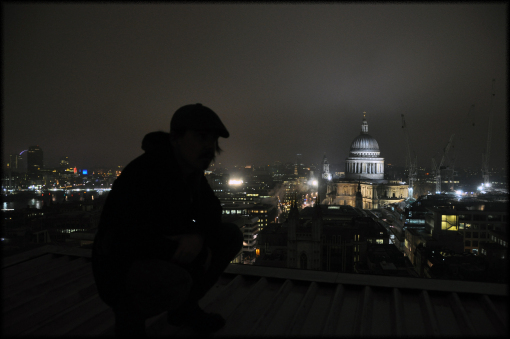
But, as you note, these are not the stories I go looking for necessarily. Geographers like Tim Cresswell, Caitlin DeSilvey, Tim Edensor, even David Harvey and Doreen Massey have written those stories. The stories that I find really enticing are not in the grand narratives but in the fine details. And out comes the archaeologist in me. Going through peoples belongings left behind, old pictures and letters to the family, imaging what lives were like before the industry was picked apart by packets or resource extinction, driving it into bankruptcy or obsoletion.

Walking through derelict mental asylums here in London, imagining the patients pacing the halls, and then visualizing the day that the nurses came in and said, “You have to call someone, find somewhere to go, Thatcher closed us down”. The grand narratives are there yes, they are the script, but I want to know how everyday people were affected, I want to encounter those “other” stories, I want to see the props and the set, not the script. And I think that is best done through experience, walking where they walked, using our geographical, cultural and sociological imaginations. If you look back to my earlier work that you mentioned, you will see that this is what I have always done, working with the local to inform the global, not the other way around. Sustainable change always starts from everyday experience, not governmental policy or cultural norms, just look at the recent failure at COP15 and compare it to what is happening in Iran at about the same time if you want an example of where real change begins. I like the idea of looking at the past to inform the present, not to increase our understanding of the past.

But apparently your informants do not do what they do for political reasons. They do not see their playful labor as a form of resistance. But isn’t one jobs of the anthropologist to aggregate the data and display the possible larger historical and cultural contexts for cultural activities? My argument would be, whether they like it or not their work has political implications.

Okay look, I read de Certeau too, I know that there are political implications in even the most seemingly mundane of practices. Most people, urban explorers included, would agree as well, but find it utterly stressful, and ultimately futile, to try and politicize this playful work every time we go out. So yes, I do see it as my job to be the one who looks past the experiences and starts drawing conclusions about our motivations, passions and actions, even though some of the people I work with find this frustrating. There are a lot of angles you could attempt to do that from.

One might be to look back to Deleuze and Guattari, to their concept of smooth/striated city space, to see urban exploration as a method of melding striations, collapsing the haptic and the optic, bringing deeper meaning to the spectacle. You could see this as a method of taking ourselves off the “grid”, at least temporarily, in an attempt to give ourselves the physical and mental space for freedom of expression. You could also tie this last idea into an existentialist narrative, something about the need to express our intrinsic freedoms, to prove to ourselves, and the world, that the control is in our hands, despite everyone’s constant moaning about how are basic freedoms are constantly being violated. You are the only one who can violate your freedom and we prove day after day that we can get into any place we want to, despite the omnipresence of CCTV, despite their mountains of barbed wire and signage warning of our impending doom should we cross the imaginary boundaries they have established. And we like the game, we don’t want them to stop trying. That is where the politics get really interesting, and where I want to focus most of my thesis. I often think about Nietzsche saying that the truly free spirited will not agitate for the rules to be dropped or even reformed, since it is only by breaking the rules that one realizes their power.

You mentioned the illegality of the activity. In fact, we don’t break into anything. We find creative ways into buildings that allow us to subvert the illusion of spatial exclusion (much like the famous London Mayfair squatters or Da! Art collective that have been in the news recently). As a result, we are in fact breaking no law. Confrontations with security guards are hilarious when you render them inept through superior knowledge of the law they are supposedly paid to enforce, explaining to them calmly that you didn’t break or enter anything and if they touch you it will be considered assault, peacefully walking off site and dancing all the way home. There’s a tactic of the weak for de Certeau.

There is a tradition in anthropology to have key informants. It seems you have a few. There is also a tradition in anthropology of acknowledging the influence we have on our informants. But it also seems that your presence in the urban exploration culture has galvanized the culture itself. Your filmmaking inspired the culture to do more of their cultural thing. It frankly seems that you are creating this culture. The ad-fab adage: ‘make it to break it’ applies I think in your case.


28 Days Later, The Urban Exploration Resource, Ninjalicious and Infiltration existed long before me. What appears to be the “creation” moment of UrbEx is actually just when it went global, with the help of the internet, like so many other movements. The community now consists of tens of thousands of people all over the globe, in countless internet forums, taking millions of pictures of abandoned places and infiltrated spaces every year. I mean, google urban exploration man, you get well over 2 million results. The thing about the movement, and what necessitates my going this deep into it, indeed getting lost in it over the course of my PhD, is that it is still, for the most part, a secret community. We have public forums, private forums, unlisted forums and a lot of people suspicious of technology altogether that not even online involved. Many of the most interesting places explored will never be publically aired; the people who did those explorations will want to keep it local. I think that is one of things that makes this community interesting, its specificity to place and dedication to the practice, without ego-driven expectation of reward. Unlike, ahem, people making ethnographic films.
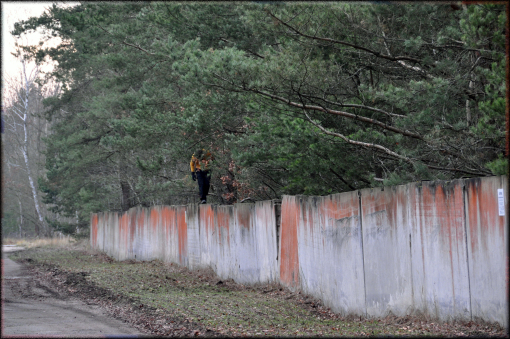
I want to think about serious games and the class of your urban exploring informants. From your documentaries I can see that your informants are all rather technologically-equipped Caucasians with enough leisure time to devote to this past time. The stakes for success or failure in this serious game are not life or death, but pleasure or pain. Now, I know that games are not just ludic past times but impact serious life. But how do you make me the reader or film viewer engage with your work without dismissing it as bourgeois tourism? It seems to me that you have to drop the phenomenology of loss, memory, and dereliction and maximize the issue of deindustrialization.

I have over 40 people involved in my research now, from a range of backgrounds. Women, working class people, people with corporate jobs, individuals from a range of ethnic and cultural backgrounds. When we travel, we meet explorers in every country we go to. This is not a class thing and it is not about leisure time, in fact the majority of the explorers I work with have full time jobs. They just choose to spend their weekends and time off of work exploring landscapes than sitting in front of a television or drinking at the pub. I respect them for that. And to be fair, they tell me I am the bourgeois tourist, the only one getting paid to this. I mean, what is more decadent than getting paid to theorize other people’s existence Adam?

The technology fetish though I won’t deny. Urban exploration seems to be inexorably attached to photography. I can think of a few reasons for this. One is that ruins are simply aesthetically pleasing in a way that takes time to digest. So we walk slowly, we take pictures and meditate on them. These places are also in a state of constant mutation, the natural state of order when human being are not there to regulate it, and since we do not want to impact places, photography becomes a means of halting the mutation. We can freeze it; though we have no intention of stopping or slowing it’s mutation, we don’t want to arrest this decay. This slippage in these places something we can grab, but not something we can hold in place. Thinking back to Shanks and Pearson, to archaeology as theatre, or to David Seamans place-ballets, we have the ability to lock ourselves into a physical courtship with place, a moment in time when body and landscape intermingle. We are in love with the ugly girl in class, the places that was ignored until we pulled out the camera and told them to look sexy. And I would argue that this excitement about encounters with the dereliction of the contemporary past is exactly what will get anthropologists to turn their attention to the industrial era, now largely ignored and under threat of physical erasure in the wake of “deindustialization”, urban “regeneration” and gentrification. Which leads me to my last point, one that it’s easy for an archaeologist to see – we are preserving points in time through photography and video. We are creating historic record.

I recently gave a paper at the Theoretical Archaeology Group (TAG) conference in Durham in a session called reanimating industrial spaces. After my talk, one archaeologist mentioned that she used urban exploration forums frequently to collect information about a site’s passage through time. We are local historians, amateur archaeologists, bodhisattvas of a forgotten past. And we do a damn good job at it! That is not about class, it is about passion for place and a lust for unbridled experience. This is but one expression of prevalent human desire, see it in other urban subversions like skateboarding, parkour, flash mobs and graffiti.

Although I am going on a bit here, let me address your insistence on “deindustrialization”. We don’t want to deindustrialize anything. I love industry, I love industrial ruins. I love construction sites and archaeological ruins equally. I love capitalism and I love laughing at its failures. The same goes for communism. You want to see some real ruined landscapes? Go to a failed communist state; when we were in East Germany, we were almost in tears, there are more ruins than live buildings! The whole thing is like some sick cosmic joke and we are the punchline.
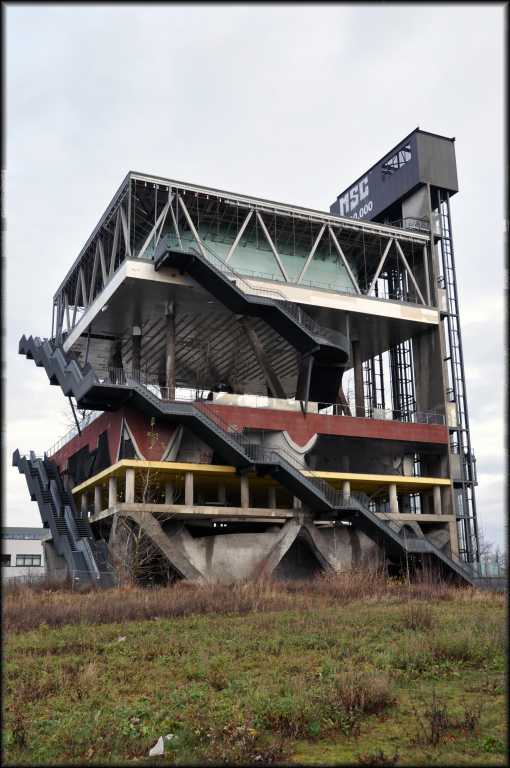
More seriously though, I am concerned that by treating the industrial era as a tainted age, we disrespect those who built and lived that age. Recognize that they were doing their best, just as we are. Again, step away from that big picture and put down that broad-stroke brush, find that those memories on the ground, the years spent on the factory floor, bring tears of joy as often as tears of sadness, just as they do for us. The capitalistic plastic skins on these architectural carcasses begin to peel back, exposed to caustic elements, to reveal a skeleton of rust, cogs, switches, dials, circuit boards and mouldy pieces of paper outlining modes of production, things to remember, forgotten Polaroids and birthday cards to the family. It’s all in there, a little package of life. And when we pass through these places, we tap into those stories and weave them into our own. This is the embodied subjective.

I refused to be ruled by fear; I will only be motivated by positivity and freedom. This is not to say I want to overromanticize the past, but that I want to make the most out of this present that I can. Life should be more than deconstruction and analysis. I can unpack my experiences and feeling about the practice, but more importantly, those experiences are creating, constructing and reinforcing brave personalities, free spirits, databases of knowledge and memory, a collective consciousness of ecstatic phenomenological wonder, of playful work that speaks volumes about culture. Industrial ruins are decaying but they’re not dead, they are landscapes filled with possibilities of wondrous adventure, peripatetic playfulness and artistic potential.

If you fall down a Parisian catacomb tomorrow, never to be seen again, what will 1) scholarship miss 2) the non-academic world miss. Meaning: what is the big contribution of your work?

Look brother if I die and don’t finish these tales of urban exploration, here are the threads, please finish it for me! Urban exploration is about experience, expression, love and creation. It is a rare instance (especially in western society today) of human beings physically going out to challenge space, to challenge control, to assert their rights to place, their rights to the city, their rights to participate in the creation of historic narratives and cultural identities. This topic is vital to our understanding of the contemporary human condition. It is so temporally and politically relevant that it threatens to implode under it’s own philosophical weight. Urban exploration is existentially reactionary, pushing against alienation, suppression, bureaucracy and overregulated existence. But it is also ecstatically playful, and by playfully pushing the boundaries of what is possible, by putting ourselves in potential danger to assert those rights, we live Hunter S. Thompson’s edgework. At play, at work, in danger, loving, bonding, challenging, and laughing, free and unrestrained, we are at our best.

What we are doing is not supposed to be possible. Most people on the anonymous city streets don’t have their gazes honed to see what we see. We are mutants, neo-sapiens. We declare that the idea of no limits to the human imagination is old news. Now we want to know the limits of human imagination physically manifested in resistance to social and cultural norms. We want to know how much bullshit we have been fed. And the sparks that come out of those clashes will give birth to new forms of being, new realms of experience. Those little beautiful demonic creations will live far longer than us.

Maps are an abstraction Adam, they are a utopic representation of nationalistic and ideological power structures which do not have a 1:1 ratio with the earth’s surface. Therefore, as Hakim Bey tells us, we have the opportunity to get into those cracks in the structure and to create Temporary Autonomous Zones of political, social and cultural insurrection. And I use that term consciously. We do not want revolution, we want to create alternative spectacles (following Debord) that are just as superfluous but that, none-the-less, cause re-analysis, confrontation and confusion. We want you to keep hitting the refresh button to see what happens next. If we are successful in realizing our personal visions, our spectacles are composed of more experience and less simulacra than those of the state, nation or culture but are just as stupid.

This is why I call us place hackers. We are the physical manifestation of the internet pirate. We are the TAZ. We have the corporeal skills of thieves amalgamated with minds molded by an internet ethos of taking what we want, when we want it. We don’t care if corporate control exists, but we assert our right to challenge or ignore it. Virtual hacking is cool but place hacking makes it core again, brachiating across scaffolding to get the shot on your Digital SLR that maximizes your flickr stats, raking in the google adsense cash and conforming to a zerowork ethos if we get pro at it. Sleep in ruins, sell your photos of disgusting shit to tourists. Rinse off in a petrol station sink and repeat. We are the nerds that finally walked away from their computers and we are behind that scaffolding covering the building you ignore everyday when you walk by it going to work, we just loved on that place like no one has in 20 years. We are psychotopological terrorists and we will shove that masterlock up your ass.

How could my interests in contemporary corporate space, networked virtual organization, and new media social activism interlace with your work?

I was talking to one of my project participants the other day while walking through a ruin that had closed down in 2003, the “newest” I had ever explored, about what will be explored from the information age. Will we find interest in exploring empty glass postmodern shells of low blue office carpet; will we photograph the little marks in the carpet where the cubicle separators used to be and get all giddy? Will we find old hard drives and hook them up marveling at the novelty of “cables” to see what was on them, infiltrating people’s left behind lives through virtual exploration? Perhaps. Certainly our children will find those places as weirdly exotic as we find the derelict art deco swimming pool. And so the torch will be passed, challenging them to find their own meaning in those remnants. I don’t know if the intersections between the past and the future have yet met in the present. Perhaps that is what we are looking for. Perhaps we could invoke that spectre.

‘Life at the Googleplex’: Corporate Culture, Transparency, and Propaganda

How the hell am I going to get access to study these uber-elite media companies? In my desperation to find ethnographic facts about ‘corporate culture’ at the new media conglomerated behemoths I am viewing these reflexive industrial videos Google and its subsidiary YouTube upload about themselves. What are these things? Part recruitment propaganda to solicit CVs from the world’s top engineers, part PR-campaign to provide proof of its post-China ‘do no evil’ mantra, part braggadocios chest bump and back slap these videos must have some information that can provide evidence for the ‘real’ internal values and dynamics that influence the 20,000 employees and the 100s of millions of networked people that use their digital tools daily.

<object width=”425″ height=”344″><param name=”movie” value=”http://www.youtube.com/v/eFeLKXbnxxg&hl=en_US&fs=1&”></param><param name=”allowFullScreen” value=”true”></param><param name=”allowscriptaccess” value=”always”></param><embed src=”http://www.youtube.com/v/eFeLKXbnxxg&hl=en_US&fs=1&” type=”application/x-shockwave-flash” allowscriptaccess=”always” allowfullscreen=”true” width=”425″ height=”344″></embed></object>
But before I begin this bite-sized Youtube videothon I want to query if anthropological tools exist for such research. First, how would an anthropologist contextualize and categorize these videos? Reflexive, check. Industrial, check. Commercial, probably. They are not viewer-created but they have the amateur aesthetic. Textual studies of reflexive and industrial media and websites in anthropology is under-developed. In that historic genre, ‘ethnographic film,’ there were calls for greater reflexivity. And there are ethnographic investigations into the social life of social media. Patricia Lang, danah boyd, Heather Horst, and Mimi Ito can be consulted for this. And I am sure that there are numerous anthropological studies of race/class/gender as exhibited on Youtube. Alexandra Juhasz and Michael Wesch use YouTube as a pedagogical tech. But as far as I am aware, nobody has thought to look at how governments, corporations, and other institutions self-visualize a public persona. Secondly, who has analyzed the particular limitations and possibilities of this new platform for cultural expression? There is more cultural material on YouTube than in anywhere in the world. We must be able to incorporate this data.
<object width=”425″ height=”344″><param name=”movie” value=”http://www.youtube.com/v/VzMPV3YEI_8&hl=en_US&fs=1&”></param><param name=”allowFullScreen” value=”true”></param><param name=”allowscriptaccess” value=”always”></param><embed src=”http://www.youtube.com/v/VzMPV3YEI_8&hl=en_US&fs=1&” type=”application/x-shockwave-flash” allowscriptaccess=”always” allowfullscreen=”true” width=”425″ height=”344″></embed></object>
The first order of analysis would be to use a political economic widget to find out what they hope to get out of this video. Usually, saying something about increasing profit and consumption is enough here. The second order would be to use textual analysis to look for accidental data points. Start with the simple realization that you are seeing into the company, notice the use of space, of the personalization of cubicles, etc. Thirdly, mix these two approaches, political economy and cultural studies, to read the subtle cues and beyond the avowed interview revelations. Pretend you have ethnographic free-reign, knowing that would always be partial even with clearance. As partial and incomplete as these video documents are a conjunctive approach will be necessary. My girlfriend suggested to me that a corporation’s IPO documents are usually remarkably honest and revealing. Also high-tech investment firms/websites such as Techcrunch keep publically available data on acquisitions, investments, and other reflexive materials. Ken Auletta’s book, Googled: The End of the World as we Know It, is incredibly revealing about Google corporate culture but is based on only a few interviews with Page, Brin, and a number with CEO Eric Schmidt. My point is that much can be done with little if the right tools are used.
<object width=”425″ height=”344″><param name=”movie” value=”http://www.youtube.com/v/aOZhbOhEunY&hl=en_US&fs=1&”></param><param name=”allowFullScreen” value=”true”></param><param name=”allowscriptaccess” value=”always”></param><embed src=”http://www.youtube.com/v/aOZhbOhEunY&hl=en_US&fs=1&” type=”application/x-shockwave-flash” allowscriptaccess=”always” allowfullscreen=”true” width=”425″ height=”344″></embed></object>
The take-away nugget is that the internet provides tools and reasons for greater corporate transparency. Some corporations answer these calls to use the web to exhibit their tax records and to incorporate users/viewers/participants into internal and external regimes of governance and profit-generation. Other corporations expose their chain of production and distribution and how it misses layovers in child labor farms or despotic regimes and ecological disasters. This is all quite wonderful. But along with greater awareness and transparency is also greater capacity for manipulation of the veneer of transparency. So we must be vigilant in our textual readings of corporate transparency practices and perceive beyond the public persona to the numerous motives, values, and metrics for success that corporations deploy. We must figure out sophisticated techniques to study these powerful institutions. Textual study of the secondary and third order of values encoded in publically available online documents is one way. Even if new media corporations isn’t your anthropological fetish, it is certain that some strangely useful video about your fieldsite or subject exists on Youtube and you are going to have to explain your justifications for using it in your research.  I invite us to co-develop these tools.

Is it unethical to say something about someone that they cannot understand?

Do anthropologists have a moral obligation to make their work accessible to the people they are writing about? The answer, to me, is an obvious ‘yes’. Although as someone who has blogged for almost a decade I seem to think that the public waits with baited breath for a description of my breakfast so I am maybe not the best person to ask. Still, I think most people can agree that anthropologists have a moral obligation to share their research with the community where they worked as well as the public. But how much of our scholarly output should be this sort of work?

Some people argue that anthropology needs to be better written so that it can be more accessible to the general public — this is part of a general sense that anthropologists write in ‘jargon’. I am not particularly happy with this critique of anthropology as ‘jargon’. First, I agree that anthropologists need to write clearly and beautifully and without unnecessary jargon — but this is just to say that many academics are atrocious writers whose style we put up with because we are interested in the content of what we are saying. The most successful academics are those who write clearly and accessibly: the Benedicts and Geertz’s of the world. So it is not just the pubic that deserves some clear writing. (and please note what a kind thing I’ve just said about Geertz’s style!)

That said, I’m often struck by the way people believe anthropologists use jargon ‘unnecessarily’ while they rarely complain about the technical prose of geophysicists or molecular biologists. Granted, some would denounce geophysicists and anthropologists in the name of a thorough-going anti-intellectualism. But for most people the distinction seems to be that geophysicists ‘know something’ while anthropologists simply do not, and therefore hide the relatively common-sense nature of their knowledge in ‘jargon’. This I have less time for.

Beyond some basic stylistic issues there is a deeper question of what genres anthropologists write in. At times it seems like some people (Eric Lassiter I’m looking at you) would argue that all of our output as anthropologists should be written for the communities we work with and, contrariwise, that only way to treat our collaborators in the field is to do our best to turn them into anthropologists like us — a fate that, frankly, I wouldn’t wish on a lot of people.

Am I wrong in thinking that this sort of approach restricts the genres in which anthropologists can write to a very narrow band? And, ironically, when taken to an extreme such an approach could result in the situation which we have now, but in reverse: anthropologists who feel compelled to write only accessible pieces for a general public. Is this the future want? I am genuinely uncertain what most people’s answer would be. Votes for ‘yes’ seem to give up anthropology’s claim to specialist knowledge that requires training and expertise — or, as they might say, perhaps they are just coming clean on what a pipe dream that is. They also seem to be unconcerned with the idea that anthropologists can and should write in several genres, each of which appeal to different audiences.

Let’s return to the jargon issue. I often have students who complain that they must write ‘in jargon’ in order to be taken seriously. Often times, these students mistake obfuscation for alternate genre standards. What is ‘jargon’ on some occasions in ‘beauty’ to others. Need I remind one here of Lévi-Strauss?

So: is it ethical in principle to say things about people that they cannot understand (technical work) or that is written in a genre they don’t care for or ‘get’ (disciplinarily-defined beauty)? Beyond the obvious answers — that we should not only write in these ways, or that there are pragmatic lengths we must go to to make sure people do not misunderstand what we are saying in these specialized works and get made at us — this is a question that anthropologists have not answered. At least as far as I can tell.

My feeling is that the answer is yes, it is ethical in principle. In practice, of course, there are power dynamics, limited time to produce in many genres, and a variety of other factors that shape how we think about our work and our relationship with members of the lifeworlds we describe. But in principle? I think the answer is no yes. But I’d be interested in hearing what others think.