Tag Archives: Blog post

Thinking about the Somethings to be done about Syria

With breathtaking paternalism, the Obama Administration has decided ‘something must be done’ in Syria.  The “something” it has in mind is the dropping of dozens of Raytheon’s BGM-109 bombs (aka the Tomahawk cruise missile) throughout Syria, particularly around its capital, Damascus.

Everyone agrees that this will not end Assad’s hold on the country, it will not improve the lot of Syrians, and “it doesn’t, obviously end the death of innocent civilians inside of Syria.”

None of this is their intention. Their intention is to spank Assad using a spectacular and display of tactically useless military violence that risks Syrian lives and protects American ones, all while pretending such violence somehow does not constitute “involvement in the civil war in Syria, [which] would not help the situation on the ground.”

Continue reading

The SCA's podcast series is pretty darn good

I’m so amazed and proud to see the way the anthropology noosphere has grown over the past few years. Where once we had two blogs and an Open Access lunch for six at the AAAs, we now have twitter meet-ups and more blogs and social media sites than you can shake a stick at. One missing piece of the puzzle, however, has been a good podcast. And now, thanks to the Society for Cultural Anthropology and their podcast series AnthroPod, we have that too. Go listen to it now.

That’s not to say that there haven’t been anthropology podcasts out there in the past. Savage Minds has played around with the genre from time to time, for instance. And of course the AAA has its own podcast series. But we at SM ultimately were too busy keeping the blog afloat to expand into podcasts, and the AAA series… well, the quality was somewhat uneven. Often podcasts would open up with a couple of seconds of static and then a phone dialing, and then people started talking, and if you listened for a while you slowly realized you were listening to Virginia Dominguez interview Marilyn Strathern. And even when they seemed a bit more professionally produced, these podcasts were too anthropological — too much for the sake of the interlocutors and not for the sake of the audience — to be interesting.

Continue reading

Fill the tanks

In a recent interview Joss Whedon gives a bit of advice that I think every student and intellectual needs to hear: “fill the tanks”:

Constantly watch things and things you don’t [normally watch]. Step outside your viewing zone, your reading zone. It’s all fodder but if you only take from one thing then it’ll show… My vacation from Buffy.. was… two weeks every year, and in that vacation I read, in 14 days, 10 books. My wife and I saw like nine plays, and that’s all we did. We just filled the tanks.

To do most things that we want to do as students, teachers, researches, and thinkers, we simply need raw material. We need our tanks filled. This is a central point of fieldwork — to just load up on experience and let your self slowly sort it out at levels conscious and un-. But it is also true of any life of reading and writing.

Continue reading

Op-Eds: What Anthropologists Can Add to the Debate

Anthropologists have much to contribute to civic discourse, but all too often we are bypassed in favor of experts in other fields, such as psychology or political science. Although many of us try to publicize what anthropologists really do, the general public still frequently confuses anthropology with Indiana Jones. Writing an op-ed is a good way to draw attention to anthropology, either by 1) commenting on a topic related to your own fieldwork or expertise, or 2) applying anthropological insights to current events. There are always news events that could benefit from an anthropologist’s analysis. The goal of an op-ed is to take a stance and make a point about those events, presenting facts along the way to support your argument.
Continue reading

Open Access Success, California style.

(It took me a while to figure out how to post here since Savage Minds is now in a permanent state of exception. We are all Agambenians now, apparently.)

Two weeks ago the University of California system-wide Faculty Senate announced that they have passed an open access policy for all 10 campuses. The policy covers 8000 tenure-track faculty, and as many as 40,000 papers annually, making up 2-3% of the worldwide scholarly journal content. More details (and some videos of me looking really tired) are here.

This is a major success. It’s a huge university system, with an unusually powerful federal faculty governance system, and getting any organization that large to do anything forward thinking is itself a triumph, and I’m proud to have been part of it. The policy commits faculty to making their work available using the California Digital Library’s eScholarship platform, or any other open access repository. It will begin on Nov. 1st, and will roll out first at UCLA and UCI, in addition to UCSF which passed a policy in May of 2012. Continue reading

Anthropologists Engaging with Media

“Anthropology,” James Peacock said in a 1995 address at the annual meetings of the American Anthropological Association, “boasts brilliant observers, cultural critics, writers, and creators, yet few if any of us have produced books that we (not to mention others) crave to read, films that we crave to see, or music that we crave to hear.” Eighteen years have passed since Peacock spoke these words. So, have anthropologists today heeded his call?  Are the crucial issues of our time receiving public reflection from anthropologists, if not in books, then in popular media? What are some of the obstacles that prevent us from doing so more often?

Continue reading

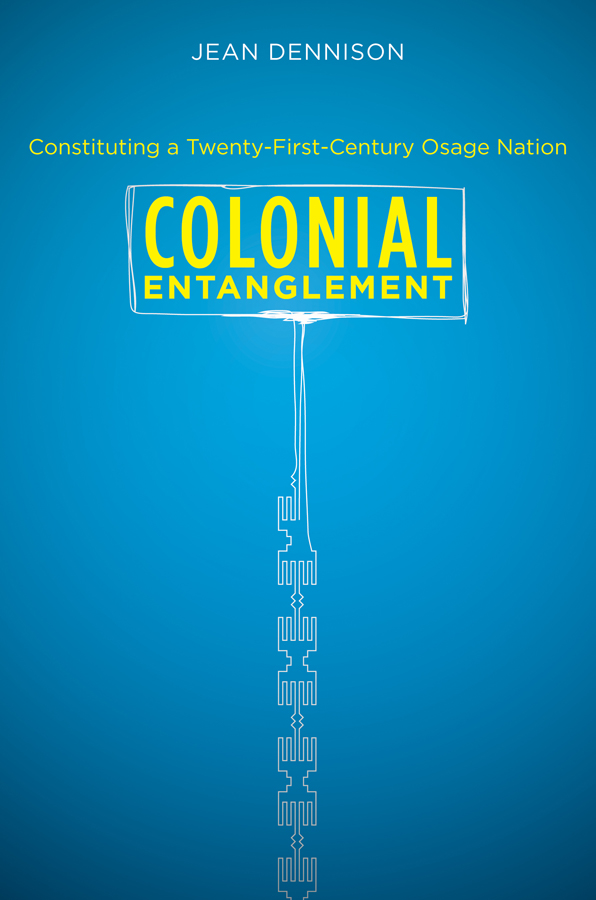
Colonial Entanglement [Book Review]

Colonial Entanglement [book review]

Dennison, Jean. 2012. Colonial Entanglement: Constituting a Twenty-first Century Osage Nation. University of North Carolina Press: Chapel Hill.

Framed by the public debates surrounding the Osage Nation’s moment of constitutional reform in the mid-2000s this ethnography illuminates the diversity of ways Osage define themselves and imagine their future as a polity, creating and negotiating ideas of self and nation. The first book from Jean Dennison, assistant professor at the University of North Carolina, Colonial Entanglement makes a strong contribution to the study of American Indian identity. It will be a must-read for anyone working with Native nations in the midst of institutional reform.

dennison_colonial_PB

Contemporary relationships between Native Nations and their land can be shaped by complicated colonial histories. The Osage situation is especially convoluted! The colonizer did something unique to the Osage and Dennison begins by orienting the reader. In 1906 when the reservation was allotted, the mineral rights were separated from the surface lands. Some Osage held mineral wealth as a collective but all individuals held their land as ordinary private property. Thus the tribal membership roll is greater than the number of members with shares in the mineral trust. To be an Osage citizen you have to be a lineal descendant of someone on the 1906 roll, but all the headrights to the mineral trust were distributed at the moment of allotment. To have a share of the mineral trust you have to be descended from someone who was allotted and that’s a more select group than those who are enrolled.

The author shares a family anecdote. Continue reading

Best Worst Job Interview

I know its not exactly jobs season, but I was inspired by this epic open thread about usual/ inappropriate/ trick questions that have come up in a job interview. A tour through the comments section reveals that a lot of people get asked about their marital status, kids, and religion. And a fair number of people claim to have been asked brain teasers or to solve puzzles, which, obviously, the Lifehacker readership is more business and tech focused than academic, but I would be blown away in some of those scenarios.

I’ve heard some crazy stories about weird interview committee behavior, too. Committee members falling asleep mid-interview, etc. Once, for a postdoc interview I was asked what my definition of critical thinking was and how I approached that in the class room. I replied that I thought it was the ability to draw connections between material in the course and events in the real world, and you do this linking up theoretical to the applied. To which my interviewer replied with an exasperated, quizzical, “Ohhh-kaaay.” That was the same interview where none of the interviewers were in the same room, it was done as a five way conference call.

I’ve flopped some interviews hard too. Like the one where they were looking for a specialist in a particular sub-field, but that wasn’t advertized in the job listing. But then, the alchemy of writing job ads could be left for a whole other post.

So the Lifehacker post got me thinking. What are the hardest, wackest, most left-field job interview questions you’ve had to answer? I’ll go first. In an interview for a admissions job I was asked, “What qualities would you use to describe your ideal supervisor?” Ouch!

Harry Potter on a Sunday Morning

Public anthropology is something any of us can do and its a practice we can engage in at any scale. I’ve written before about how anthropology helped me speak in front of city council to save the bookmobile and I’ve advocated for a public anthropology that is “fast, cheap, and out of control” — meaning it can be local, easy, and not professionally oriented.

This past Sunday I had the opportunity to do something new that was very rewarding for me. I gave a sermon! I’ve included the text of it here. It’s a long read (I had 20 minutes to fill), but if turning cultural relativism into a religion is your cup of tea you might enjoy it. What a treat it was for me to deliver it.

071

If you’re nostalgic about church but are too anti-authoritarian to put your kids in Sunday school, if you’re interested in your spiritual well-being but can’t stand rules, if you don’t mind a little New Age hugging then check out your local UU. You’ll meet a lot of misfits, hippies, New Englanders, and people who for whatever reason had to walk away from other religions. As my friend Ayla, who grew up in the UU, describes it, “It’s a little bit of Christianity, a little bit of rock and roll.”

Chances are you’ll find other anthropologists, scientists, and professors too. For example my minister has a PhD in physics from Princeton. When I shared with him this story about how some Christian fundamentalists reject Set Theory he said, “Well then, they must object to Godel’s incompleteness theorem as well.” UU’s are a bunch of smartypants.

Continue reading

How to explain anthropology to a physicist

cartoon courtesy of xkcd.com under a cc-by-nc license

Science works by proposing and disposing of hypotheses. Hypotheses come from a lot of places: previous research results, modeling, inspiration, and plain old intuition. Our intuition is a good source of scientific hypotheses because our species has evolved to possess an implicit model of the natural world that allows us to move, eat, balance, and so forth. Of course, this model is not perfect nor is it explicit. Which is why we need science. Nevertheless, it is a good source of hypotheses, and our intuitions about where things go when we throw them are an excellent place to begin elaborating, say, a classical mechanical account of projectile motion, regardless of where in the world you are when you throw something. This is because physical laws operate uniformly on earth, modulo extremely advanced concerns in quantum physics or the philosophy of science.

Continue reading

Using George Zimmerman as an object lesson in the anthropology of policing

(Savage Minds is pleased to run this guest column from Kevin Karpiak. Kevin is Assistant Professor in the Department of Sociology, Anthropology and Criminology at Eastern Michigan University.  His work focuses on policing as a useful nexus for exploring questions in both political anthropology and the anthropology of morality.  He is currently completing a manuscript based on his dissertation research (UC Berkeley 2009), entitled The Police Against Itself: refiguring French liberalism after the social, which provides an ethnographic account of the ethical work undertaken by police officers, administrators, educators and citizens as they experiment with new forms of sociality “after the social moment” in France.  He also maintains both apersonal blog and a group blog on the Anthropology of Policing. -R)

Over the past year and a half, I’ve been exploring the tragedy involving George Zimmerman and Trayvon Martin in a course I teach entitled “Policing in Society.”  My goal is to use the event as a concrete opportunity that can give students practical experience in using the tools we learn in class for conceptualizing “police,” “society,” and their relationship.  An added benefit is that it allows students to form and articulate their own positions in regards to such issues.

Continue reading

The Newest HAU: An Embarrassment of Riches

I am not an artless enthusiast for the open access journal HAU. I didn’t post a fawning blog entry when they released the first number of their Masterclass Series, “Cosmological Perspectivism in Amazonia and Elsewhere” by Eduardo Viveiros de Castro” because, frankly, the meat of it has been published elsewhere and I don’t think perspectivism will have a big impact on anthropologists outside of VdC’s circle of trufans. I didn’t make a big deal of their reprint of Prytz-Johansen’s 1954 “The Maori and His Religion In Its Non-Ritualistic Aspects” because, despite my enthusiasm for the piece as a Pacifist, I don’t think (alas!) that tons of people were interested in it. But the latest issue of HAU deserves attention.

Continue reading

Anthropology: It’s not just a "promotion" problem

Just read this guest column in the Orlando Sentinel by Ty Matejowski and Beatriz M Reyes-Foster.  It was written a while back, but still worth a read.  Good on them for writing this piece.  It’s all about anthropology’s “branding problem”:

Cultural anthropology’s branding problem is largely superficial. Anthropologists possess unique knowledge and skill sets that have real-world value. Anthropology helps us understand the world in a way that cannot be reduced to numbers or captured in surveys.

The marketing industry is increasingly recognizing the value of anthropological methodologies. A recent Atlantic article highlights the way in which ethnography and participant-observation are used in market research. Moreover, the World Bank recently elected an anthropologist, Jim Yong Kim, as president.

Anthropologists need to take better ownership of our brand. The complexity of anthropological concepts such as “culture,” “power” and the “global” should not dissuade anthropologists from engaging in meaningful public discourse.

In short, the argument here is that anthropology suffers from a PR problem.  While this may be true at many levels, I think there’s quite a bit more to the story.  Sure, anthropologists should go about and promote their field and all of that.  Fine.  Great.  But the deeper issue here, in my view, is more about how we actually think about and practice anthropology rather than whether or not we are marketing ourselves well enough.  I think that once we deal with the former some of the PR issues will fall into place.  The short version of my argument: we don’t just need to promote ourselves, we need to change.  The “we need promotion” argument assumes that we are doing everything right, and we just need to get ourselves out there in the public view.  As if all is right in the house of anthropology, and we just need some good press on CNN.  I disagree.  I think we need to actually change how we do anthropology. Continue reading

Vale Ward Goodenough

As some readers out there may know, Ward Goodenough passed away this week. A Micronesianist who had done a little work on Papua New Guinea, his death prompted an spate of remembrances on the Pacific Anthropology list I belong to. By any account he was a remarkable man — a prolific author, a careful fieldworker, a mentor to a whole generation of anthropologists, and an innovative theorist to boot. At a certain point in anthropology’s history a lot of people looked at him and saw the future of anthropology. Now that he has passed away I thought I might ask — respectfully — how and why it happened that Goodenough is remembered as an area specialist and not a theorist. It’s an interesting question partially because of what it says about the twists and turns of anthropological theory, but also because of how it speaks to the way our discipline is configured today. So I should say up front that I’m interested in talking about him and why he is important, even if he is not the road that anthropology took. I don’t want to use his passing to speak ill of him.


Goodenough was a Yale man — his father taught there, and he got his Ph.D. there. He came off the edges of the Boasian tradition. Like Julian Steward, he went through Cornell before heading off to Yale to do his degree. He missed Sapir and ended up taking courses from Malinowski, Linton, and Murdock. Murdock became his mentor, he came out of Yale ready to turn anthropology into a Real Science. It was a good time for it: the cold war was on, and anthropology was ready to Apply itself. People like Goodenough, Frake, Conklin, Lounsbury, Romney, and others were interested in making anthropology more quantitative, and brought a lot of energy to that task.

They ended up being sidelined, however. I think of the post-war period in anthropology as a series of overlapping moments. The componential, formal modeling, ethnoscience, cognitive sort of moment of Goodenough got started just a few years before Geertz (and a bit later, Turner) got going on symbolic anthropology. Goodenough’s paper on “Componential Analysis and the Study of Meaning” was (iirc) in 1956. Geertz began publishing interpretive stuff in the early 1960s. Neoevolutionism also got going in the early 1960s. Structuralism, that genius school of social thought, managed to look like kinship algebra to the ethnoscience people, myth interpretation to the symbolic anthro types, and structural Marxism to the evolutionists. So as a result everyone read Lévi-Strauss.

Continue reading

God Bless Sage for their Unvarnished Commercialism

The nice thing about Sage is that they don’t try to hide who they are and what they do. They want to make money — lots of money — and they use us to do it. This is so different from the American Anthropological Association, which claims to be doing things because they are the right thing to do, but actually is desperate to make money, and uses us to do it. There are other differences as well — Sage has very high production values, while the AAA has AnthroSource. Most importantly, however, is the genius Sage shows in keeping its audience happy. Which (I should clarify at the start) is actually rather sinister.