Tag Archives: Military violence conflict

Cultural Dynamics in Interrogation: The FBI At Guantanamo

It is easy – commonplace – for anthropologists to have an opinion on “the war” and to think that our opinions are worth hearing. But those opinions are more informed, nuanced, and will carry further if they are shaped by the close, yet open-minded, encounters with ground level realities, and practice, whose importance we, and our disciplinary forbears, have worked so hard to promote.” – p. 327 in Keith Brown and Catherine Lutz, “Grunt Lit: The participant observers of empire.” AE 34:2, 322-328.

For Brown and Lutz, the autobiographical accounts of soldiers provide a window into the messy and chaotic instantiation of empire in war, and are worth submitting to what Lutz calls “[the] discipline’s standard tropes of person-centered, contextualized understanding” (Lutz 2006 in AE, 33:4, p. 593). Along these lines, the interrogation records of the GWOT should be subject to the same ethnographic scrutiny. If nothing else, they reveal that (to paraphrase Clausewitz) interrogation is the extension of war by other means, as a complex ideological conflict is waged discursively in the context of the prison interrogation room.

To make this point, I’ll share a very abbreviated draft of article I’m writing, for which I draw on a subset of roughly 500 pages of documents dealing with FBI interrogation at Guantanamo Bay, Cuba, between February 2002 and July 2004. Within this collection, there are approximately fifty FBI “transcriptions” (which are perhaps better described as summaries of interviews, “interview” being FBI parlance for interrogation). Because many are heavily redacted, it can be hard to discern where one interview ends and another begins. Reading these is akin to listening to a radio broadcast between bursts of heavy static, or watching a movie interrupted by sporadic blackouts. Although the interview transcriptions do use proper names, identifying information is always redacted; and for convenience, I am following FBI convention in referring to the parties as “interviewers” and “detainees.” I use a bracketed ellipsis to denote redactions […], and I quotations to the official document number so that interested readers can look up the source material (e.g., 4042).

Redactions notwithstanding, this collection provides fascinating insight into the manifold ways in which “culture” makes its presence felt. As Robert Rubinstein points out in his forthcoming book, Peacekeeping Under Fire: Culture and Intervention (Paradigm 2008), culture operates at many levels in UN peacekeeping efforts. He identifies three interlocking cultural dynamics that shape the trajectory of these operations: interactions between peacekeepers and local populations; interactions between participating local and national bureaucracies; and in a meta-sense, as international perceptions of “peacekeeping” evolve politically and institutionally.

Similarly, cultural dynamics operate at multiple levels in interrogation. At its most basic, interrogation aims to get specific information for specific purpose: for example, to develop a criminal case, obtain a confession, or provide “actionable intelligence” that can be used in tactical decision-making. That interviewers are seeking such information is apparent when detainees are asked to explain their presence at an Al Qaeda training camp, or shown photos of other detainees and asked to identify co-conspirators (e.g., 3904). However, far more is going on in these FBI interviews than attempts to elicit specific facts from recalcitrant detainees. In the interrogation encounter, detainees and interviewers look at each other across the table and, with the help of a translator (who is always silent in the transcriptions), they dive into a discursive exchange that reaches far beyond the confines of the interrogation room.

For example, interviewer-detainee exchanges shed light on the dynamics of guard-prisoner interactions in detention operations at Guantánamo. Often, the detainees complain to the interviewers about mistreatment by military police: roughing up prisoners, insulting detainees, and disrespecting the Koran are all sore points among the detainee population. But the weak have weapons: in one interview, a detainee gives the interviewers advice for how guards should comport themselves in front of the detainees – and in doing so, hints at vibrant hidden transcript, in which the projection of state power, embodied in the masculine form of the military police guard, is undermined by a simple technology:

Detainees see the guards as babies, especially the “big American guards that fill the doorway.” This is because the guards are supposed to be strong, yet they walk around with a “camel” (a backpack water storage device with a drinking tube attached) on their back sucking on a tube of water all of the time. A strong man is able to go without water for long periods of time. (The detainee) suggested that the water be kept out of sight of the prisoners and have the guards walk to where the water is kept. (3913)

Secondly, the records illustrate how detainees under interrogation challenge the official transcript of GWOT internment with complex counter-narratives about such topics as the war in Afghanistan (e.g., 3906), jihad and September 11 (e.g., 3899, 4080, 3845, 3844, 3850), American imperialism and foreign policy (e.g., 3918-21, 3912, 3913, 3916, 3925, 3842, 3861, 4086), and the fact that the detention operation at Guantanamo violates legal rights guaranteed by the US Constitution (3924). Along the way, the detainees also share their views on Christianity (e.g., 3906), Israel and Judaism (e.g., 4026), popular culture and sexuality (e.g., 3921), proper treatment of the Koran (e.g., 4803, 4024) and privacy of the body and shame (e.g., 3836, 3854, 4061). Sadly, there are also numerous descriptions of physical abuse, mostly beatings, particularly when the detainees are initially arrested either by Northern Alliance (e.g., 3903) or US troops (e.g., 3892).

But just as the detainees challenge the official discourse of the GWOT, we can see the FBI interviewers developing their own counter-narratives of Islam for the purpose of convincing the detainees that they should share what they know about Al Qaeda, terrorism, 9/11, and the Taliban. The manipulation is psychological, playing heavily on old-fashioned self-interest, but is arguably cultural, too, insofar as the manipulation draws on a framework of religious beliefs. For example, in one transcription (4033-4034), the interviewing agents show the interviewee a movie and photographs of people dying in New York and Washington on 9/11. As they do so, they invoke a narrative of Islam that questions the theological basis for mass violence, then point out that the detainee had become involved with a group of people who “…(abused and maligned) the religion, and will feel God’s wrath and anger on judgment day. […] appeared visibly shaken by this realization.” The interviewer then offers the detainee a chance for absolution through cooperating with the FBI. He warns the detainee that his fellows are “out to save their own butt,” and tells him the window of opportunity is closing. The technique, it seems, is emotionally powerful, as illustrated in a surprisingly poignant closing paragraph:

At the conclusion of the interview, the interview team wished […] luck and that God may accept his prayers. After exiting the room, the interview team witnessed […] with his head down on his hands on the table in front of him… […] was crying and sobbing with the tears falling down on the table when he lifted his head” (4033-4034).

Whether or not this individual eventually gave the FBI team what it wanted is not clear.

By now it should be apparent that interrogation does not necessarily involve the forcible elicitation of “facts”. In these transcriptions, interrogation is revealed as a complicated communicative exchange in which participants share, gather, construct, and deploy knowledge as they provoke and/or resist an alien Other. As Alfred McCoy points out (2006), FBI interrogation strategies strongly emphasize rapport-building over coercion; and we can see FBI agents putting this ethos into practice in the interrogations they conduct. The resulting knowledge that emerges in these exchanges is often profoundly cultural, but not necessarily anthropological. Moreover, the headers on these transcriptions indicate that they were shared among the agencies involved in Guantanamo (DHS, DoD, and FBI) and as such, are likely source material for interrogators and intelligence analysts constructing their own model of the Arab/Islamic Other.

This raises another question about culture; namely, the problem of institutional culture and interagency power struggles as three major government bureaucracies – the FBI, DHS and the Department of Defense – each implement their own strategies for eliciting information from detainees. In particular, DoD interviewers frequently take a much more forceful approach to interrogation, something that FBI agents – and indeed, many DoD personnel – find troubling. And that’s the teaser for my next post.
Some general thoughts about anthropology, interrogation, and torture

A few months ago, in a November 2006 post reflecting on the twin Gonzalez-Lin resolutions against the war in Iraq and the use of anthropological knowledge in torture, Rex asked whether anthropologists might be in danger of generating more heat than light. I’ve asked myself the same question. Ever since Sy Hersh published his three-part series on Abu Ghraib in 2004, anthropologists have been worried about the involvement of their counterparts in torture, or the use of ethnographic information in torture. But aside from a lot of people quoting Sy Hersh, over and over and over again, I’ve come across no corroborating evidence of a link between anthropology and Abu Ghraib – or even in plain old GWOT interrogation, for that matter.

As I discuss in an upcoming short piece in Anthropology News (likely to be published in October), I wrote Hersh a letter and asked him to comment on the link between Patai and torture. He actually called me back in July to tell me that he doesn’t think that Patai’s book played a role in Abu Ghraib (yes, you read that right). When I told him that anthropologists took his claims in “The Gray Zone” very much to heart, and that we’d even put forth resolution against the use of anthropological knowledge in torture, Hersh seemed genuinely surprised, and pointed out that he’d never actually written any such thing. Which, strictly speaking, is true. Read the piece here.

So here’s my plea: don’t point to Hersh as evidence of ethnographically informed torture, and when people do point to Hersh’s article as evidence of such, question whether or not there’s anything to corroborate the claim. If you want to go the extra mile, then dig into the documents yourself. There’s plenty of documentation out there that supports research into the problem of ethnographically informed torture. Several organizations, including the Center for Public Integrity, the University of Minnesota Human Rights Library, and the ACLU all maintain extensive electronic archives of FOIA’d documents around interrogation and detention operations involving the DoD, the intelligence community, and the FBI. In 4000-plus pages of reading, I’ve seen no evidence of anthropologists being involved in torture or interrogation. In fact, I’d have to characterize anthropology as conspicuously absent from detention and interrogation operations.

But that doesn’t mean culture isn’t important. Indeed, the Global War on Terrorism constitutes a cultural encounter of some kind – we just haven’t figured out what, precisely, that means. There’s an opportunity for excellent critique, but making our critique relevant requires some new thinking about our own “sources and methods,” to borrow a term from the intelligence community.

In this regard, I liked Keith Brown and Catherine Lutz’s recent article on “grunt lit,” in which they describe soldiers as the “participant-observers of empire” (2007). They argue that anthropologists should pay more attention to soldiers’ memoirs as a window into the confusing and contradictory microdynamics of empire. In doing so, we might learn a lot about the instantiation of empire and the shifting identity of the American nation-state in the post-Cold war, post 9-11 era.

I’ve come to think of the thousands of pages of memos, emails, depositions, forms, reports in the FOIA collections as the electronic precipitates of the Global War on Terrorism. As such, they offer a glimpse into the nature of American empire – which is, among other things, a bewildering conundrum of personnel, agencies, policies, procedures, acronyms, directives, rosters, and the like. In detention and interrogation operations, this Gordian knot of bureaucracy is unleashed on enemy combatants and prisoners of war, most of whom seem to hail from Arabic-speaking regions of Central Asia and the Middle East.

This is where anthropology comes in, but not as instrumentally or formally as many anthropologists seem to have assumed. It’s not that the military-intelligence-security apparatchik systematically sought anthropologists (or even ethnography) to play the role of cultural seer in interrogation. Rather, what’s anthropologically interesting is the way that people within the bureaucracy are actively engaged in making sense of an alien Other, and in doing so, are formulating their own theories and understandings about what makes this Other tick. Moreover, there’s evidence that the Other is engaged in reciprocal effort vis-a-vis guards and interrogators. As such, interrogation itself constitutes a sociocultural encounter of an astoundingly complicated kind. I’ll be writing more about this topic for my next post, using a couple of examples from a collection of FBI observations about detainee treatment at Guantanamo, and talking a bit about Robert Rubinstein’s ideas about culture in peacekeeping operations in a forthcoming book of his.

Suffering Ch. 5: reading military through colonial anthropology

I spent the weekend trying to figure out how to tie together Donald Moore’s book with the recent spate of talk here about sports and the military. No go on the former so far, but I think the book is a good case for thinking about the history of anthropological knowledge and its contribution to geo-political affairs. Comparison with Iraq is obviously apposite– why is Mugabe’s Zimbabwe not the same kind of threat as Saddam’s Iraq, barring the obvious issue of oil? Why is the region considered (relatively, and by the US and EU) stable despite the ravages of AIDS, the super out-of-control inflation or the century-long (and now tit-for-tat) history of racialized dispossession at the center of Moore’s book? But more relevant is the question of how anthropological knowledge has been used in both governance and wartime in the history of Africa. The “colonial” card is one often played in anthropology (and frequently here on SM), but rarely, I think, carefully examined. For my money, Chapter 5 of Moore’s book is one of the few places I’ve seen an anthropologist take really seriously the complicated uses of anthropological knowledge in a colonial and post-colonial setting, and I think it merits a comparison with the question of what, for instance, people like Montgomery McFate, Laura McNamara, or Marcus Griffin are involved in with respect to Iraq are involved in with respect to the use of anthropological knowledge within the government today (NOTE: I didn’t mean to lump all three of these folks together as people working in or on Iraq… only as three different kinds of anthropologists working with or on the miltary or defense. Laura McNamara works for th DOE and has studied defense analysts, but has nothing whatsoever to do with HTS or the DoD.) .
Continue reading

Professor Griffin Goes to Baghdad

Readers interested in ongoing discussion about anthropological knowledge and military operations should follow the blog of Dr. Marcus Griffin, professor of anthropology at Christopher Newport University in Newport News, VA. Griffin is being deployed to Baghdad under the US Army’s ‘Human Terrain System’ initiative (this .pdf explains the HTS). Griffin’s blog promises to report intermittently on the work he is doing with the Army. Given the heated discussion here at SM and elsewhere on the ethics of this sort of affiliation between the military and a professional anthropologist, I wrote to Professor Griffin asking him to clarify what set of ethical guidelines will govern his research and conduct in Iraq as I was unable to discern this from the HTS document that he links to. He has promised to write about these matters. At the moment, however, he is very much involved in preparations for Baghdad. Here, he describes ‘going native‘ within military culture:

Going “native” in anthropology is a fairly common strategy to gain a better understanding of the people with whom one is working. I am about a month away from deploying to Baghdad as part of the US Army’s new Human Terrain System and have almost gone completely native. How am I doing this?

First, I am working out regularly with Lt. Gato. He is showing me how to develop greater strength and endurance, pushing me to exert myself beyond my own motivation. When I complained about elbow tendonitis, he said, “Good, no pain no gain.” Thanks to him I am gaining greater strength and larger muscles. Second, I cut my hair in a high and tight style and look like a drill sergeant. I know because a woman at the gas station asked me if I was one and was perplexed when I said no but was satisfied when I said I was simply on my way to Iraq. Third, I shot very well with the M9 and M4 last week at the range. I previously paid careful attention to the training one of my team members gave me on his own time and our effort paid off handsomely. Shooting well is important if you are a soldier regardless of whether or not your job requires you to carry a weapon. Fourth, I am trying to learn military language with all the acronyms and idioms otherwise alien to university professor such as myself. I actually know what people are saying now half the time. By going native, I am better able to see social life from the viewpoint of the people I am working with.

Reading Circle Supplements: crazy inflation and f*ed up laws.

inflastion
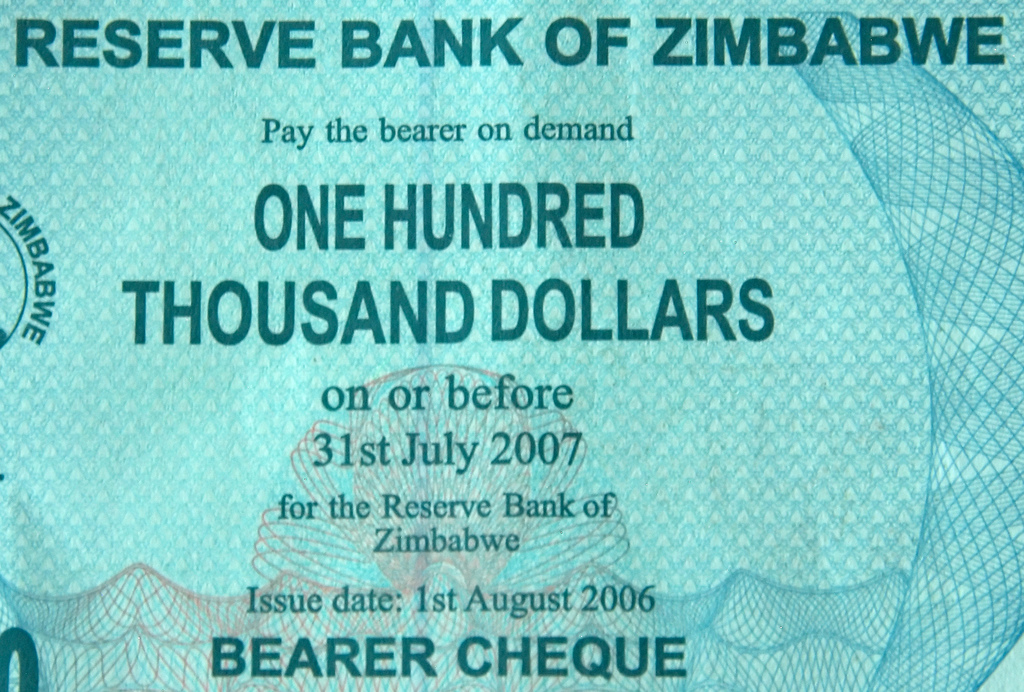
For those of you who haven’t yet picked up, or received, your copy of Suffering for Territory, here’s some sources for learning about current affairs in Zimbabwe. Inflation is currently somewhere around 4500%. I think that basically means that the price goes up before you can dig for change in your pocket. Or would that be your wheelbarrow of cash. The US has apparently offered food aid. The Times of London has an article about starvation and the “silent genocide” with the startling claim that no one seems to know what the population of Zimbabwe is anymore. Also (via boingboing) a series of Internet-related laws allowing monitoring of all phone and data traffic.

A few good blogs (1| 2| 3) seem to be out there as well… please post others if you know of them.

More on War

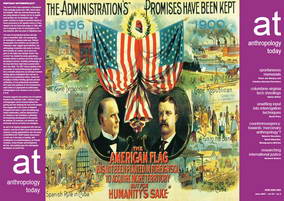
Readers of SM who have followed the many discussions here about the role of anthropologists and anthropological knowledge in war (including the Iraq war) will be especially interested in the June 2007 issue of Anthropology Today.

at0706.jpg

The Editors write: “Everyone supports non-partisan use of academic research for ‘humanity’s sake’. However, since anthropologists cannot research without first gaining and then retaining the trust of the peoples they engage with in the course of fieldwork throughout the world, in open and willing long-lasting relationships, partisan deployment of our research in war constitutes a potentially life-threatening development for the peoples we befriend, for ourselves, our students, our profession and for our family and colleagues. As part of an ongoing engagement with how our research, and that of other social and behavioural sciences, is being appropriated in war, this issue of ANTHROPOLOGY TODAY features discussions on their use in two areas of warfare, with contributions on counterinsurgency, by Roberto González, David Kilcullen and Montgomery McFate, and unwitting input into interrogation techniques, by David Price.”

The Fate of McFate: Anthropology’s Relationship with the Military Revisited

Back in January, Matthew Stannard at the SF Chronicle, having come across my SM piece Anthropologists as Counter-Insurgents, contacted me about doing an interview for an upcoming profile on Montgomery McFate, the advocate for anthropology in the military whose work I was responding to. The piece is now online, entitled Montgomery McFate’s Mission: Can one anthropologist possibly steer the course in Iraq?. I’m not quite ready to revisit this topic — I’m up to my neck in grading and other work, with the semester’s end a week-and-a-half away, but I thought I’d mention it now while I put together some further thoughts on the matter. It’s a fairly good article, even though I’m only quoted once (Stannard apparently has not been taught the maxim that the more quotes of me a paper has, the better it is). Interestingly, though the interview ranged all over, I’m quoted more in my capacity as historian of anthropology than in my — I think more relevant — role as anthropological ethicist.

Wartime Anthropological Linguistics

We’ve had a fair bit of discussion, here at Savage Minds, about the role of anthropologists during wartime, an issue which has troubled American anthropologists as far back as Boas. There has also been a lot of discussion as of late about the shortage of Arab speakers in the US military and intelligence community. (The policy on gays in the military makes it unlikely that there will be an American T.E. Lawrence.) So, within this context I’ve been meaning to link to Mark Liberman’s Language Log post on Mary Haas, who had studied with Edward Sapir and gone on to head the Linguistic Society of America.

For Haas, as for most of the other linguists of her generation, the watershed of her career was the onset of the Second World War. In 1940-41, as the United States moved toward entering the war, a cadre of field linguists was recruited to learn and teach the lesser-known languages of the European and Pacific theatres. … Recruited to study Far Eastern languages — and ordered to produce practical handbooks, teaching grammars and vocabularies — were such scholars as William S. Cornyn, who was assigned Burmese; Murray Emeneau, who was channeled into the study of Vietnamese; and Haas, who got Thai. Given the near total lack of teaching materials on Thai in those days, Haas, like Cornyn and Emeneau, had to learn her language from scratch, through direct elicitation from native speakers…

Haas spent 1941-43 at the University of Michigan acquiring a knowledge of Thai phonology and syntax through intensive fieldwork with Thai speakers, one of whom, Heng R. Subhanka, became her second husband. … in 1943 she went to Berkeley where the Army Specialized Training Program had been set up, under the direction of A. L. Kroeber, to teach strategic languages to servicemen.

Liberman, noting without comment the contrast between the eagerness to help with the war effort back then, and the greater suspicion that exists now, wonders whether it was Kroeber himself who organized this effort? (Mark also notes that Kroeber was Ursula K. Le Guin’s father, but fails to mention that he is also from my hometown, Hoboken NJ!)

UPDATE: More here and here.

Cultural Operations Research Human Terrain

Via Kevin Drum, a press release about an article in the New Yorker. With a title like “Can Social Scientists Redefine the War on Terror?” it seems right up our alley. (See previous posts on the topic here, here, here, here, here, here, and here.) In the New Yorker article George Packer talks to “a remarkable theorist named David Kilcullen, an Australian anthropologist who is also a lieutenant colonel in his country’s Army and the chief strategist in the U.S. State Department’s Office of the Coördinator [sic] for Counterterrorism.” There isn’t much saying what makes Kilcullen so “remarkable” except for his willingness to actively work for the military, but it seems he isn’t the only one:

Anthropologists and former military officers in the Pentagon are currently working on a new project called “Cultural Operations Research Human Terrain,” which is recruiting social scientists around the country to join five-person “human terrain” teams that would go to Iraq and Afghanistan with combat brigades and serve as cultural advisers on six-to-nine-month tours. Pilot teams are planning to leave next spring.

You can read some of Kilcullen’s papers here. I wonder if any of the anthropologists engaged with the military on these missions would be willing to blog about their experiences?

UPDATE: The full article is now available online.

Torture and Social Scientists

Inside Higher Ed ran a long piece this morning entitled “Torture and Social Science”:http://insidehighered.com/news/2006/11/22/anthro that covers the goings-on at the AAAs general business meeting we “recently blogged about”:/2006/11/20/aaa-democracy/. What I find most interesting about the article are the comments that people have made on it, which include lines like:

This condemnation by the American Anthropological Association carries about as much conviction as a condemnation of human rights violations by the United Nations’ General Assembly i.e. none at all.

and

My worry is that anthropology may have become too self-marginalized as a discipline, increasingly irrelevant to the big questions of the day in our world, content to snipe from the sidelines as soon as it seems safe.

I have to admit that my sympathies are more with this line of argument. As many of you can probably imagine, I am anti-torture. But the enormous amount of energy and acrimony that goes into adopting some sort of measure like this is enormous, and I often wonder what sort of practical effect it will have other than salving the conscience whose super egos need some form of topical treatment. I mean: think of the concrete, substantive effect the Yanomami debacle had on Chagnon’s career! Don’t get me wrong — I am sympathetic by those who oppose the weaponizing of anthropology. And I recognize that for some people passing resolutions and measures etc. is an end in itself. But… aren’t we danger of generating rather more heat than light?

Economists and anthropologists on video game violence

Academic bloodsport has been on my mind this week since I have been reading the Charlot/Valeri debate that raged briefly in the pages of Pacific Studies in the late 1980s. It is without at doubt the Ultimate Fighting Championship of debates about Hawai’ian Sacrifice, partially because of the intensity with which it is fought (Valeri, in finest Francophone style, accuses of Charlot of managing to miss “not only the forest, but the trees as well”), partially because of its incredible erudition, and partially because it is, as far as I know, the only major academic debate about Hawai’ian sacrifice to date.

The Charlot/Valeri debate is totally unavailable electronically and so I have no link to it here. However, if you are interested in one academic cutting the work of another into very small pieces I hardily reccomend “Edward Castronova’s smackdown”:http://terranova.blogs.com/terra_nova/2006/07/review_of_carne.html#more of “Carnagey’s work on video game violence”:http://www.public.iastate.edu/~vasser/pubs/06CAB.pdf, which features zingers like “the bugbear of statistical significance is loose among poorly-grounded fields, among which one must now, on the basis of their acceptance of this paper, sorrowfully include experimental social psychology.”
Continue reading

Ye good olde military ethnography

The New Republic posted a lovely little piece recently on “The Food of the Iraq War”:http://www.tnr.com/doc.mhtml?i=20060710&s=diarist071006 which includes folk beliefs of soldiers like the fact that Country Captain Chicken can ‘make you gay’ and Charms candies bring disaster when consumed. So much for the Iron Cage of Rationality. At any rate it’s a great teaching piece to use in class and I like it because of the way it hearkens back to the anecdotal bits written by American anthropologists after WWII based on their experience serving in the military, such as Ralph Linton’s “Totemism and the A.E.F.”:http://links.jstor.org/sici?sici=0002-7294%28192404%2F06%292%3A26%3A2%3C296%3ATATAEF%3E2.0.CO%3B2-H and George Homans’s “The Small Warship”:http://links.jstor.org/sici?sici=0003-1224%28194606%2911%3A3%3C294%3ATSW%3E2.0.CO%3B2-A Sort of like “Baseball Magic”:http://www.dushkin.com/olc/genarticle.mhtml?article=27128 but with guns.

Of course today the ethnography of the military is an enormous field, ranging from “Homefront”:http://www.amazon.com/gp/product/0807055093/sr=8-1/qid=1152904409/ref=pd_bbs_1/103-7676725-6471050?ie=UTF8 to “Mastering Soldiers”:http://www.berghahnbooks.com/title.php?rowtag=Ben-AriMastering, but Country Captain Chicken making you gay really took me back.