Tag Archives: Martin Luther King jr.

Hannah Arendt and Martin Luther King Jr.: The Next #AnthReadIn on February 17, 2017

By: JC Salyer and Paige West

On January 20, over one thousand anthropologists came together to read Michel Foucault’s lecture eleven in “Society Must Be Defended.” What began as a simple blog post became a global showing of scholarly solidarity and transnational anthropological community building in the wake of the disastrous presidential election in the United States. Groups in sixteen countries convened to both read aloud and discuss Foucault’s analysis of biopower, racism, and the state. Some of these groups were based in university settings but many were not. We had readers in pubs, museums, living rooms, on a live radio broadcast, and in front of Trump Tower in New York City. After the events on January 20 people contacted us through e-mail, Facebook, and Twitter, to describe the sense of collective scholarly engagement that this event provided. Many said that the feeling of anthropological community in the face of this disastrous political change grounded them.

In the wake of this extraordinary response to the initial Read-In idea, we now propose along with co-sponsors Savage Minds and the journals American Anthropologist, American Ethnologist, Cultural Anthropology, Environment and Society, and Political and Legal Anthropology, and based on hundreds of suggestions from anthropologists, a monthly global Anthropology Read-In.

Here is how it will work: On the third Friday of every month for the next four years (or as short or long as necessary), using the new #AnthReadIn on Twitter and utilizing the Facebook group https://www.facebook.com/groups/170068806806067/, we will come together to read and discuss a single text or a few short texts. Anthropologists will curate the monthly reading lists with each curator, or curatorial collective, assuming responsibility for three months’ worth of readings. At the end of their tenure as curators, they will then pass the responsibility on to another individual or group. Hence, we will provide readings for February and March and then pass the responsibility onto someone else who will provide readings for April, May, and June. We are hoping that this method (a kind of snowball sampling method of editorial control) will move the privilege of choosing the readings around through a broad network of anthropologists and through a range of perspectives and expertise.

We initially chose lecture eleven from “Society Must Be Defended” because we had both been trying to think through how the election did and did not alter the United States as a nation-state. In the two months following the election we watched in horror as hate crimes increased in the United States and as it became even clearer than it had been in the months leading up to the election that the new administration was going to focus on representing Black Lives Matter protesters, migrants, and other people of color as enemies of the state. Therefore, we wanted to read Foucault to consider how racism is the dividing practice par excellence of the modern biopolitical state. But we also wanted to remind ourselves that the state itself is grounded in, and literally built on, racism and dispossession. Specifically, it is on the land of indigenous peoples and it was built with and through the labor of slaves.

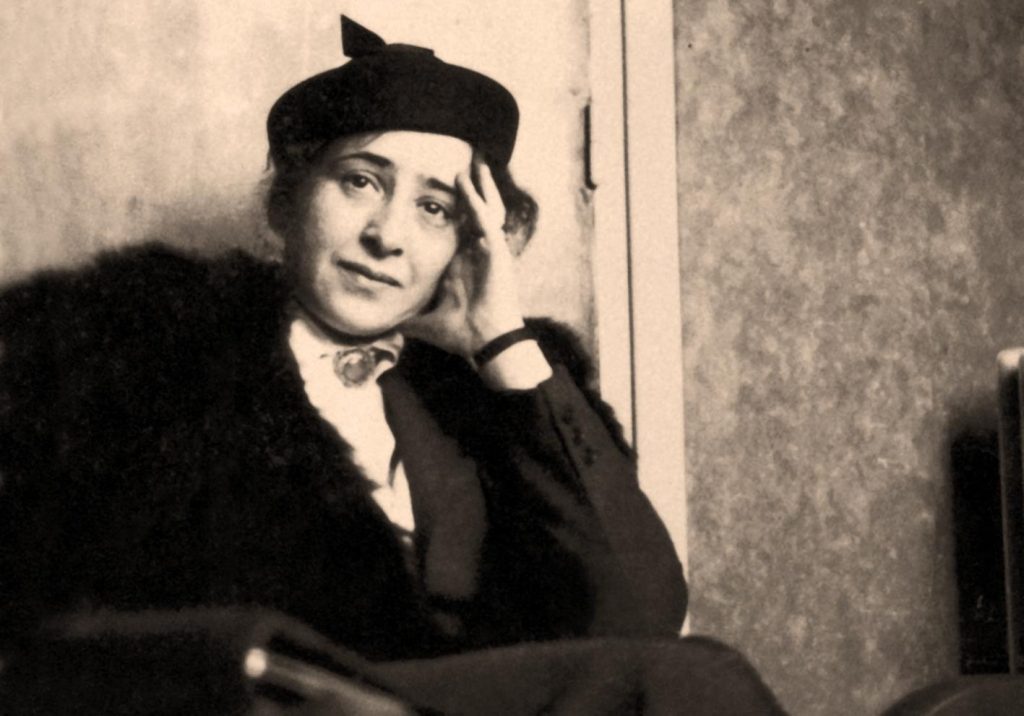
Sadly, the first week of the Trump administration has proved to be as much of an assault on principles of equality, democracy, and humanism as was feared, if not more so. Because we believe it is important that the #AnthReadIn be primarily about providing an intellectual response to the Trump presidency, we have tried to select readings that directly address that actions of the administration and that challenge us to consider what is actually mandated in terms of a moral response. Therefore, for February 17 we propose to read Hannah Arendt’s “The Decline of the Nation-State and the End of the Rights of Man,” which is the ninth chapter of The Origins of Totalitarianism as well as Martin Luther King Jr’s “Letter from a Birmingham Jail.” Personally, we will both be reading, discussing, and sharing our thoughts through social media. We invite you to do the same.


Paige West is Claire Tow Professor of Anthropology, Barnard College and Columbia University

JC Salyer is Term Professor of Practice, Barnard College

Teaching Martin Luther King in Hawai‘i

Every Spring I teach “Letter from a Birmingham Jail” in the class immediately following MLK day. Typically I focus on first and second year college students. I do it for several reasons: For many of my students, “I have a dream” is the only text of MLK’s that they know; because it helps explain the reason for the season; and, most of all, because the letter is incredibly teachable.

I originally got the idea from Gerald Graff, who remarked that King was such a clear writer you could almost reconstruct the letter he was responding to just by turning his sentences around. So I said, alright, let’s do it. I’ve done the assignment is several different ways, but basically it goes like this: Students come to class, and we read the letter out loud, each student reading one paragraph at a time. We then begin with the logice of his argument: What are his claims, his reasons, and his examples (this goes pretty quickly in a college setting).

We then move on to rhetoric, asking: How does MLK creates roles for readers and audience in the text? Who does he compare himself to? Who is Paul, what is Tarsus? Many students don’t know this, while others are proud to be able to share their knowledge in an institution which is sometimes not totally welcome to practicing Christians. Some who think they are Christians realize they don’t actually know anything about key texts from their tradition. It’s interesting. But anyway the questions are: Who does he think his audience is? What does he assume that they know?

I then introduce the concept of heteroglossia and ask my student what other voices they can find in the text. How is this single-authored piece shot through with other opinions. Who is King agreeing with or disagreeing with? At the end of class I give students an assignment to write the letter than King was responding to, using only text-internal clues regarding what that letter said. I ask them to reconstruct the argument, as well as to sign it — that is, imagine what kind of people wrote it, even if they don’t know their names.

This process is not too hard on students — you could do it in middle school or high school, in addition to college. You can tweak it, asking them to read MLK’s letter outside of class and then come to class having written the letter to which he’s responding. You can assign some chapters on the book on the Letter from the Birmingham Jail, to provide context, or read other texts by King (I’ve used “Conforming Non-Conformist” in the past).

But really, it’s the ease of analyzing King’s text that makes the exercise so useful. Students feel like they can do it. And you can basically teach ALL intro level college analytic skills just out of this one piece of writing. Once they have that under their belt, you can tell them: “Great. Now on Thursday we’ll be doing this with Foucault. Good luck!”

King’s text is not just easy to analyze, it’s also a model of clarity and persuasive speech. King writes clearly and concisely, but does not write sparely or sparsely. When he needs to let the clauses roll out, they roll out. It’s a valuable corrective to the indigestible academic prose that fills the academy, and which our students unfortunately learn to imitate.

King is exemplary for more than just his prose of course. Undergraduates today — especially those in Hawai‘i — don’t live in King’s world. This is the first experience with Jim Crow that many of my students have had. It’s powerful. And King does more than remind readers of a past that they may not have had access to before. His approach to dialogue is important to. In academy which is used to critique, King tries to convince. In an academy which too often stigmatizes enemy subject positions, King offers readers a chance to be good people — if they get on board his plan. King doesn’t just know what’s wrong. He knows what’s right.

It’s also quite shocking to some students to see that King was in fact a political agitator. We have a vision of him as a great conciliator, someone who found common ground, increased shared understanding, etc. But the King of the Letter actively advocates disruptive, illegal protests. He urges us to heighten tensions, not resolve them. He encourages violation of unjust laws. King was an activist who did the right thing, not the legal thing. I sometimes feel that this is something that people would like us to forget about him.

Finally, reading the Letter makes students ask new questions: What happened after the letter was written? How did we get from there to here. If I fill in some of the context, they start asking: Who was Malcolm X? Martin Buber? If I am teaching a more advanced class, we begin asking “how are we interpellated as a subject? What are the rights and wrongs of such interpellation”?

Your mileage may vary, and it may be too late for you to incorporate some of this material into your own classes later on this week. I’m sure that I’m hardly the only person who finds time in class to teach MLK around MLK day. But if you haven’t yet, why not give this exercise a shot, or adapt it for your own use? Or why not share your own in-class exercises below? Thanks. And happy Martin Luther King Jr. Day.