All posts by Kerim

Kerim

P. Kerim Friedman is an associate professor in the Department of Ethnic Relations and Cultures at National Dong Hwa University, in Taiwan, where he teaches linguistic and visual anthropology. He is co-director of the film Please Don’t Beat Me, Sir!, winner of the 2011 Jean Rouch Award from the Society of Visual Anthropology. Follow Kerim on Twitter.

Become an Expert in Less Than an Hour

As a professor of anthropology one frequently has to advise graduate students whose work is, in some key aspects, far removed from one’s own area of expertise. It makes sense that a graduate student interested in child labor in India would want to work with me. I’ve published on India and teach a course on economic anthropology, but that doesn’t mean I know very much about child labor issues in India. What I can do is steer that student in the right direction.

Multiply this by a number of related scenarios (e.g. book reviews, manuscript evaluations, discussing a conference paper, etc.) and you see why anthropologists frequently have to learn how to grok an entire subfield in under an hour. Yes, real expertise takes years of hard work, but identifying the key works and ideas that define a subfield can be done quickly if you know where to look. A good analogy might be the difference between having grown up in a city and knowing how to use a good travel guide with Google maps.


Continue reading

Dove Ideology

[youtube http://www.youtube.com/watch?v=XpaOjMXyJGk?rel=0]

The latest Dove advertising campaign, “Real Beauty Sketches,” has already garnered its share of well-deserved criticism: That “Dove is owned by Unilever – the same company that owns Axe, king of misogynistic ads.” That “the real take-away is still that women should care whether a stranger thinks she is beautiful.” That the women in the ads don’t look like the women one sees “on the subway, at highway rest stops, in suburban malls.” That the “main participants” are mostly Caucasian, blonde, thin, and young. Etc.

All that is true. But my interest in the ad is pedagogical. For me it is the perfect illustration of what I call the “bent-stick theory of ideology.”

Continue reading

RTFM

ikea instructions

If you’ve spent any time perusing web forums you’ve encountered the phrase “RTFM” which stands for “Read the fucking manual.” This invariably offends the initial poster who, rightfully (IMHO), points out that if the documentation was clearer they never would have taken the time to register for a web forum and post their question in the first place. The problem with most documentation is that it only makes sense if you already know the answer. People who write documentation have a hard time putting themselves in the mindset of the people for whom the documentation is actually written.

This is not a trivial insight. Continue reading

Senate Blocks Poli Sci Funding

The Senate voted Wednesday to bar the use of National Science Foundation funds for political science research not deemed essential to national security or economic interest. [Link.]

The American Political Science Association has a page with more information.

Temporary Home of Savage Minds

Till our regular site is back up (which could take days) we will be posting here.

Why is Savageminds.org down? The short answer is that our webhost messed up big time. They are working on sorting out the issue and hopefully will get the regular site up soon. At that time we will re-import these posts back to the regular site.

Cultural Anthropology Goes Full-OA!

orson_wells_Slow-Clap

For years now Open Access news from the AAA has been nothing but one frustration after another, so it is great to finally have some unqualified good news:

The Society for Cultural Anthropology (a section of the American Anthropological Association) is excited to announce a groundbreaking publishing initiative. With the support of the AAA, the influential journal of the SCA, Cultural Anthropology, will become available open access, freely available to everyone in the world.  Starting with the first issue of 2014, CA will provide world-wide, instant, free (to the user), and permanent access to all of our content (as well as ten years of our back catalog).

Well, OK, maybe not completely unqualified… There was this:
Continue reading

Chagnon vs. Asch

Asch

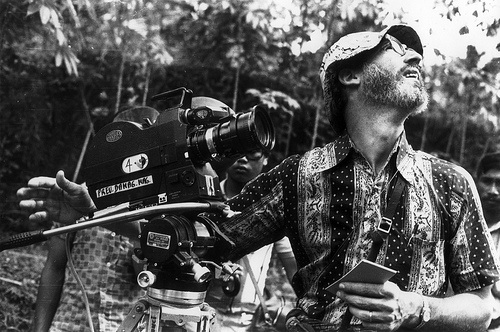
It seems a lot of anthropologists have had cause to write angry letters in response to Chagnon’s latest book: Sahlins, Fuentes and Marks here on Savage Minds, and a host of others elsewhere (see Anthropology Report for a good rundown). But I thought Jay Ruby’s criticism was unique enough that it deserved it’s own post. Sent to VISCOM, an email list for visual anthropology, Ruby wrote the following:

For me, the most annoying thing about this book is Chagnon’s attempt to erase Tim Asch’s contribution to the production of the Yanomamo films.  At one point, Chagnon even refers to the films as “my documentary films.” I knew Tim Asch as a friend and colleague.  We had many discussions about his collaboration with Chagnon.  Anyone interested in reading about Asch’s view of the collaboration should look at Chapter 4 of my book, Picturing Culture (2000, U of Chicago press). When it was commonly assumed that the best way to make an ethnographic film was for a filmmaker to collaborate with an ethnographer, The Asch-Chagnon collaboration was regarded as the model. Few people knew that the partnership was a disaster with Asch literally begging Chagnon to spend more time working on these films. Their relationship was so unpleasant that when Asch died in 1994, Chagnon refused to contribute to a planned memorial.  To say Chagnon’s treatment of Asch in this book is unjust and petty is an understatement.

On Profiling in India and the US

In describing the subject of our film, Please Don’t Beat Me, Sir! we often tell people that the situation of India’s Denotified Tribes (DNTs) is very similar to the kind of profiling that happens against African Americans or Muslim Americans. Recent examples from the states include Oscar-winning actor Forest Whitaker getting stopped and frisked leaving a Morningside Heights deli, and the “Stop and Frisk” program of the NY City Police Department (NYPD) which was recently ruled unconstitutional, as well as the news that the NYPD was “engaged in a massive surveillance operation on the city’s Muslim community.”

In fact, it turns out it is exactly the same. Indian papers recently broke the story that police officers in Ahmedabad have “prepared a dossier on 207 men and women” in the Chhara community – the very community where we shot our film.

Continue reading

Living in a Plain Text World (Tools We Use)

If you look through the archives of Savage Minds you will find a lot of posts that are seemingly unformatted. Most of these are by Rex, who was an early fan of Markdown, a “a text-to-HTML conversion tool for web writers” developed by John Gruber. Unfortunately, the plugin we were using to make those posts appear pretty was sucking up a lot of server resources so we disabled it until we could find something better. There are probably better options out there now, but we haven’t looked at them. I personally write my blog posts in raw HTML and never saw the advantage of learning Markdown… until now.

Before I go on, a word of warning. Usually I only write my “Tools We Use” posts about software I feel confident about. That means it is bug-free, already has all the promised features, and can be easily used even by those who are less tech-savvy (with a bit of effort). However, some (but not all) of the tools discussed in this post aren’t really ready for prime time.

So what changed? Why did I come around to Markdown (MD)? Well, the main thing for me was my discovery of FoldingText. I know a lot of academics, Rex included, really like Scrivener (“the first and only word processing program designed specifically for the messy, non-linear way writers really work”), but despite trying really hard to like it, it just never “clicked’ for me. Mainly because I don’t like how it works as an outliner. FoldingText, on the other hand, is a great outliner. Yes, the current version is still missing some important features one would expect from an outliner, but I already love it. In this post I will write a bit about why I like FoldingText so much, as well as some of the other MD tools I’ve found helpful, including a way of writing powerpoint-style presentations in MD, and a new proposed syntax for annotating documents in MD. All this and more after the fold… Continue reading

Some Notes on Toilets

Sometimes you think that a topic would be interesting to research, but don’t have time to do it yourself. I figure that this is exactly what blogs were invented for. So, without further ado, here are some links about toilets presented without discussion (although the juxtaposition of stories is not always accidental). Feel free to add your own in the comments.

Taiwan’s Modern Toilet Restaurant:

Toilet Restaurant
Picture by Fun Fever.

Japan sniffs at Taiwan’s toilet culture:

Japanese tourists are said to be frequently distressed at the lack of clean public toilet facilities in Taiwan. In particular, they are horrified at the sight of bathroom trash bins filled with used toilet paper.

Mainland Toddler Poops In Taiwan Airport, Predictable Uproar Ensues:

In a Taiwan airport recently, someone snapped a picture of a toddler defecating onto a newspaper in the middle of the ground, reportedly with a bathroom nearby.

Continue reading

Happy Birthday Gramsci!

Gramsci was born January 22nd, 1891. I wanted to use the opportunity to correct three common misperceptions about Gramsci.

  1. Gramsci’s concept of “hegemony” is important because it allows Marxists to talk about “culture.”

The truth is the other way around. Gramsci did not so much provide a way for Marxists to think about culture as he sought to ground the study of culture in Marxism. That is to say, his work was a critique of idealist philosophy which viewed language and culture as having their own internal logic separate from that of political economy. His work was an attempt to ground the study of these subjects in a Marxist history of the Italian state.

Continue reading

Culanth.org: Doing It Right

I just wanted to give three cheers for culanth.org, the website of Cultural Anthropology. It is simply one of the nicest websites I’ve seen for an anthropology journal/AAA section. There is much to admire, but first and foremost is the beautiful clean and minimalist design of their homepage. Having overseen the redesign of the SLA website (which has since gone through additional changes) I can say from experience that this is no easy task. Other things to admire on the site include:

True Open Access: These aren’t simply ads for the journal, but links to articles which authors have placed in institutional repositories.

They also have a great blog: [Heh, right now the blog’s homepage is giving error messages, but you can link to the most recent blog posts from the top level of the site.] You can also follow them on Twitter.

Curated collections: “(formerly Virtual Issues) gather together five articles that speak to a particular anthropological or contemporary theme.”

What other AAA journals/sections have great websites that promote open content?